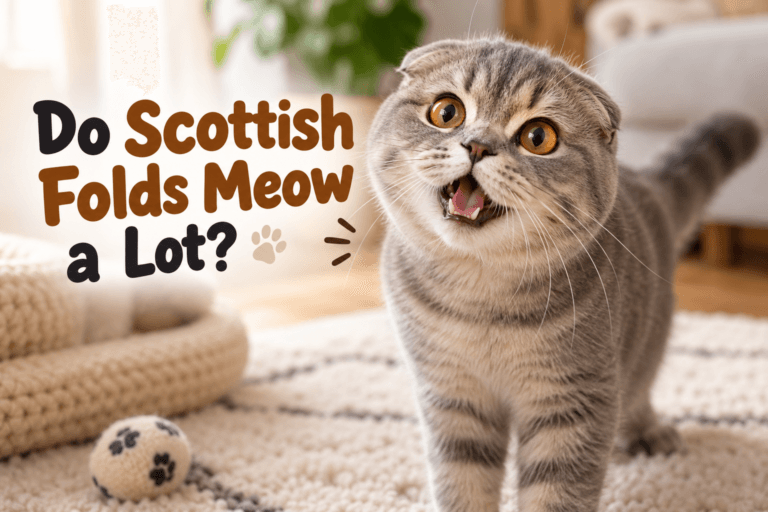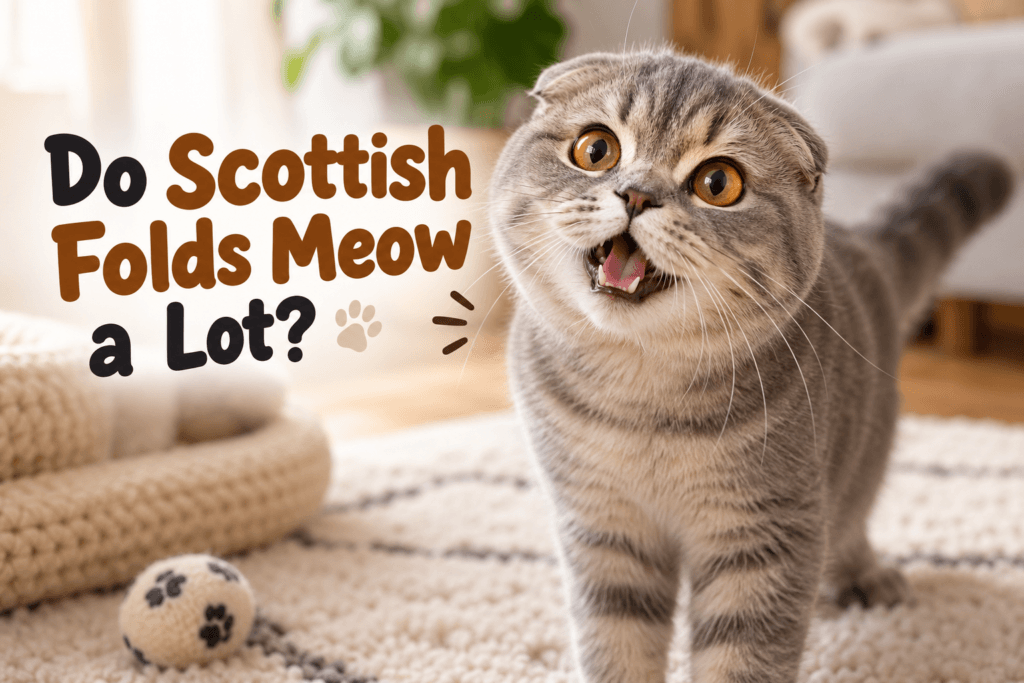


Scottish Folds are generally quiet cats, but they do meow. Most are better known for soft calls and small conversational sounds than constant loud vocalization. Some, however, can be quite talkative around food, play, or attention. Scottish Fold meowing varies from one cat to another, so the amount of noise alone is not enough to judge whether anything is wrong.
A Fold that has greeted you with short meows for years may simply enjoy talking. A normally quiet cat that suddenly begins calling throughout the night deserves a closer look. Understanding Scottish Fold meowing starts with knowing what is normal for your own cat.
Scottish Fold Meowing at a Glance
Scottish Folds are often described as calm and relatively quiet. They may follow their owners from room to room and make gentle sounds without demanding constant interaction. The Scottish Fold breed profile describes this combination of an affectionate nature and quiet communication.
Still, a breed description is only a starting point. One Fold may say almost nothing until dinner, while another may chirp when you enter the room and meow until you notice it. Neither pattern automatically means a problem. Age, routine, environment, personality, and experience all shape how much a cat communicates.
The important thing about Scottish Fold meowing is consistency. If your cat eats, plays, moves, and rests normally while making the same familiar sounds, there is usually less cause for concern than when its voice or behavior changes suddenly. For a wider look at their temperament and daily care, see our Scottish Fold cats guide.
Common Sounds Scottish Folds Make
Scottish Fold meowing is only one part of feline communication. You may hear chirps, trills, purrs, and longer calls, and the same sound can mean different things depending on the situation. Rather than giving every sound a fixed translation, look at what your cat is doing at the time.
| Sound | What It May Mean |
|---|---|
| Short, soft meow | Greeting, attention, or a simple request |
| Chirp or trill | Interest, excitement, or social greeting |
| Repeated meows | Anticipation, food, or a learned request |
| Purr | Often contentment, but sometimes self-soothing during discomfort |
| Loud, drawn-out call | Frustration, stress, mating behavior, or a possible health concern |
A chirp at the window while watching birds is different from a loud cry made while hiding under furniture. Watching posture, appetite, activity, and the time of day helps you understand the message. The veterinary guide to cat meows explains why vocal sounds are best understood alongside body language.

Why Scottish Folds Meow
In everyday life, Scottish Fold meowing usually has a context. Cats learn which sounds attract a person’s attention, so their vocal habits often grow around familiar activities. Food, company, play, and household changes are worth considering before assuming that every meow has a medical cause.
Food and Meal Routines
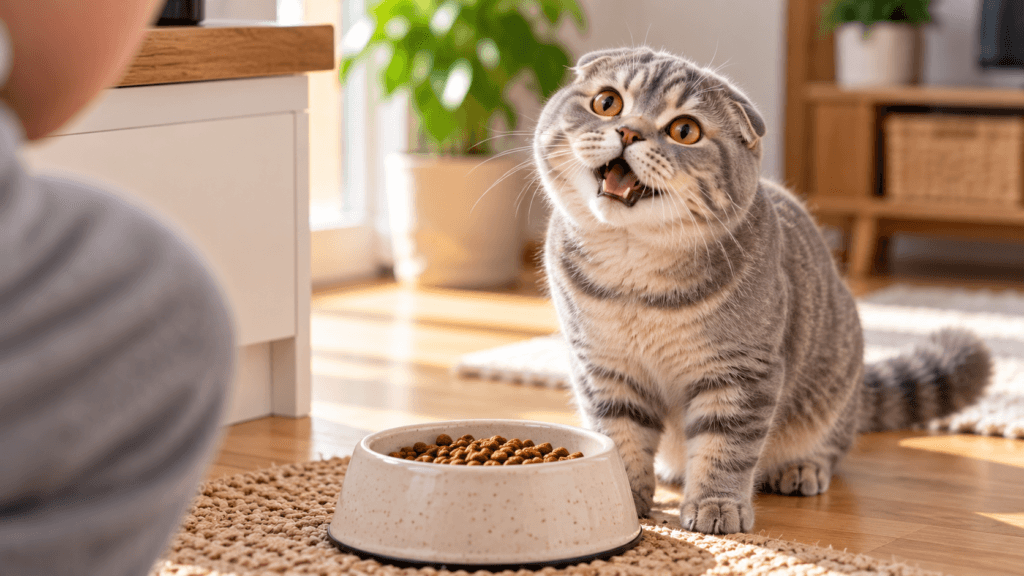
Some cats begin calling as soon as they hear the food cupboard open. Others meow when the bowl is empty or when a meal is later than expected. If Scottish Fold meowing happens mainly around feeding time, your cat may have learned that a short call gets a response. Offer suitable meals on a consistent schedule rather than treating every meow as proof of hunger.
Attention and Social Contact
Some Folds like to stay close to their people. They may meow when you come home, stop petting them, or close the door to a room they normally visit. A cat that calls and then settles comfortably beside you may simply have been asking for company. Notice what happens after the sound rather than assuming every call is a demand.
Play, Excitement, and Curiosity
Small chirps and trills can accompany a toy chase or an interesting view outside the window. They are not exclusive to Scottish Folds. If Scottish Fold meowing increases briefly during play while the cat remains relaxed and active, excitement may be the simplest explanation.
Changes in Routine
Visitors, a new pet, a move, or a changed work schedule can make a familiar home feel different. Some cats respond by hiding, while others vocalize more. Give your cat predictable food, play, and quiet resting times. If the changes persist or come with physical symptoms, do not assume stress is the only explanation.
Normal Scottish Fold Meowing vs Excessive Vocalization
A talkative cat is not automatically an unhealthy cat. It helps to separate a familiar pattern from a new one. Scottish Fold meowing that has stayed much the same for months may reflect personality or a learned routine; a sudden increase can signal that something has changed.
| What You Notice | What to Consider |
|---|---|
| Soft greetings every day | Familiar social behavior |
| Meowing before meals | Feeding routine or learned request |
| Chirping while playing | Interest or excitement |
| Suddenly louder or more frequent calls | Changes in health, stress, or environment |
| Meowing with appetite, litter box, or movement changes | Contact your veterinarian |
Do not count meows and compare them with an imaginary breed limit. Instead, ask whether your Fold’s frequency, volume, tone, or usual triggers have changed. That comparison is more useful than deciding that five meows are normal but ten are not.
Nighttime Scottish Fold Meowing
Nighttime Scottish Fold meowing may happen when a cat expects breakfast, has energy left after a quiet day, notices outdoor animals, or has learned that calling brings someone out of bed. Evening play, a consistent feeding routine, and a stimulating daytime environment can help when the reason is behavioral.
New nighttime calling needs a different approach, especially in an older cat. Aging cats can develop changes in sleep, hearing, vision, and orientation. Conditions such as pain or thyroid disease can also contribute to nighttime vocalization. The Cornell Feline Health Center’s guide to cognitive dysfunction discusses these changes and why they need proper veterinary assessment.
If your Fold has begun pacing and crying at night after previously sleeping quietly, record when it happens and check for other changes. Do not simply treat all nighttime meowing as an attention habit.
Meowing When Left Alone
Some Scottish Folds are sociable and enjoy being around their owners. A few calls when you leave or return home do not, by themselves, prove separation anxiety. The cat may be responding to a routine, hearing a door close, or hoping for attention.
Look for a wider pattern, including persistent distress, litter box changes, loss of appetite, or unusual behavior during your absence. Scottish Fold meowing at departure time is easier to interpret when you also know what the cat does after you leave. A calm departure routine and activities your cat enjoys can help, but ongoing distress deserves guidance from a veterinarian or qualified feline behavior professional.
For practical ways to plan time apart, read can Scottish Folds be left alone?.
When Changes in Scottish Fold Meowing Matter
Not all extra meowing is a health problem, but a persistent change should not be ignored. It matters more if the cat also drinks unusually often, loses weight, eats less, vomits, hides, moves differently, or struggles in the litter box. These signs give your veterinarian a clearer picture than the meowing alone.
For Scottish Folds, mobility deserves particular attention. Pain or stiffness may change a cat’s activity and sometimes its vocal behavior. Our article on why Scottish Folds sit like humans explains why a change in posture can matter when it comes with reduced movement. Scottish Fold meowing is not a reliable test for joint pain, so look for changes in jumping, walking, grooming, and comfort too.
A cat that cries while repeatedly straining to urinate or produces little to no urine needs urgent veterinary help. A possible urinary blockage is an emergency, not a behavior issue. Cornell explains the warning signs in its guide to feline lower urinary tract disease.
Reading Your Scottish Fold’s Normal Voice
The easiest way to understand Scottish Fold meowing is to notice its usual timing. Does your cat call before breakfast, greet you at the door, chirp during play, or meow at one particular cupboard? Those patterns often become familiar without any special training.
Also watch what happens immediately afterward. If the cat meows, you open a door, and the calling stops, you have learned something useful about the request. If the cat vocalizes repeatedly but cannot settle, the message may be less straightforward. Body language and changes in normal routine matter just as much as sound.
If Scottish Fold meowing suddenly becomes louder, more frequent, or different in tone, a short note or phone video can help your veterinarian understand what you are seeing at home. Never deliberately frighten a cat or withhold necessary care to test why it meows.

How to Respond to Frequent Meowing
Respond to the reason, not just the noise. If your Fold calls around meals, keep feeding times predictable. If it seems bored, offer play, puzzle feeders, scratching options, and safe places to watch the world. If it seeks company, make time for calm interaction without rewarding every demanding call immediately.
Punishment is not a useful fix for Scottish Fold meowing. Shouting may frighten the cat without addressing hunger, frustration, stress, or illness. For a new or unexplained vocal change, rule out health problems first. Behavior training is more appropriate once you know your cat is comfortable and medically well.
Scottish Fold Meowing Quick Guide
| When the Meowing Happens | Check First |
|---|---|
| Near meal times | Food routine and expectations |
| When you walk into the room | Greeting or attention |
| During play or at the window | Excitement or interesting activity |
| When you leave | Routine and social needs |
| At night | Activity, feeding pattern, or age-related changes |
| Suddenly with other symptoms | Possible illness, pain, or distress |
Use this chart as a starting point, not a diagnosis. The strongest clue is still whether your cat is behaving differently from its usual self.
Frequently Asked Questions
Do Scottish Fold cats meow a lot?
Most Scottish Folds are described as relatively quiet, although some individuals are more vocal. Scottish Fold meowing is often soft and linked to familiar routines. How much your own cat meows depends on personality, environment, and what it has learned.
Are Scottish Folds quiet cats?
Generally, yes. They are not normally known for constant loud calling, but being a quiet breed does not mean every cat is silent. Some Folds follow their owners and make small, conversational sounds throughout the day.
Are Scottish Folds talkative?
Some are. A naturally talkative Fold may meow at meals, greet you, or chirp during play. A cat that has always done this and otherwise behaves normally is different from one that becomes unusually vocal overnight.
Why does my Scottish Fold chirp?
Chirps and trills may happen during greetings, excitement, or bird watching. Look at the cat’s posture and surroundings to understand the context instead of assigning one fixed meaning to every chirp.
Why is my Scottish Fold meowing so much?
Frequent meowing can relate to food, attention, play, or routine. If Scottish Fold meowing has increased suddenly or appears with appetite, litter box, sleep, or movement changes, arrange a veterinary check rather than assuming it is a personality trait.
Why does my Scottish Fold meow at night?
Nighttime calling may come from feeding expectations, energy, attention, or outside activity. New nighttime vocalization, especially in an older cat, can also accompany health or age-related changes that deserve assessment.
Final Thoughts
Scottish Folds are usually considered quiet cats, but they still have plenty to say. The occasional meow before dinner, a chirp at the window, or a soft greeting may all be part of an ordinary day. Scottish Fold meowing becomes more useful to pay attention to when it changes in volume, frequency, timing, or tone.
You do not need to count every sound. Get familiar with your cat’s normal routines, watch for changes in eating, movement, sleep, and litter box habits, and seek veterinary advice when something no longer seems right. That approach is more helpful than trying to make a cat match an average breed description.
This guide provides general information and is not a substitute for individual veterinary advice.