

If you’re wondering about Scottish fold ears cleaning, start with a quick weekly check and clean only when you see a buildup of ordinary wax and the ear looks comfortable. The ears of a Scottish Fold can hide buildup and discomfort under the fold. Look first, clean only the visible outer flap when needed, and call a vet when the ear looks sore, smells bad, or has discharge.
Quick answer
Look at both ears once a week. If they look healthy and you see only a trace of wax, leave them alone. If wax builds up or the ear looks sore, contact your vet.
Why Do Scottish Fold Ears Need a Closer Look?
What Can Hide Under the Fold?
From the front, a Scottish Fold’s ears can look clean even when wax, debris, or moisture is tucked under the flap. Before deciding on Scottish fold ears cleaning, look from the side when your cat is settled and the light is good.
The folded shape comes from an inherited change in cartilage. The same change is linked to a bone and cartilage condition called osteochondrodysplasia, which can also affect the joints. You can read about when Scottish Fold kittens’ ears fold if you want more on how the shape develops.
What Does a Healthy Ear Look Like?
A healthy ear has a clean, pale flap. There will be no thick dark residue, scabs, redness, or discharge. A vet may also check for mites because dark, crumbly debris in a Scottish Fold ear can suggest ear mites.
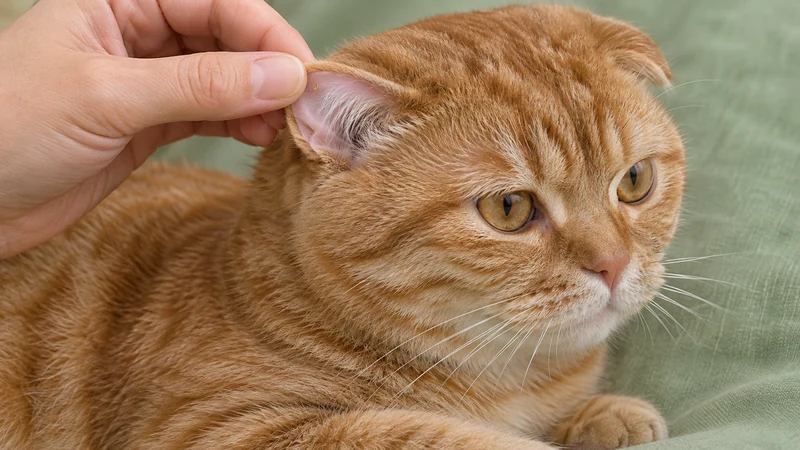
Gently lift the flap only as far as it moves easily, then stop and look inside with the tips of your fingers. The visible skin should look calm, with little or no wax and no unusual smell. Some cats have darker skin pigment, so pay attention to what looks normal for your own cat. If one ear looks different from the other or your cat flinches when you approach it, make a note and stop handling it if it seems sore.
How Often Should You Clean a Scottish Fold’s Ears?
What Should You Check Each Week?
When planning Scottish fold ears cleaning, set aside a moment once a week to look at both ears. Notice how much wax you see, whether the flap looks irritated, and whether your cat reacts differently on either side. You can do this while your cat sits next to you. A clear view of the flap is enough for a home check. There is no need to try to see deep into the ear.
When Is It Time to Clean?
Clean only when you see a buildup of ordinary wax in an otherwise comfortable ear. For some Scottish Folds, that may work out to roughly once or twice a month. Others may go much longer between cleanings. If there is only a small trace of wax, leave it alone and look again at the next weekly check.
Too much cleaning can strip away protective oils and irritate the ear. If wax keeps coming back soon after cleaning, ask your vet to check the cause before you increase the frequency.
What Does Brown or Black Gunk in a Cat’s Ear Mean?
When Can Dark Wax Be Normal?
A little brown gunk in cat ears can be ordinary wax. It may be brown or almost black, and it can collect dust and tiny bits of debris. A small amount in a comfortable ear that smells normal is usually less concerning than debris that keeps coming back or appears with a change in behavior.
Take note of how much you see and whether the texture has changed. A light smear on the flap and a thick pile of dry crumbs are different observations, even if they are the same color. Also watch what your cat does when you are nowhere near the ear. Repeated scratching or head shaking matters even if the flap looks fairly clean.
When Should You Leave the Ear Alone and Call the Vet?
If you’re looking up Scottish fold ears cleaning because buildup is heavy, returns quickly, or comes with discomfort, call your vet first. Until then, you can use a weekly look. This is the safest option when any of these warning signs are present.
| What you see | What else to check | What to do |
|---|---|---|
| A small trace of brown or very dark wax | No bad smell, redness, or repeated scratching | Leave a trace alone. Check again during your usual weekly look. |
| Dark, dry crumbs that resemble coffee grounds | Repeated scratching, head shaking, or scabs near the ear | Contact your vet before cleaning. Mites are one possible cause. |
| Red or swollen skin, a bad smell, or discharge | Pain when touched, rubbing the ear, or a change on one side | Leave the ear alone and call the vet. Infection or another ear problem is possible. |
Which Ear Cleaner and Supplies Are Safe for Cats?
How Should You Choose an Ear Cleaner?
For Scottish fold ears cleaning, use a vet-approved cat ear cleaner if your cat needs more than a surface wipe. Ask your vet to show you how to clean Scottish Fold ears with it so the cleaner does not go too far into the canal.
A cleaner loosens wax and debris. If the ear smells bad, has unusual discharge, or seems painful, arrange a vet check before putting anything into it. That gives your vet a chance to see what is there and advise you on the right care.
What Should You Keep Away From the Ear Canal?
Set out soft cotton balls or gauze before you begin. Keep everything within reach so you can let go of the flap as soon as your cat wants to move.
Avoid rubbing alcohol, hydrogen peroxide, vinegar, and human soap. These can irritate the ear. Keep cotton swabs out of the canal because they can push debris deeper or injure the ear.
How Do You Clean Scottish Fold Ears Safely at Home?
How Can You Keep Your Cat Comfortable?
If you’re working out how to clean cat ears at home, start at a quiet time when your cat is already resting. Use a stable surface or sit on the floor beside them. Support their body in a natural position. Lift the flap gently and let it keep its natural fold. If your cat turns away, take a break and try another time. If touch seems painful, stop and call your vet.
What Are the Steps With a Vet-Approved Cleaner?
Here’s how Scottish fold ears cleaning works when the ear looks comfortable, ordinary wax has built up, and your vet has advised that canal cleaning is suitable for your cat.
- Apply the cleaner. Lift the flap enough to see the opening. Hold the bottle tip outside the ear and use the amount your vet and the product direct. If directed to fill the canal, let the cleaner flow in without inserting the nozzle.
- Massage gently. Rub the base of the ear just below the opening. Stop if your cat reacts as if it hurts.
- Let your cat shake. Release the flap and give your cat room. The shake helps move loosened wax toward the opening.
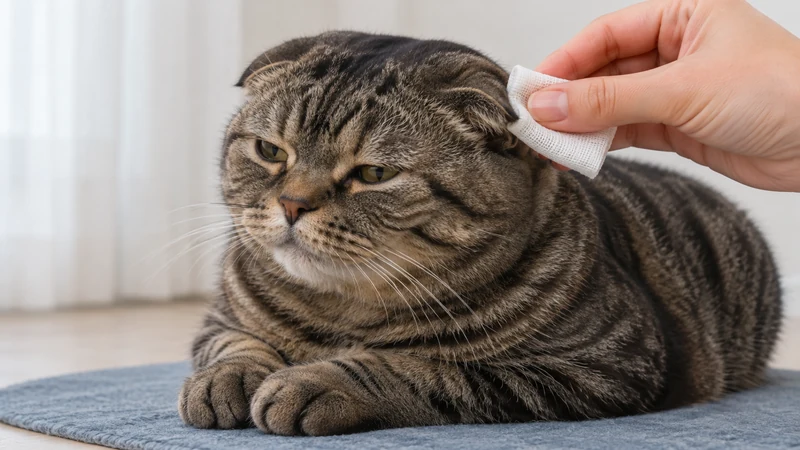
- Wipe outward. Use a soft cotton ball or gauze to wipe the loosened wax from the visible flap. Keep your fingers and the gauze outside the canal.
Three common mistakes
- Cleaning on a calendar schedule. Put the weekly check on the calendar and clean only when ordinary buildup is visible.
- Putting a swab in the canal. Use soft gauze or cotton on the visible flap where you can see exactly what you are wiping.
- Using a household liquid to dissolve wax. Ask your vet which feline cleaner is suitable when canal cleaning is needed.
Can You Clean a Cat’s Ears Without Solution?
When Can You Use a Damp Cloth?
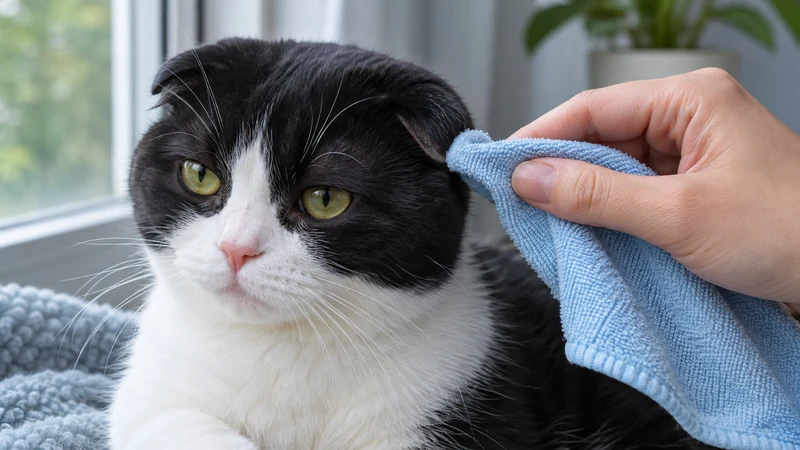
If you want to know how to clean cat ears without solution, think of it as wiping a small bit of surface dirt from the visible flap. Check in good light first. If the skin looks healthy, your cat is comfortable, and there is a little dirt you can easily reach, a lightly damp cloth can be enough. Leave a clean flap or a trace of ordinary wax alone.
Moisten a soft cloth, a piece of gauze, or a cotton ball with plain lukewarm water. Squeeze it out so it feels damp and does not drip. Gently wipe away from the opening, moving toward the outer edge. Pat the area dry with clean, soft gauze or cloth. Keep water out of the opening and keep the cloth, your fingers, and any swabs out of the canal.
Which Signs Mean You Should Stop Before Wiping?
Use a soft cloth or cotton ball to clean the visible outer flap. Leave the ear alone if you see redness, swelling, bleeding, or dark crumbs that look like coffee grounds. If you can only reach the buildup by pushing past the opening or pulling the flap farther than it moves easily, stop there and ask your vet about Scottish fold ears cleaning.
When the same patch of dirt or wax reappears soon after wiping, tell your vet how long it took to come back and whether you saw it in one ear or both.
When Should You Call a Vet About Your Cat’s Ears?
What Can Ear Mites Look Like?
Possible signs of ear mites in Scottish Fold cats include intense itching, frequent scratching, repeated shaking, swelling, and unusual discharge. Resting near food is still possible if the ear is sore, so keep an eye out for strange eating habits or a drop in appetite.
Mites spread easily between cats, so mention any other pets that are scratching. A vet needs to confirm the cause before treatment, because infections and other ear problems can look similar. Skip home mite remedies and call before cleaning or using drops.
What Should You Tell the Vet?
If you’re asking your vet about Scottish fold ears cleaning after a change, say when it began, which ear is affected, and how fast any buildup returned. Mention any scratching, head shaking, odor, discharge, or change in appetite.
For other routine care topics, see Scottish Fold health and care.
Random Facts
- Earwax catches dust and small bits of debris.
- A tiny trace of dark wax can be normal.
- A brief shake after using cleaner can bring loosened debris outward. Repeated shaking at other times is worth reporting.
- The common cat ear mite is called Otodectes cynotis.
How Much Does Cat Ear Cleaning Cost?
What Might Supplies Cost at Home?
For Scottish fold ears cleaning at home, a bottle of cleaner and a pack of cotton balls or gauze may cost about $15–$30 together. Check with your vet practice or their recommended retailers.
What Might a Vet or Groomer Charge?
A vet cleaning might run about $50–$200. An exam or medication can bring the total to around $300 in some cases, and the actual bill can vary. Ask the clinic whether the quote includes the exam and anything else your cat may need.
Grooming estimates range from $40–$90 for a standalone service or $35–$75 as part of a package, depending on the provider and what they include. Routine grooming is for ears that look comfortable. If the ear hurts, smells, or has unusual discharge, call the vet for an exam.
Frequently Asked Questions
Can I Clean My Cat’s Ears With Just Water?
If you’re wondering about Scottish fold ears cleaning with just water, use a soft cloth lightly dampened with plain lukewarm water to remove a little dirt from the visible outer flap. Do not put water deeper into the canal, and leave any visible redness, swelling, or discharge for the vet to check.
Is a Little Brown or Black Earwax Normal?
A small trace can be normal if the ear smells fine, looks comfortable, and your cat is acting as usual. If the wax looks unusual, smells bad, or keeps coming back, ask your vet.
Can I Tell Ear Mites From Wax at Home?
Color and texture can give you clues to share with your vet. Dry dark crumbs and frequent scratching can point to mites, so let your vet confirm it.
What If My Scottish Fold Will Not Let Me Touch Its Ears?
If you’re unsure about Scottish fold ears cleaning when your cat pulls away, let them move away and try a brief look later, when they are relaxed. Do not hold them down or force the ear, as it could lead to a painful experience you want to avoid.
Are Scottish Folds Prone to Ear Infections?
The fold can make wax, debris, or moisture harder to see, but ear shape alone cannot tell you whether an infection is present. Ask your vet if you notice discharge, odor, pain, or repeated scratching.
When deciding on Scottish fold ears cleaning, start with a quick weekly look to see what is normal for your cat. Keep notes and contact your vet if things change. Looking at both ears regularly helps you spot changes in wax or skin early, and check in with your vet if the buildup is unusual or ongoing.
Sources
- Cats Protection ear-mite guidance = https://www.cats.org.uk/media/mu1lt5da/fleas-2025.pdf (open in a new tab)
- VCA Animal Hospitals ear-cleaning guide = https://vcahospitals.com/know-your-pet/instructions-for-ear-cleaning-in-cats (open in a new tab)