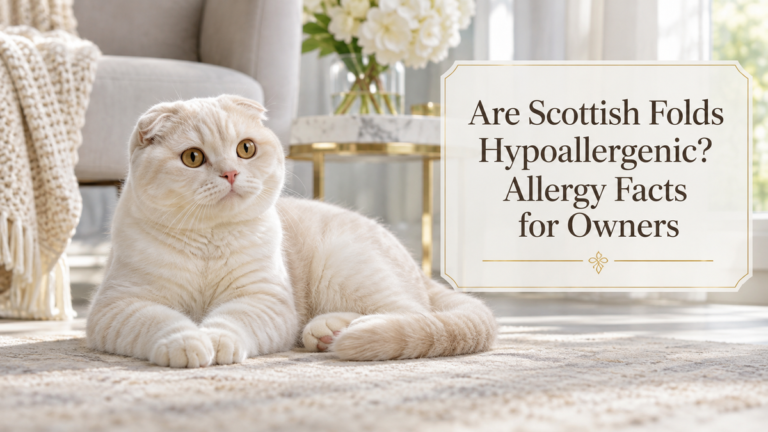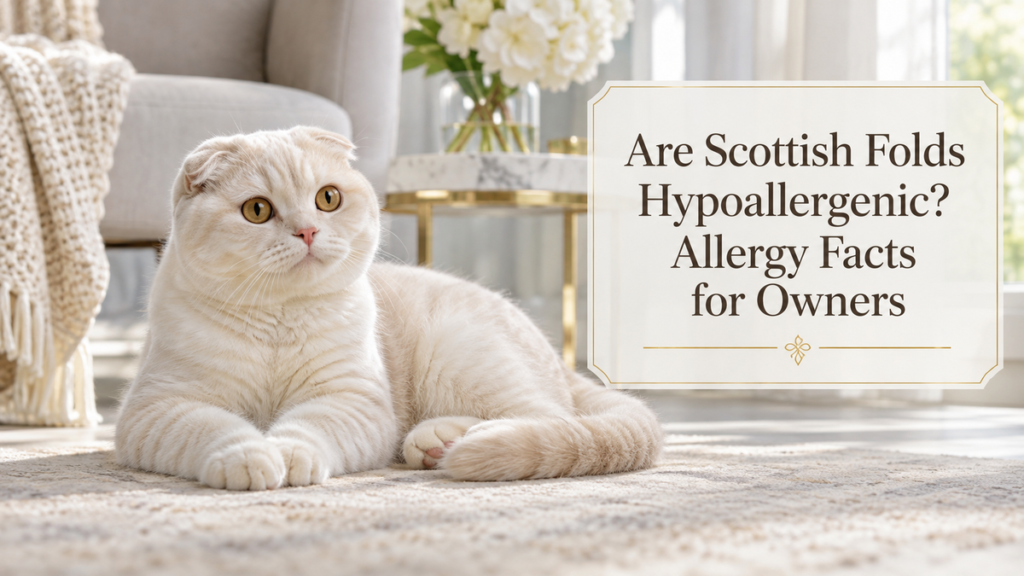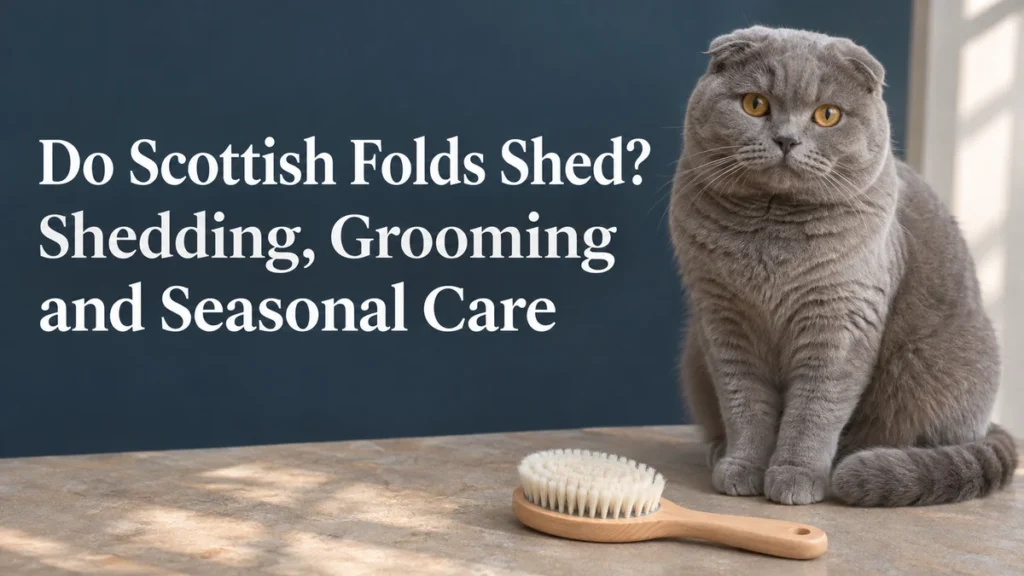


Are Scottish Folds hypoallergenic? No. Scottish Fold cats produce the same main cat allergen, Fel d 1, as other cats, so their folded ears do not make them a safer choice for people with cat allergies, although their coat and grooming habits can affect how allergens move around a home. Some people with mild allergies may manage life with a Fold by following a careful home routine, while people with asthma or stronger reactions should speak with an allergist before bringing one home.
Scottish Folds are not hypoallergenic. They produce Fel d 1, a cat protein that can trigger allergic reactions. Short hair may be easier to manage than a long coat, but coat length does not change how much allergen a cat produces. No breed is completely allergen-free. If you have asthma or moderate to severe allergies, get medical advice before adopting a cat.
The Short Answer is Scottish Folds Are Not Hypoallergenic

If you are asking, are scottish folds hypoallergenic, the honest answer is no. People also ask, do Scottish Folds cause allergies? Yes, they can, because they produce the same Fel d 1 protein as other cats. Scottish Fold cats produce normal levels of Fel d 1, the main protein linked with cat allergies. Their folded ears, round face, and plush coat may make them look different from other breeds, but those features do not make them allergy-safe.
People can react differently to individual cats, but this does not make the breed hypoallergenic. The word hypoallergenic may mean lower allergen output, not zero allergens. No breed can be promised as completely allergen-free.
What Fel d 1 Is and Where It Comes From

Fel d 1 is a protein made by cats, and Scottish Fold Fel d 1 levels are normal, like other breeds. It is the main cat allergen for many people who react to cats. It is produced mainly in the salivary and sebaceous glands, and it is also found in lacrimal and anal glands. It is not made by the hair itself, and it does not come from a cat’s ears.
Fel d 1 is responsible for most cat-allergy reactions, although estimates vary. These figures cannot predict how one person will react. Read the Wikipedia page on Fel d 1 for background; it is not medical advice.
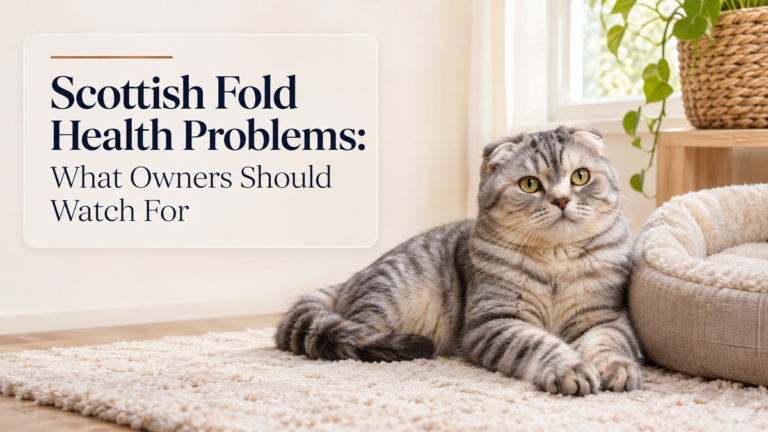
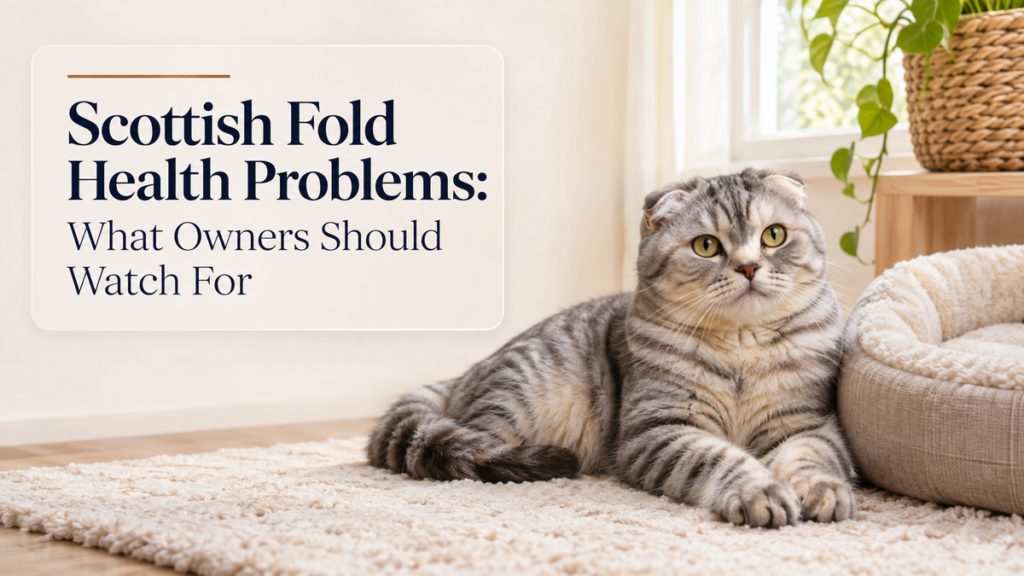
People sometimes ask whether a Scottish Fold’s health traits change its allergen output. There is no evidence for that idea. Fel d 1 is produced by glands, while the breed’s folded-ear trait relates to cartilage and bone. These are different body systems. For more on the breed’s health considerations, read Scottish Fold health problems.
Why Folded Ears Do Not Change Allergy Levels
Scottish Folds are known for their forward-folding ears. The folded shape comes from a cartilage-related trait. It affects the structure of the ears and is not connected to the glands that produce Fel d 1.
That distinction answers an important part of the question, are scottish folds hypoallergenic. Their ears do not lower the amount of allergen their bodies make. A folded ear is not an allergen filter, and it does not stop the cat from spreading saliva proteins onto its coat during grooming.
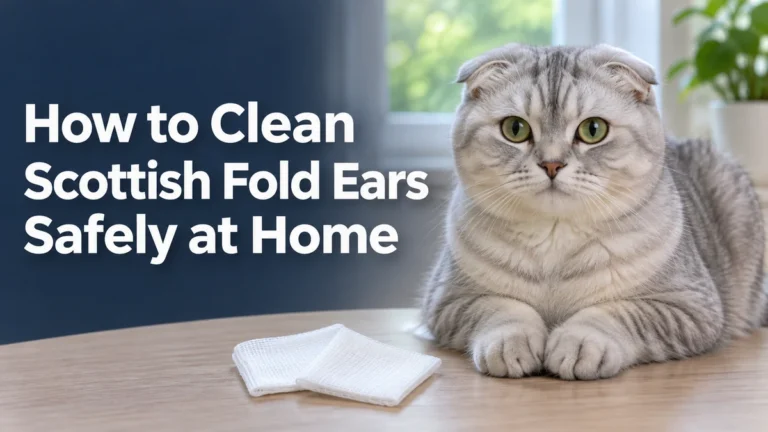
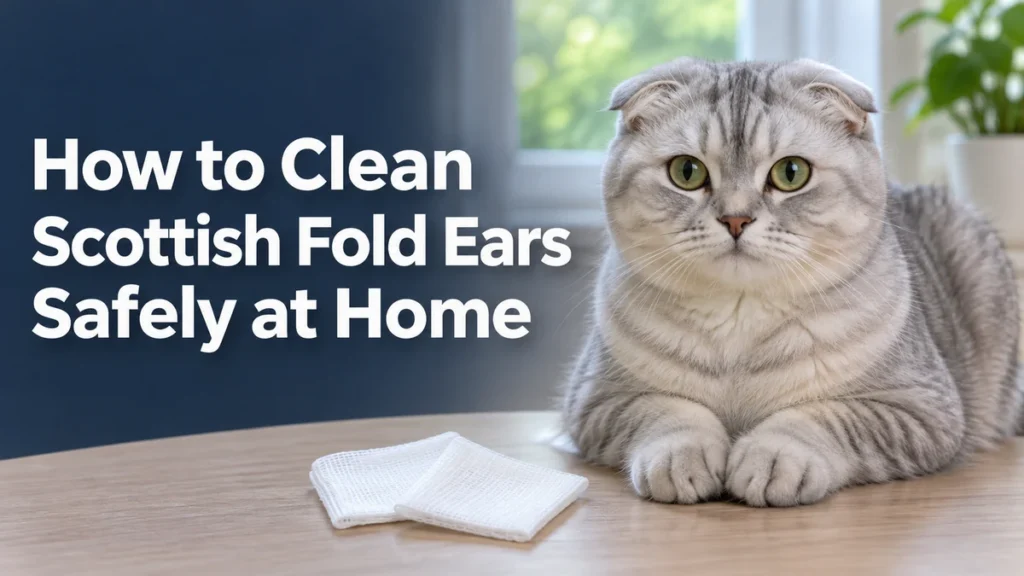
Folded ears may also trap debris and moisture, so careful ear checks matter for the cat’s comfort. However, ear cleaning does not lower Fel d 1 output or prevent human allergies. Ear care and allergy control are separate tasks.
Shedding, Coat Length and How Allergens Spread

Scottish Fold shedding is moderate, and both shorthaired and longhaired Scottish Folds can spread allergens through grooming and normal movement around the home. Loose hair can carry dried saliva and skin particles, but the hair is not the source of Fel d 1.
Coat length changes how allergens may be spread, not how much Fel d 1 the cat produces. A long coat can hold more loose material and may release it during brushing. A short coat may be easier to groom and clean around, but it does not make a Fold hypoallergenic. ACAAI reports no association between hair length and allergen levels.
When comparing coat types, think about cleaning rather than expecting one to be allergy-free. Grooming can remove loose hair, and should ideally happen outdoors or be done by someone without cat allergies.
For more detail about the breed’s coat and normal shedding, use the article below.
Who Can Live With a Scottish Fold Despite Allergies
So are Scottish Folds good for people with allergies? Some people with mild, predictable cat allergies may be able to live with a Scottish Fold if they understand the risk and follow a strict routine. That is not a guarantee. A person who has only mild symptoms around one cat may react differently after living with that cat every day. So, are scottish folds hypoallergenic for someone with mild allergies? No; careful management may help some people cope, but it cannot change the breed’s allergen status.
Before making a decision, spend time with the specific Scottish Fold you are thinking of adopting. A short visit cannot guarantee that daily life will be symptom-free. Discuss the plan with an allergist before making a commitment.
Vets advise against bringing a Scottish Fold home when a person has moderate to severe allergies or asthma. In those cases, the possible health impact is more important than the appeal of a particular breed. Speak with a doctor or allergist about your own symptoms and risk. Do not rely on an online breed guide to decide whether living with a cat is safe.
One cat may create a lower allergen load than several cats, but this is not a guarantee. Your sensitivity, the individual cat, and the home environment all matter.
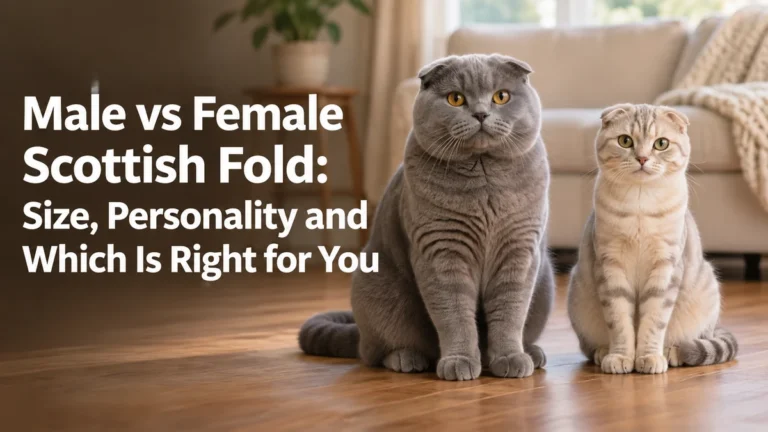
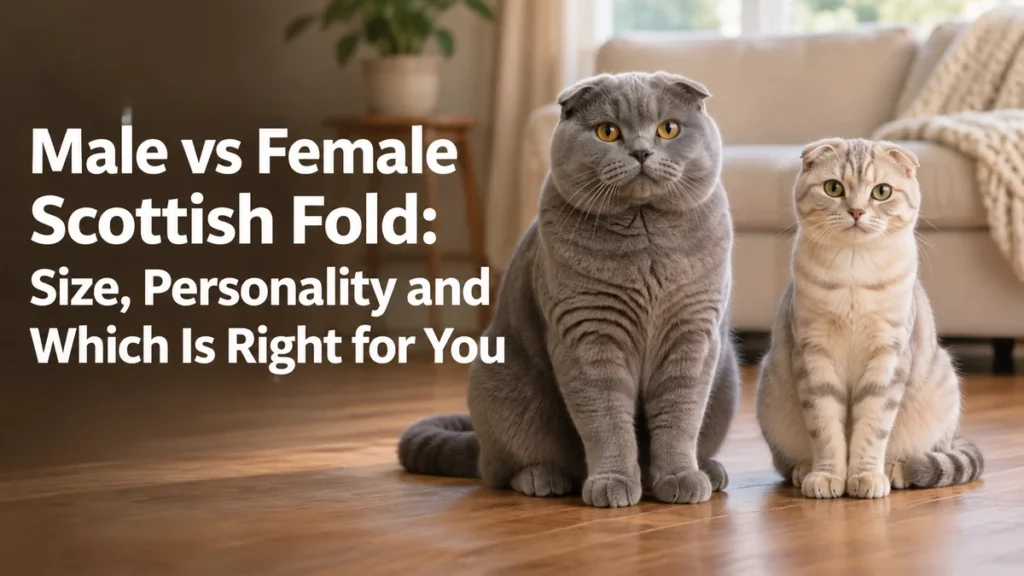
There are different claims about sex and Fel d 1. Some secondary sources report that intact males produce more, and that females or neutered males may produce less. However, ACAAI says sex is not associated with allergen levels. The evidence is not settled enough to use sex as a reliable way to choose an allergy-safe cat.
If you are still wondering, are scottish folds hypoallergenic for people with mild symptoms, the answer remains no. Some individuals may cope with careful planning, but the breed is not a safe choice by default. Make the decision with medical guidance, not a promise from a breeder or seller.
Daily Habits That Lower Allergens at Home

If an allergist agrees that living with a cat may be reasonable, the question of how to reduce cat allergens at home comes down to a daily routine. The aim is to reduce the amount of allergen that collects in the places where you sleep, sit, and spend time. These habits do not make Scottish Folds hypoallergenic, but they may lower exposure. No single cleaning step can remove all Fel d 1, so consistency matters.
Keep the bedroom cat-free, close the door, and do not let the cat onto the bed or bedroom furniture. This creates one space with lower exposure.
Wash bedding regularly. Vets recommend washing bedding at 60°C or higher where the fabric care label allows it. Use a HEPA-filter vacuum and consider a HEPA air purifier. One study found airborne allergen levels fell from 36.3 to 4.7 ng/m³ after filtration. That result belongs to the study conditions and should not be treated as a guaranteed result in every home.
Hard floors are easier to clean than carpets. Reduce rugs, heavy curtains, and other soft furnishings where possible. Wipe surfaces with a damp cloth to avoid stirring particles into the air.
Brush your Scottish Fold weekly, preferably outdoors or with help from a person who does not have allergies. Grooming can remove loose hair before it spreads, but brushing may also release particles into the air. The person with allergies should avoid doing the brushing if it triggers symptoms.
Bathing is sometimes discussed as an allergy-control method. Frequent washing can temporarily reduce airborne allergen, but the effect is limited and repeated bathing may not be practical for many cats and owners. Do not turn bathing into a stressful routine without considering the cat’s comfort. Damp pet wipes are another option, but they should not be presented as a way to make a cat allergen-free.
Remember that Fel d 1 can remain in a home for months after a cat leaves. A one-time deep clean may not be enough. Keep up the routine and judge changes over time rather than expecting an immediate result.
Allergy Tests, Treatment and When to See a Doctor
If you suspect a cat allergy, speak with a healthcare professional rather than trying to diagnose yourself. An allergist can review your allergy symptoms and discuss testing. Vets use skin-prick testing and an IgE blood test to assess allergy.
A skin-prick test is a common reference test, with results often available within 15 to 20 minutes. An IgE blood test can also help assess whether your immune system reacts to a specific allergen. Your clinician can explain which test is suitable and what the result means for your situation.
Treatment depends on the person. Options to discuss with a healthcare professional include antihistamines such as cetirizine and loratadine, nasal corticosteroids such as fluticasone, and allergen immunotherapy. Do not start or change medicine based on this article.
If you have asthma, chest tightness, or a history of strong reactions, speak with a doctor before bringing a Scottish Fold home. Breathing difficulty, chest tightness, or swelling of the face or throat can be signs of a serious reaction and need urgent medical attention. Do not wait to see whether cleaning or moving the cat solves a severe reaction.
This article is general information, not medical advice. It cannot tell you whether a Scottish Fold is safe for you personally. If you are unsure, get professional advice before adopting.
Lower-Allergen Breeds to Consider Instead
If you love cats but are concerned about allergies and are looking for the best cat breeds for allergies, you may want to research breeds that are reported to produce lower levels of Fel d 1 or may be easier for some people to live with. Breeds often discussed in this context include Siberian, Balinese, Russian Blue, Bengal, Devon Rex, Cornish Rex, Sphynx, Oriental Shorthair, and Javanese.
Among hypoallergenic cat breeds, some Siberian lines are reported to produce lower Fel d 1, but this does not apply to every Siberian or guarantee that an allergic person can live with one. Breed labels cannot guarantee an individual cat’s allergen output.
Spend time with the individual cat before adopting, but remember that a short visit cannot predict daily exposure. Speak with an allergist, especially if symptoms are moderate to severe or you have asthma.
A direct Scottish Fold vs Siberian comparison comes down to this: the Fold produces normal Fel d 1 levels, while many Siberian lines are reported to produce less, but neither breed is guaranteed safe for an allergic person.
So, are scottish folds hypoallergenic compared with these breeds? No. Some other breeds are reported to have lower allergen output, but there is no guaranteed hypoallergenic cat. A careful decision should be based on your health, the individual animal, and realistic expectations.
For more cat health and care information, visit the Folded Paws Health & Care category.
FAQs
Can you be allergic to Scottish Folds?
Yes. Scottish Fold allergies happen because the breed produces Fel d 1, the main cat allergen for many people. Their folded ears do not prevent them from producing or spreading it. This is why are scottish folds hypoallergenic has a clear no answer. A person’s reaction can vary, so spend time with the specific cat and speak with an allergist before adopting. Are scottish folds hypoallergenic for every owner? No individual cat can be promised safe for every allergic person.
Do shorthaired Folds cause fewer allergies?
A short coat may be easier to groom and clean around, but it does not mean the cat produces less Fel d 1. Hair length is not associated with allergen levels. Coat length can affect how loose hair and particles spread, not whether the cat is hypoallergenic.
How can I reduce allergens at home?
Keep the bedroom cat-free, wash bedding regularly, use a HEPA-filter vacuum and air purifier, reduce carpets and soft furnishings, and arrange regular grooming away from the allergic person. These steps can lower exposure, but they cannot remove every allergen.
Is there a truly hypoallergenic cat breed?
No breed can be promised to produce zero allergens. Some breeds are reported to produce lower levels of Fel d 1, but individual cats vary. The question are scottish folds hypoallergenic still has the same answer: no. Meet the specific cat before adopting and discuss your allergy risk with an allergist.
Should I get a Fold if I have asthma?
Do not make that decision based on breed claims or an online article. People with asthma or moderate to severe allergies should not bring a Fold home without medical guidance. Speak with your doctor or allergist first.
Random Facts About Scottish Folds and Cat Allergens
- Fel d 1 is a protein, not a type of cat hair. Fur can carry it around the home, but it is produced by glands.
- The folded-ear trait is linked with cartilage and bone, not the glands that produce Fel d 1.
- Fel d 1 can remain in a home for months after a cat has left.
- Purina’s own LiveClear research reported about 47% less active Fel d 1 in saliva after three weeks. This is a company-reported result, not a guarantee for every cat.
Mistakes to Avoid
- Assuming short hair means no allergy risk. Coat length can affect how allergens spread, but it does not make a Scottish Fold hypoallergenic.
- Trusting a breed label as a safety promise. No breed is guaranteed to be allergen-free, and individual cats vary.
- Adopting before checking your health risk. If you have asthma or stronger allergies, speak with an allergist before bringing a cat home.