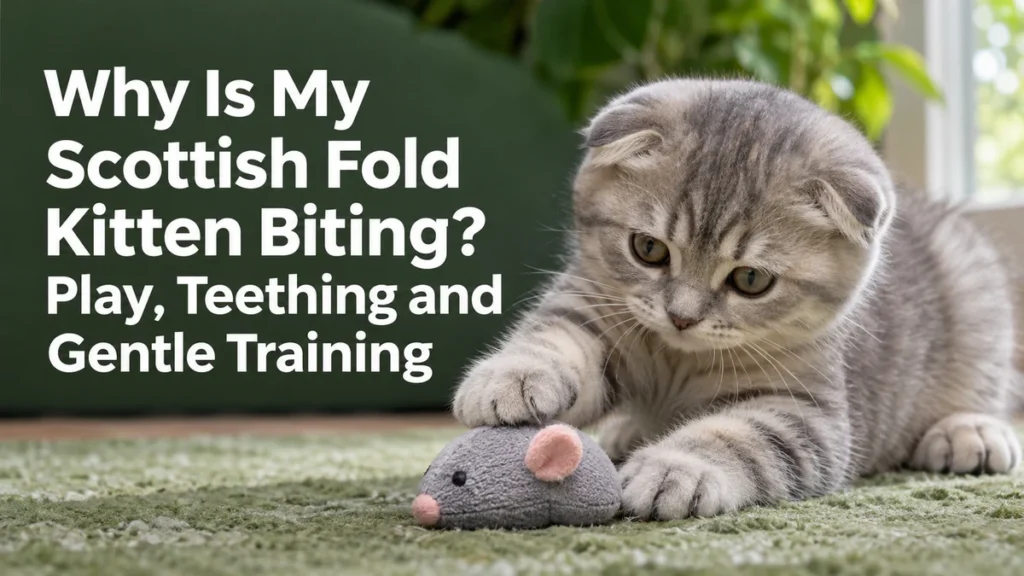


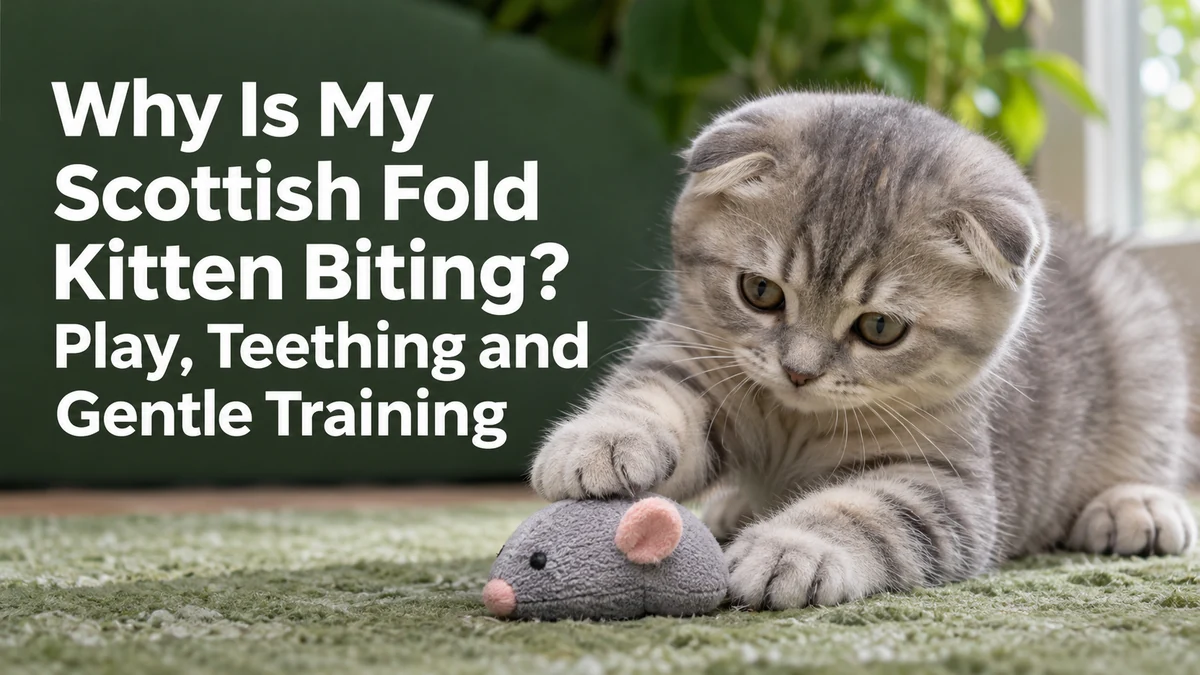
Scottish Fold kitten biting is often linked to play, teething, too much petting, or discomfort, and the situation just before the bite can help you decide what to do next. Keep your hands and feet still, end rough contact calmly, and offer a suitable toy after your kitten settles, while making sure everyone at home follows the same gentle play rules. If biting begins suddenly, happens when you touch one area, or comes with less movement, poor appetite, or reduced play, contact your vet rather than assuming it is normal teething.
To manage Scottish Fold kitten biting, watch the trigger first: moving feet suggest play, extra chewing may fit teething, and bites during handling need a closer look at comfort. Stop play involving skin, give space, and reward gentle toy play. New sensitivity to touch or signs of illness need veterinary advice.
Why Is My Scottish Fold Kitten Biting My Hands and Feet?
A foot passing a doorway can look like something worth chasing. Fingers moving under a blanket can do the same. Kittens practice hunting through stalking, chasing, grabbing, and biting, even when their food arrives in a bowl.
Is your Scottish Fold kitten biting hands whenever someone reaches for a toy? Think about earlier games. If fingers have been used for wrestling, your kitten has had practice treating skin as a play target. Changing that pattern takes clear, consistent responses.
An ankle ambush after a quiet afternoon may also mean your kitten wants an active game. Notice when it happens and offer suitable play before that familiar moment.
However, context matters. A kitten chasing socks and a kitten biting when lifted may need different responses. Neither example tells you everything about the kitten’s health or feelings. Watch what happened immediately before contact, rather than deciding that every bite means aggression.
How Can I Tell Play Biting, Teething and Touch Discomfort Apart?
With Scottish Fold kitten biting, the useful question is what surrounds the behavior. Bite strength alone cannot reliably separate play from fear or pain, and more than one cause may be involved.
| Possible pattern | What you might notice | A sensible next step |
|---|---|---|
| Play or hunting | Following moving feet, hiding before a pounce, grabbing during games | End play involving skin and provide an appropriate toy game. |
| Teething-related chewing | Chewing objects more during the tooth-change period | Offer suitable soft toys and watch eating comfort. |
| Overstimulation or fear | Biting after petting, restraint, a loud noise, or attempts to move away | Stop contact and provide space. |
| Possible pain or touch discomfort | A new response to touching one area or lifting, sometimes with other changes | Avoid testing the area and arrange veterinary advice. |
What Does Play Biting Usually Look Like?
The kitten may track a moving object, crouch, then pounce. That sequence suggests a play context, but it does not rule out discomfort or other factors.
Could Teething Be Increasing the Chewing?
Chewing may increase as teeth change. Look at age, toy chewing, and eating together. Dropping food or struggling to eat deserves veterinary advice rather than a simple teething label.
Has Petting Become Too Much?
A kitten may enjoy brief strokes but want contact to stop soon afterward. Turning toward your hand, going tense, or pulling away can be early clues. Fear can also cause biting when escape feels difficult.
Could Touch Be Uncomfortable?
Notice whether the response is new or linked to one location. Keep a short record: what happened, where you touched, and whether movement or appetite changed. Never repeat a painful-looking interaction just to confirm the pattern. These observations help a vet; they do not establish a diagnosis.
What Should I Do the Moment My Kitten Bites?
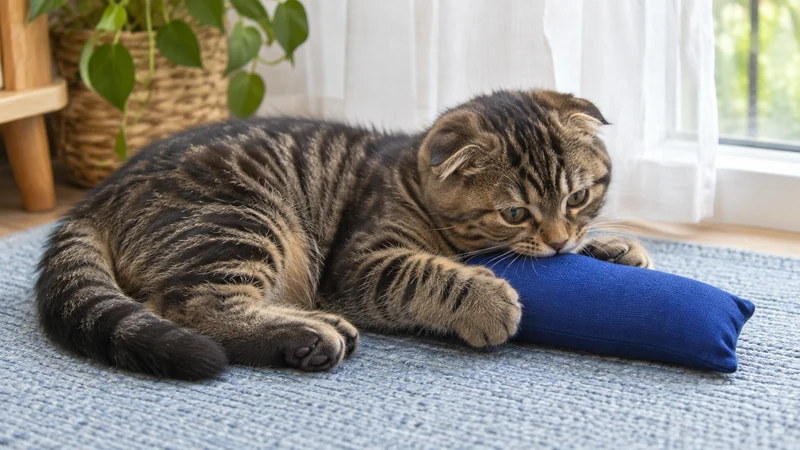
Stop moving the targeted hand or foot. Quick pulling and wiggling can keep a chase game going. Stay calm and let your kitten disengage; do not grab their mouth or hold them down.
End rough contact and give both of you space. Once your kitten is calm, offer a separate toy game away from your body. If fear or touch discomfort seems involved, simply stop handling and allow retreat. A toy is not a reason to continue unwanted contact.
Avoid shouting, hitting, scruffing, or spraying water. These responses can increase fear and make your approach harder to predict.
If teeth break your skin, wash the wound with soap and water and seek prompt medical advice, especially for a hand bite. Deep wounds or bleeding that will not stop need urgent care. Human wound care and your kitten’s behavior assessment are separate needs.
When Scottish Fold kitten biting starts, stay still and calm, and give your kitten space to settle.
How Can I Stop Scottish Fold Kitten Biting Gently?
If you are wondering how to stop Scottish Fold kitten biting, start with a rule everyone can follow: hands and feet never become toys. Plan play before predictable ambushes, rather than relying only on reacting afterward.
How Can I Redirect Biting Toward a Toy?
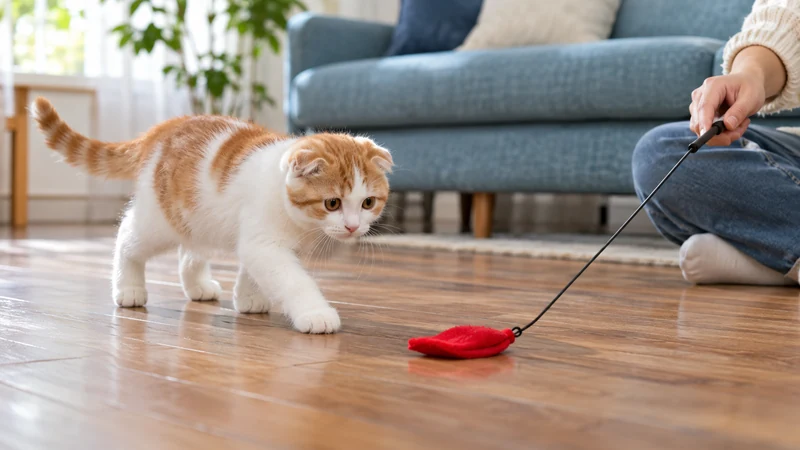
Move a wand toy along the floor away from your fingers. Let your kitten follow, pause, and catch it. A suitable soft kicker toy can provide something to grip without using your arm.
Reward appropriate toy play with quiet praise or a small suitable treat. Do this while your kitten is playing appropriately, rather than making a bite the signal for a food reward. Put string toys away after supervised use.
Keep a suitable toy near places where ambushes happen so you can plan ahead. Start games while your kitten is still calm. If ankle attacks happen as you walk to the kitchen each evening, arrange play before that walk instead of waiting to be bitten.
Which Toys Allow Comfortable Play?
Choose intact, suitably sized soft fabric toys or flexible kitten chew toys. Check labels and inspect seams, stuffing, and loose parts. Remove anything that splits or sheds pieces.
Avoid very hard wood, rigid plastic, hard nylon, loose thread, elastic bands, and small objects that could be swallowed. Keep electrical cables inaccessible. Do not offer human teething products or medicines.
How Often Should We Play, and for How Long?
Try two to four planned play opportunities around your kitten’s active periods. Morning wand play, a brief midday game, and evening play can form a simple routine, with an optional extra session.
An interested, comfortable kitten may enjoy a burst of about 10-15 minutes with pauses. One-to-two-minute games are also fine. Stop when your kitten walks away, tires, becomes tense, or seems uncomfortable. Keep play at floor level when that is easier; there is no need to force jumps.
How Long Should I Keep the Routine Going?
Keep these rules through kittenhood and adulthood. Review triggers and progress over days and weeks, without expecting a fixed cure date. Maintain a calm kitten care routine across play, handling, and other daily tasks.
A simple record can note the time, activity, and how quickly your kitten settles. Look for fewer bites to hands and feet and easier pauses, rather than expecting no mistakes overnight. If the same plan is not helping, discuss the pattern with your vet instead of making play rougher.
When planning care around leaving a Scottish Fold kitten alone, arrange suitable supervision and safe activities. Do not leave wand strings available while nobody is watching. Seek help sooner if behavior worsens or discomfort appears.
How Can I Handle My Scottish Fold Kitten Comfortably?
Understanding Scottish Fold kitten biting in these moments helps you stop before the bite, because the warning signs usually appear first.
What Warning Signs Mean I Should Stop Touching?
Watch for a head turning toward your hand, sudden stillness, a tense body, tail flicks, withdrawal, growling, or hissing. Stop before a bite if you see these changes. Read the whole situation instead of relying on one posture.
Offer a brief stroke, pause, and let your kitten choose whether to stay. Sitting close to you does not always mean they want more petting.
Which Areas Need Extra Care During Petting?
Be gentle around the ears, tail, back, and joints. Do not bend or press folded ears, pull a tail, test its flexibility, or move joints to check whether they hurt. Avoid repeated strokes over an area your kitten guards.
Sensitivity there does not automatically mean a cartilage disorder. Fear, skin irritation, infection, and other sources of discomfort may also affect touch tolerance. A vet can assess possible causes.
How Can I Pick Up My Kitten Without Forcing Contact?
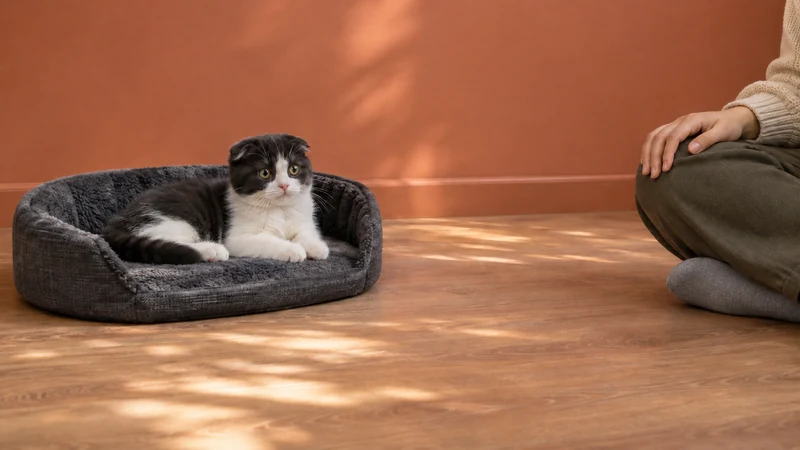
If your kitten accepts lifting, support the chest and hindquarters, keeping the body close to yours. Lower them gently when they want down. Never leave the back legs dangling or force a cuddle. Handling practice may last only seconds; it should not become a timed exercise in endurance.
What Should I Know About the Scottish Fold Breed?
Four breed-related points help keep Scottish Fold kitten biting in perspective:
- Kittens still need outlets for normal play and chewing. The breed name does not explain an individual bite.
- The genetic trait associated with Scottish Folds affects cartilage and bone. Discomfort can make touch or movement harder to tolerate.
- The age and course of joint-related changes vary. Compare your kitten with their usual behavior rather than another cat online.
- Reduced movement should not automatically be read as a calm personality. Comfortable rest and avoiding activity because it hurts can look similar at first.
There is no reliable evidence presented here that these kittens bite more than other breeds. Breed awareness should help you notice comfort needs without turning ordinary kitten behavior into a medical conclusion.
When Do Scottish Fold Kittens Stop Biting?
There is no proven age when Scottish Fold kitten biting must stop. Teeth follow a broad development pattern, while play habits, handling preferences, and health follow their own course.
What Changes From Baby Teeth to Adult Teeth?
If you searched “Scottish Fold kitten teething biting,” check the timing before assuming sore gums explain everything. These are approximate kitten stages, not a special dental timetable for this breed.
| Approximate age | Dental or behavior context | What it means for biting |
|---|---|---|
| Birth to two weeks | Teeth have usually not emerged. | This is early development, not a training deadline. |
| Two to six weeks | Baby teeth begin appearing. | Chewing can accompany eruption; human skin is not a suitable outlet. |
| Six weeks to three months | Baby teeth are generally present and play habits develop. | Biting does not prove constant gum pain. |
| Around three to six months | Adult teeth start replacing baby teeth, beginning around three months. | Extra chewing can occur, alongside ordinary play. |
| Around six to seven months | The adult set is generally present, normally 30 teeth. | Tooth eruption ending does not guarantee hand biting ends. |
| Seven to twelve months | Chewing and established play habits may continue. | Keep gentle play rules; do not assume teething lasts all year. |
| After one year | Baby-tooth replacement no longer explains ongoing biting. | Review habits, handling, and possible health concerns. |
Why Can Biting Continue After Teething Ends?
The same hand games can remain appealing after adult teeth arrive. Keep providing suitable outlets and consistent responses. Do not wait for a birthday if biting is painful, escalating, or linked to touch.
Three small facts help explain the picture: kittens normally have 26 baby teeth; shed teeth may be swallowed, so you might never find them; and play with littermates helps kittens develop control over bite pressure. None provides a guaranteed date for gentle behavior.
Which Mistakes Can Make Kitten Biting Worse?
- Using fingers for wrestling, then changing the rules. Give everyone the same toy-only approach, including visitors who think a tiny nip is harmless.
- Punishing or forcing contact. Shouting, spraying, or holding a struggling kitten can increase fear. End the interaction calmly and change what happens before the next bite.
- Calling every bite teething or stubbornness. A new response during lifting, reduced play, or trouble eating needs attention. Record the change instead of testing the sore-looking area again.
Clear rules work best when they respect both your safety and your kitten’s ability to move away.
When Should I Call a Vet About My Kitten’s Biting?
Contact your vet when Scottish Fold kitten biting changes suddenly or comes with other signs that something may be wrong. Useful reasons to arrange advice include:
- New or escalating biting, particularly outside a familiar play context.
- A repeated response to touching one area or being lifted.
- Stiffness, reduced activity, less play, or changes in your Scottish Fold’s jumping.
- Reduced appetite, trouble eating, repeated food dropping, marked drooling, or obvious mouth discomfort.
- Persistent unexplained biting or mouth discomfort beyond the usual tooth-change period.
Signs of injury, clear pain, difficulty moving normally, or a visibly unwell kitten need prompt veterinary advice. You do not need to wait until one year or finish several weeks of training first.
For an otherwise well cat with an ongoing behavior concern, your vet can discuss an assessment and whether qualified behavior support would help. Take a brief history of triggers and changes. A safely recorded video of normal movement can be useful, but never provoke a bite to film it. The aim is to understand what has changed and choose suitable support.
What Else Do Owners Ask About Kitten Biting?
Is It Normal for a Scottish Fold Kitten to Bite?
Some mouthing and play biting occur during kitten development. That does not mean every bite should be ignored. Redirect play toward toys, and seek advice for painful, escalating, sudden, or touch-linked changes.
Do Scottish Fold Kittens Like Being Held?
Some accept brief supported cuddles; others prefer sitting beside you. Watch your kitten’s response instead of expecting a breed-wide preference. Put them down gently when they withdraw, tense, or struggle, and avoid forcing longer contact.
Why Does My Scottish Fold Kitten Bite Me, Then Lick Me?
The sequence alone does not establish one meaning. It can happen around changing play or contact levels. Notice what came before the bite and stop unwanted interaction rather than assuming licking proves the bite was affectionate.
Can a Quiet Scottish Fold Kitten Still Be Uncomfortable?
Yes. Quiet behavior does not rule out discomfort. Changes in walking, appetite, grooming, play, or responses to touch may be more useful clues. Discuss new changes with your vet instead of relying on how vocal your kitten is.
What If My Scottish Fold Still Bites After One Year?
Do not assume baby-tooth teething is continuing. Review play habits, triggers, and handling, and discuss persistent or concerning biting with your vet. Qualified behavior guidance may help once possible medical causes have been considered.
Responding to Scottish Fold kitten biting starts with watching, pausing, and offering better choices. Keep hands out of games, respect your kitten’s limits, and notice changes in comfort. A steady routine gives you both space to build trust, while timely veterinary advice helps when the pattern suggests more than play.
Sources
- Cats Protection: Bringing a New Kitten Home
- UC Davis Veterinary Genetics Laboratory: Scottish Fold