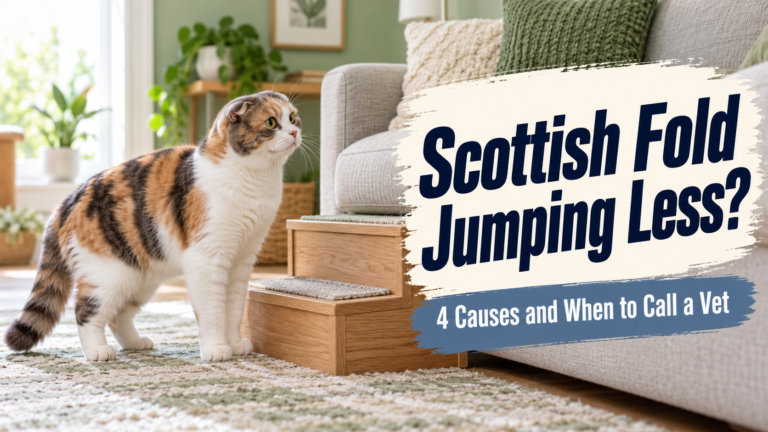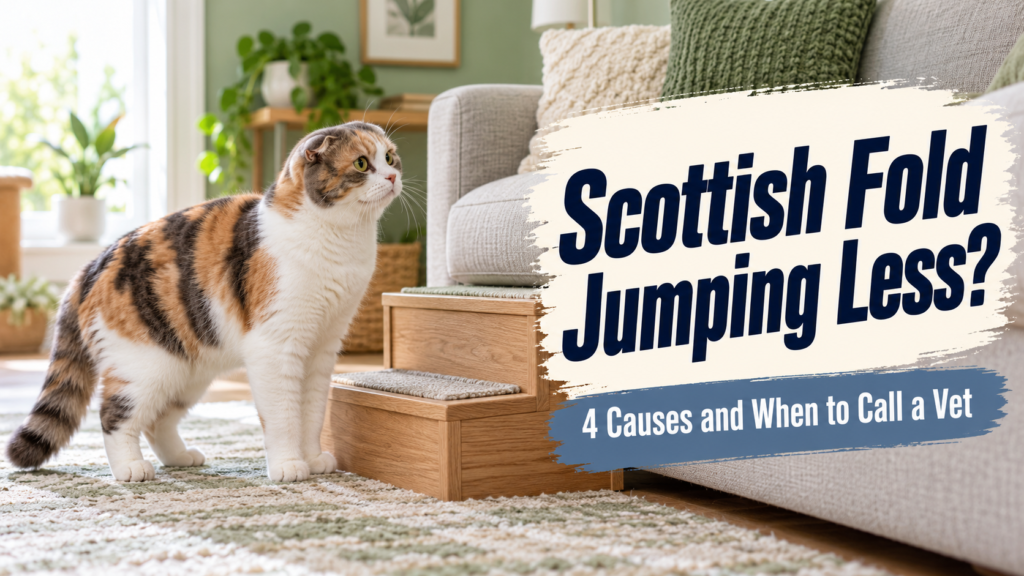


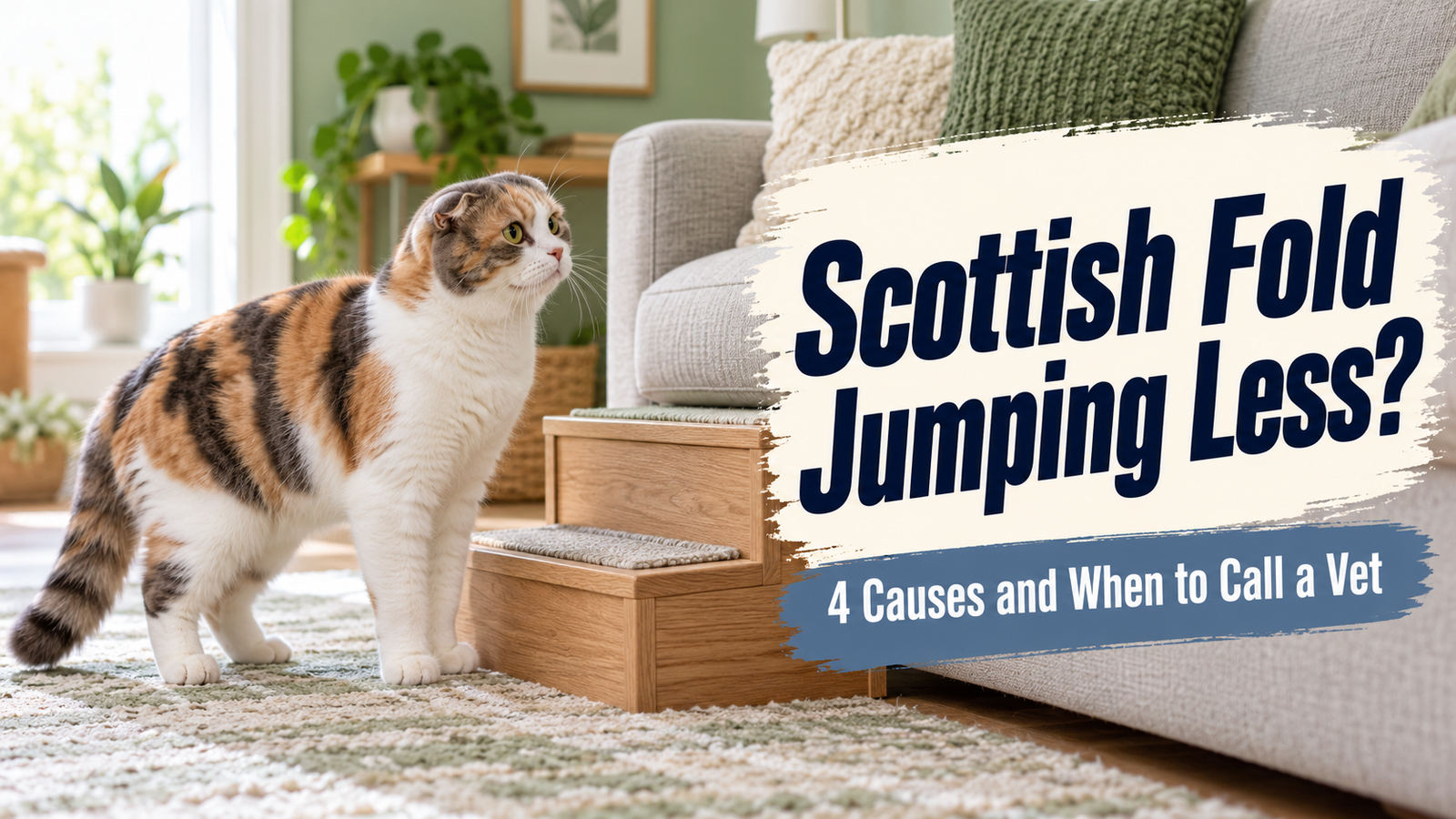
A change in Scottish Fold jumping habits can reflect discomfort, an injury, weakness or another problem affecting movement. A cat that stops reaching familiar places needs veterinary assessment rather than an assumption that it is lazy or simply getting older. The breed’s inherited cartilage and bone condition is relevant, but it does not identify the cause of every mobility change.
Compare your Fold with its own usual routine. A lifelong preference for low furniture is different from suddenly avoiding a sofa it reached easily last week. Notice what changed, when it began and whether other everyday activities look different. Our Scottish Fold Health and Care guide provides broader context on the breed’s daily care and mobility concerns.
When Does Reduced Jumping Need Urgent Veterinary Help?
Some movement changes require emergency attention. Others still need a prompt conversation with your veterinary practice, even when your cat continues eating or walking.
| What you notice | What to do |
|---|---|
| Sudden inability to stand or walk, dragging or paralysis of the hind legs, collapse, severe distress or difficulty breathing | Contact an emergency veterinarian immediately. Do not wait to collect videos or try home adjustments. |
| A sudden change in jumping, especially after a fall or alongside limping or other illness signs | Contact your veterinary practice promptly for advice on how urgently your cat needs examination. |
| Repeated hesitation, lower jumps or avoidance of a previously easy route | Arrange a veterinary assessment and record the changes without asking your cat to repeat difficult movements. |
If you are unsure which situation applies, call the practice and describe what you see. Avoid setting yourself a waiting period of several days before seeking advice about a meaningful new change.
What a Change in Scottish Fold Jumping Looks Like
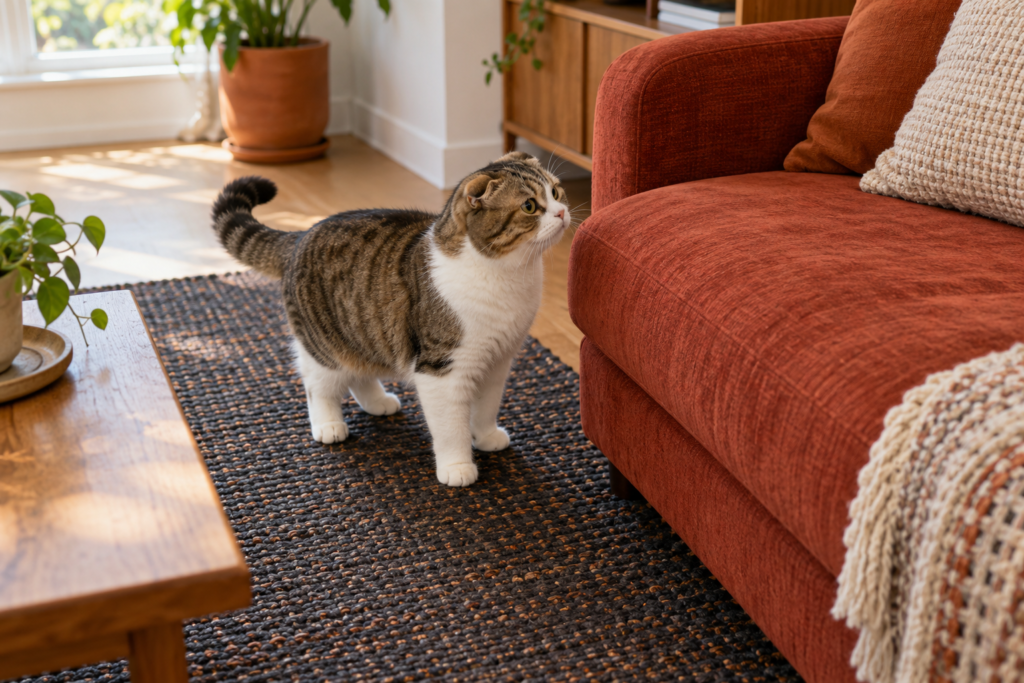
Reduced Scottish Fold jumpings is not always a complete refusal to leave the floor. A cat may still reach the bed, but use a chair halfway up. Another may pull itself onto the sofa with its front legs instead of making its usual smooth movement.
You might also notice a Fold approaching a familiar surface, pausing and choosing somewhere else to rest. Difficulty coming down matters too, even if getting up still looks manageable.
| Previous routine | Current change | Useful detail to record |
|---|---|---|
| Reached the sofa in one movement | Uses an intermediate surface | When the new route first appeared |
| Regularly rested on a windowsill | Chooses a lower bed instead | Whether other climbing habits changed |
| Moved easily between levels | Hesitates before getting down | Whether walking or stairs also look different |
These observations help you describe Scottish Fold jumping changes clearly, but they do not identify the cause. A single photograph or one missed jump cannot tell you whether a joint, paw, muscle or another problem is involved. A new Scottish Fold sitting position may also be worth noting when it appears alongside altered movement.
4 Possible Reasons for Reduced Scottish Fold Jumping
Several factors can affect Scottish Fold jumping, and more than one may be relevant. Your veterinarian considers the pattern of change alongside your cat’s age, medical history and examination.
Joint Pain and Breed-Associated Cartilage Problems
Scottish Folds have an inherited cartilage and bone disorder called osteochondrodysplasia. The genetic change associated with folded ears also affects cartilage development elsewhere in the body. Abnormal bone growth and arthritis around affected joints can restrict comfortable movement.
A published clinical report on Scottish Fold osteochondrodysplasia describes affected cats with mobility difficulties, including reluctance to jump. This establishes an important breed connection, but a small clinical report cannot tell an owner why their individual cat has stopped jumping.
The extent of skeletal changes and mobility difficulties can differ between cats. Changes in a Scottish Fold stiff tail can be another useful observation to discuss with the veterinarian. A Fold should not be assumed comfortable simply because it is quiet, nor should one change in movement be treated as proof of advanced disease.
Scottish Fold jumping difficulties are not restricted to old age. Young adult cats have appeared in clinical reports of the condition. An active kitten’s current behavior also cannot predict exactly how its movement will change later. A new difficulty deserves attention at any age.
Injuries Affecting the Paws, Limbs or Back
A sore paw, damaged claw, soft-tissue injury or a problem involving the limbs or back may make a familiar movement uncomfortable. A recent fall, awkward landing or other incident may help explain a sudden change in Scottish Fold jumping.
An injury is not always obvious from watching the cat cross a room. Being able to walk does not establish that pushing upward or landing is comfortable. Avoid pressing sore areas or moving the limbs to find the problem yourself.
Extra Weight, Weakness or Other Illness
Body condition is one part of assessing Scottish Fold jumping changes. Extra weight can increase the demands of movement and contribute to joint difficulties, but appearance alone does not establish why a cat is avoiding a jump.
Weakness or problems affecting balance and coordination may also change movement. Mention changes in appetite, drinking, energy or general behavior so the veterinarian can consider the wider picture. Do not begin a restrictive diet or give supplements as a substitute for assessment.
A Changed Route, Slippery Surface or Loss of Confidence
Scottish Fold jumping habits may change after furniture moves, a familiar step disappears or a floor becomes slippery. A new bed may also be higher than the old one. These details help explain the situation your cat faces.
Record environmental changes alongside physical ones. A persistent loss of a familiar ability should still be discussed with a veterinarian rather than attributed entirely to confidence or the room layout.
What to Record Before You Contact the Vet
Notes about Scottish Fold jumping are most useful when they describe ordinary behavior clearly. You do not need to create a test or repeatedly encourage a difficult jump.
Useful details include:
- Timing: when you first noticed the change and whether it developed suddenly or gradually.
- Direction: whether getting up, coming down or both seem more difficult.
- Other movement: changes in walking, stairs, getting up after rest or usual play.
- Daily care: differences in grooming, appetite, litter-box access or preferred resting places.
- Recent events: falls, furniture changes, illness or changes to prescribed medication.
- Handling: whether your cat has become less comfortable with its usual gentle contact.
A short video of voluntary movement can help explain what happens at home. Record only what your cat chooses to do safely, and never delay urgent care to obtain a clip. Do not bend the tail or manipulate joints to check flexibility.
How Vets Assess Scottish Fold Jumping Changes
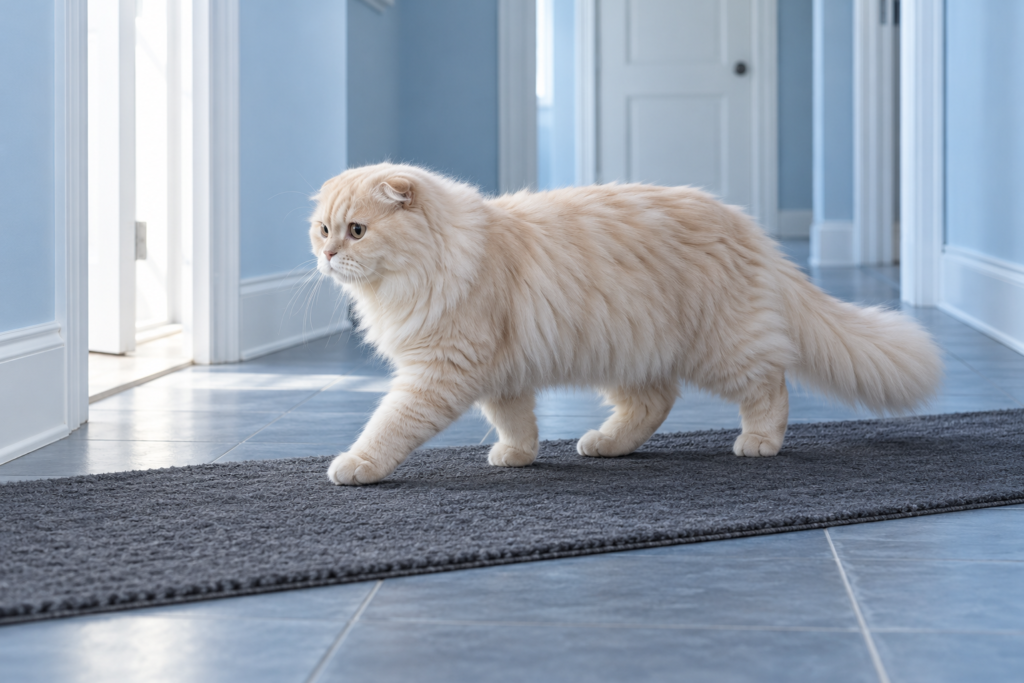
Assessing Scottish Fold jumping changes begins with the history and a physical examination. Your veterinarian may watch movement and assess the paws, limbs, joints, back and general health. What you have noticed at home helps guide that assessment.
Radiographs or other tests may be appropriate depending on the findings. The vet interprets them alongside the examination and history rather than treating one image or checklist as a complete explanation.
The next steps depend on the cause. A cat with an injury may need a different plan from one with a long-standing joint condition or illness-related weakness. Ask what activity is suitable while the problem is investigated and whether any changes are needed to your cat’s existing care.
Making Your Home Easier to Move Around
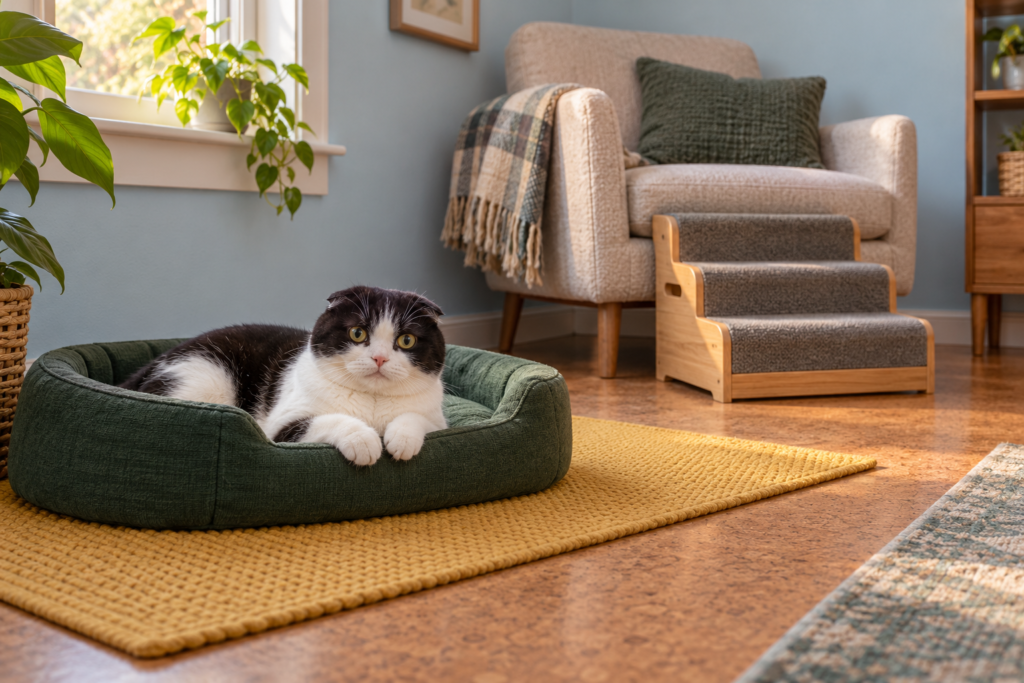
When Scottish Fold jumping becomes difficult, make essential resources easier to reach. Start with comfortable options at floor level, especially while waiting for advice about suitable activity.
The Feline Veterinary Medical Association’s home-modification guidance recommends improving access to daily resources and providing secure footing. Practical changes can include:
- Accessible resting places: offer a comfortable low bed without requiring a jump.
- Stable steps or a ramp: provide a secure route to familiar furniture when suitable for your cat and consistent with veterinary advice.
- Non-slip surfaces: secure rugs or mats along frequently used routes so they do not slide or bunch up.
- Easier litter access: consider a suitable low-entry box that your cat can enter and turn around in comfortably.
- Reachable food and water: keep essentials in convenient places without unnecessary stairs or climbing.
These changes support access; they do not establish or treat the underlying cause. Let your cat choose comfortable routes rather than repeatedly guiding it onto furniture.
Do not give human painkillers or start joint supplements without veterinary direction. Medicines that are suitable for people can be dangerous to cats, and the appropriate care depends on the individual animal.
If body condition needs attention, ask for a tailored feeding plan. Any play or exercise should match the veterinarian’s advice and your cat’s abilities rather than involve repeated high jumps.
FAQs
Can Scottish Folds Jump Normally?
Many Scottish Folds can jump onto familiar furniture, but ability and comfort vary between individuals. Scottish Fold jumping should be judged against that cat’s own routine. The important concern is a new loss of an ability or a change in how the movement happens, rather than a particular height every Fold should reach.
Can a Young Scottish Fold Develop Difficulty Jumping?
Yes. A change in Scottish Fold jumping deserves attention in a young cat as well as an older one. Breed-associated skeletal problems can affect young cats, while injuries and other causes are also possible. Do not assume that a cat is too young for discomfort or identify the cause from age alone.
Why Does My Scottish Fold Still Eat Normally but Avoid Jumping?
A normal appetite does not rule out a movement problem. Scottish Fold jumping may change while eating and some other routines remain familiar. Tell the vet which activities have changed and which have stayed the same. Grooming, resting places, walking, handling and litter-box access can provide additional useful context.
Is Difficulty Jumping Down Different From Difficulty Jumping Up?
Both deserve attention. Getting onto a surface and coming down involve different demands, so a cat may appear more comfortable with one direction. That pattern is useful to describe, but it cannot reliably identify the affected body part or diagnosis. Note what happens without asking your cat to repeat the movement.
Should I Encourage My Scottish Fold to Jump as a Test?
No. Repeatedly using food or toys to provoke a difficult jump could cause discomfort or an awkward landing. Observe voluntary everyday movement instead. Provide an accessible resting alternative and follow veterinary advice about suitable activity. You do not need to demonstrate a failed jump before contacting the practice.
What to Do Next
When Scottish Fold jumping changes, focus on the difference from your cat’s previous routine. Contact the appropriate veterinary service, make everyday resources easy to reach and share clear observations without forcing movement.
The useful question is what your cat can comfortably do now compared with before. That individual pattern gives your veterinarian more context than a breed-wide assumption about activity.