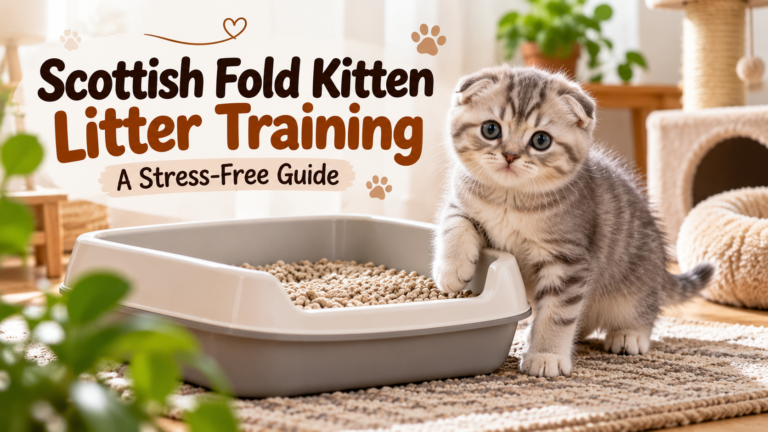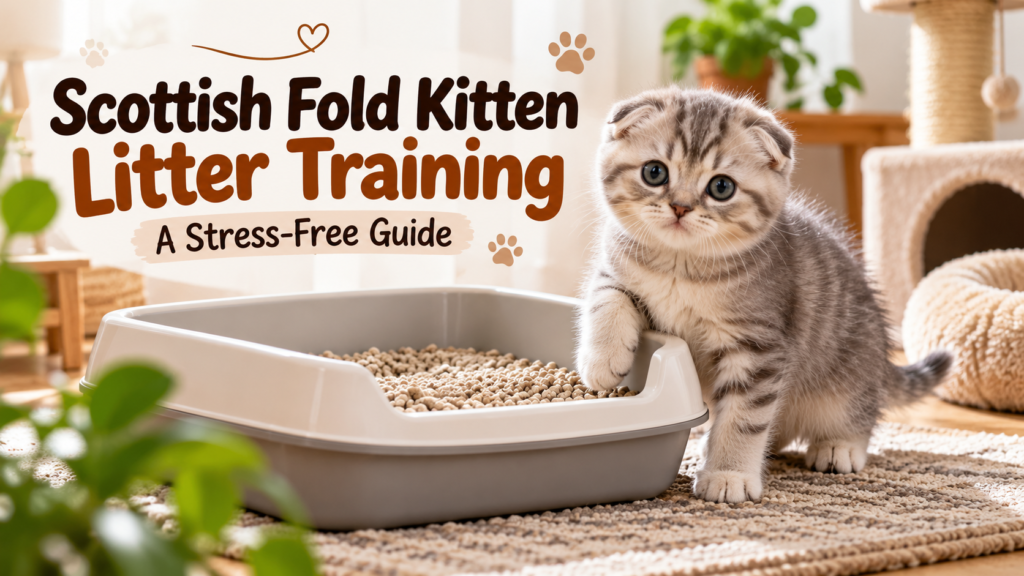


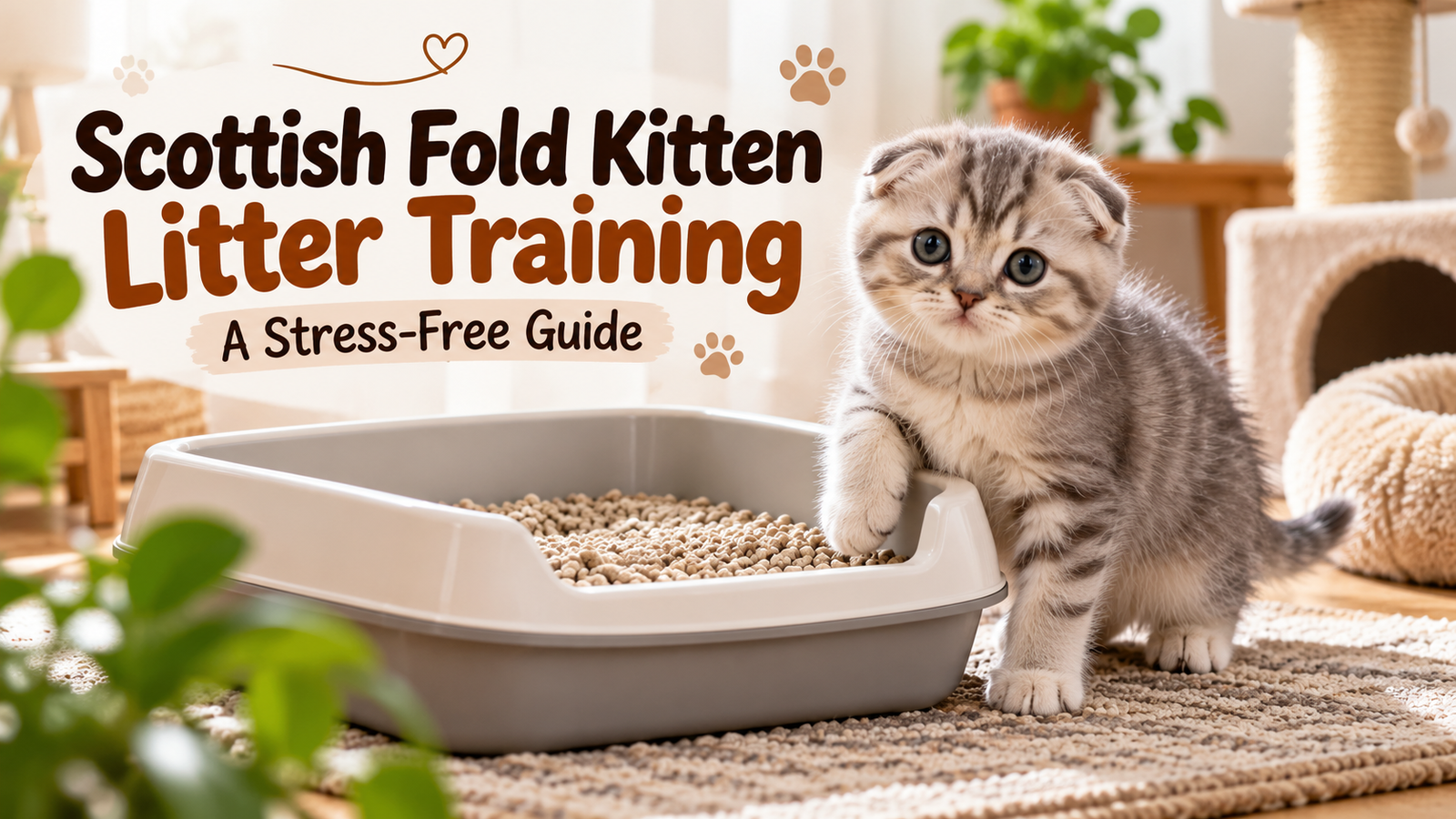
A new Scottish Fold kitten may seem to settle in quickly, then leave a puddle beside the litter tray. That does not mean your kitten is stubborn or needs strict discipline. Most kittens have a natural interest in digging and covering waste, but they still need to recognize where the toilet is in a new home.
Scottish Fold kitten litter training begins with an accessible tray, suitable litter, a quiet location, and a gentle daily routine. Let your kitten investigate the box, offer it after naps and meals, and respond calmly to accidents. A comfortable setup matters more than repeated lessons.
Scottish Fold kittens generally learn in the same way as other kittens. Their breed is relevant mainly because the inherited folded-ear trait is associated with cartilage and skeletal changes, so easy access and changes in movement deserve attention. This guide explains how to build steady habits without assuming that every kitten has a medical problem.
When Is Your Scottish Fold Kitten Ready for a Litter Box?
Kittens commonly begin exploring a shallow litter tray at about three to four weeks of age, as they become more mobile and start toileting independently. Before that stage, very young kittens depend on their mother to stimulate urination and bowel movements. Orphaned newborns need specialized assistance under veterinary or experienced rescue guidance; they are not ready for ordinary litter box lessons.
By the time a kitten joins a new household, it may already know how to use a tray. But a new room, unfamiliar litter, or long distance to the box can cause accidents. Scottish Fold kitten litter training in a new home may therefore be less about teaching a new skill and more about helping your kitten locate a familiar kind of toilet.
| Age | What owners may notice | Helpful approach |
|---|---|---|
| Birth to roughly 3 weeks | Toileting usually depends on the mother or a trained caregiver | Follow age-specific neonatal care advice |
| Around 3 to 4 weeks | Interest in a shallow litter tray may begin | Offer an easy-to-enter tray with suitable litter |
| Around 5 to 6 weeks | Many kittens are increasingly consistent | Keep the tray nearby and expect occasional accidents |
| Around 8 to 12 weeks | Many kittens already recognize a litter tray | Recreate the previous setup where possible |
| As the kitten grows | More space and changing body size affect access | Add trays or upgrade size without abrupt changes |
These ages are general guidance, not promises that every kitten will be fully trained by six weeks. Before moving a kitten to your home, ask the breeder, rescue, or previous caregiver which tray and litter it already uses. Our Scottish Fold Kittens guide covers more of the changes that happen during early kittenhood.
Create a Litter Box Setup Your Kitten Feels Comfortable Using
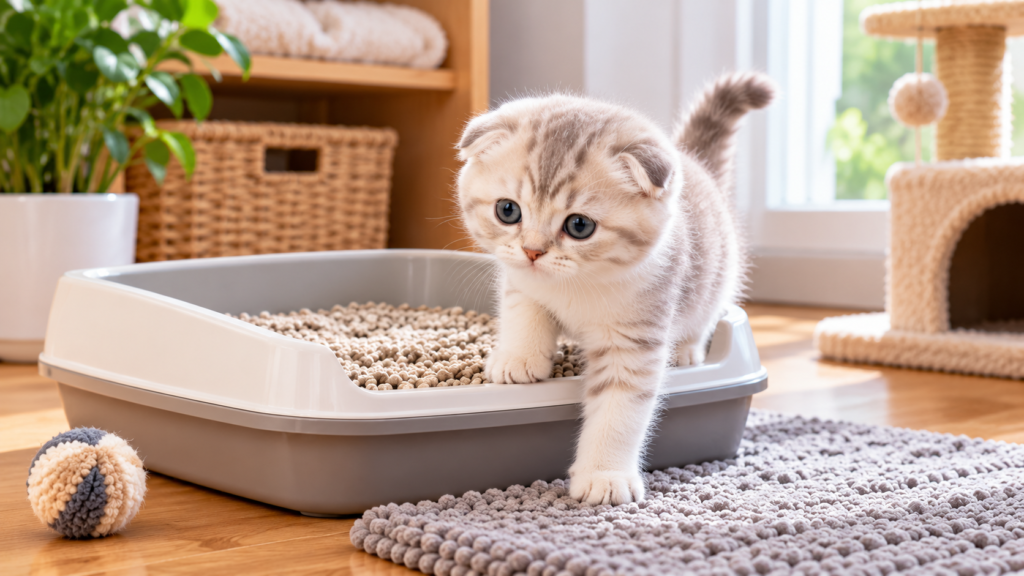
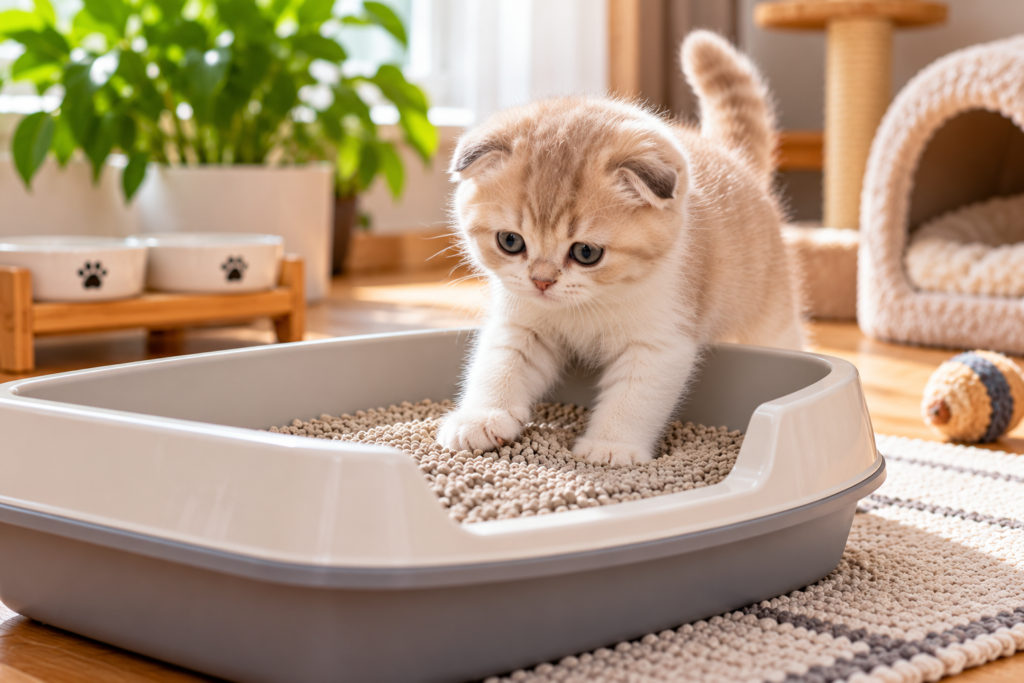
Before planning rewards or a training timetable, examine the setup from your kitten’s point of view. Can the kitten see the box, enter without climbing, turn around, and leave without being startled? A poor setup can turn Scottish Fold kitten litter training into a frustrating experience even when the kitten understands what litter is for.
A Low-Entry Tray Makes a Difference
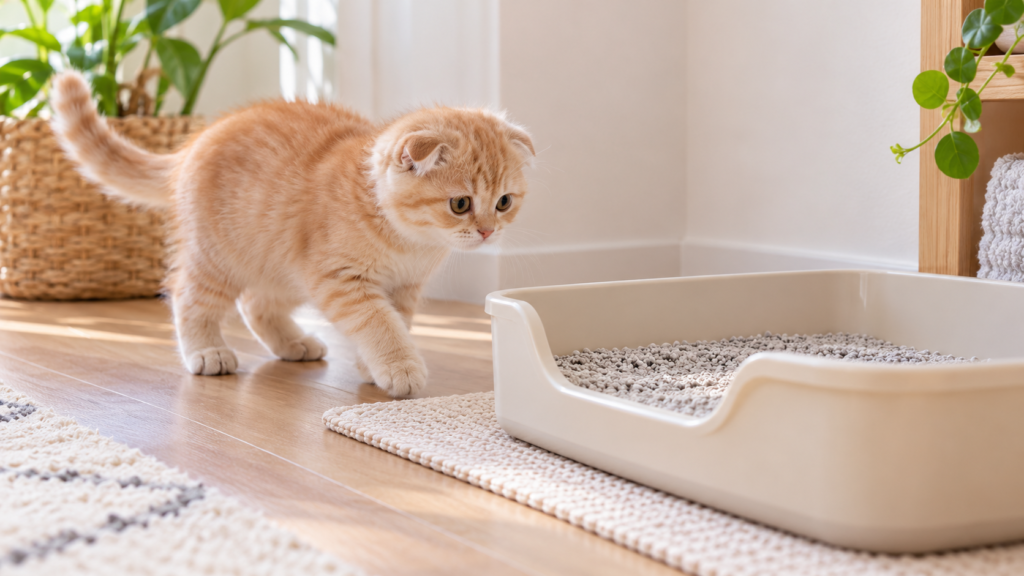
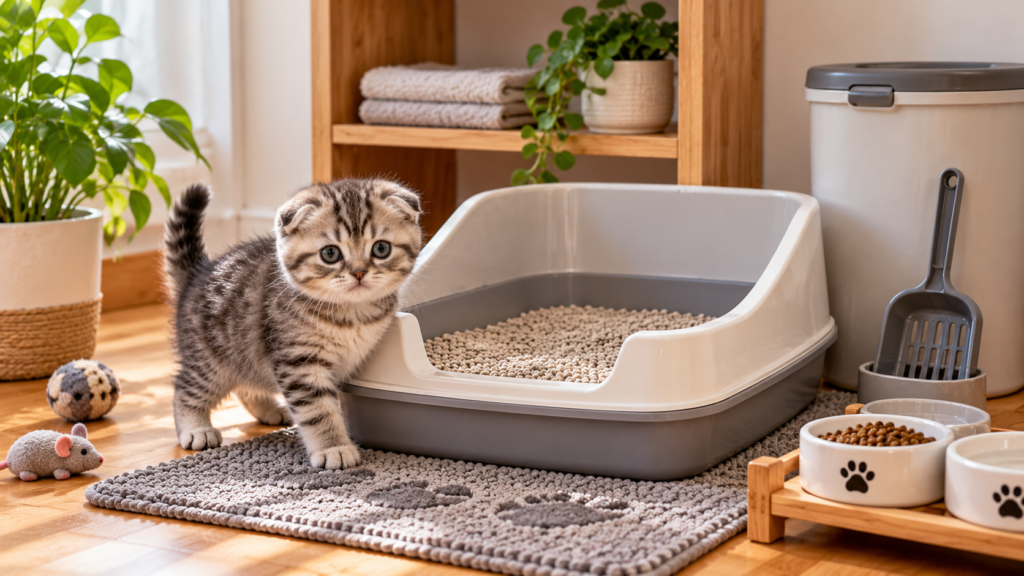
Start with a stable, open tray that has a low entrance. The kitten should be able to walk in rather than climb or jump. Provide enough room to turn, dig, and squat without touching the walls at every movement. A lightweight pan is fine if it does not slide across the floor when stepped on.
Covered and top-entry boxes may seem tidier to people, but they can be harder for a small kitten to navigate and may trap odors. A simple open tray makes it easier for you to see whether your kitten is using it comfortably. As the kitten grows, you can move to a larger tray while preserving a low or otherwise comfortable entrance.
For Scottish Fold kitten litter training, accessibility is more useful than a product advertised as breed-specific. If the kitten hesitates at the entrance, check the height and stability before assuming it is refusing to cooperate.
Choosing Litter for Small, Curious Paws
A familiar, unscented litter is a sensible starting point. Some kittens dislike strong perfumes or unfamiliar textures and may avoid a perfectly clean box because of how the litter feels. If your kitten was using a suitable litter in its previous home, keep that product initially if possible.
For very young kittens, non-clumping litter is generally the cautious recommendation because they sometimes investigate materials with their mouths. Swallowing clumping products may cause harm. Age suitability varies by product, so read the packaging and consult a veterinarian if you are unsure. Paper-based or other non-clumping materials can be options, but no litter should be treated as safe to eat.
Offer a modest layer that allows digging without making the footing unstable. Approximately one to two inches may suit a small, appropriately sized tray, but comfort and product guidance matter more than a rigid depth. Scottish Fold kitten litter training should never involve encouraging the kitten to stand in a tray that feels difficult or unpleasant.
Finding a Quiet Spot Away From Distractions
Choose a calm, easily reached location away from food bowls, water, loud appliances, and busy doorways. The tray should feel private without being hidden behind a door that might close. If a kitten is spending its first days in a starter room, keep the box within easy walking distance of its usual activities while separating it from sleeping and feeding areas.
Multi-story homes may need a tray on each level the kitten can safely access. In households with other pets, make sure no dog or adult cat can block the route. A sensible location is part of Scottish Fold kitten litter training, not simply a housekeeping preference.
Scottish Fold Kitten Litter Training: A Gentle First-Week Routine
The first week should establish familiarity, not a deadline. A kitten that uses the tray once has not necessarily memorized where it is, and one accident does not erase progress. Keep the following routine steady while watching how your kitten responds.
Start With a Small, Familiar Space
Begin with a safe room containing a bed, toys, food, water, and a litter tray placed away from the eating area. The manageable space helps your kitten find the box quickly and gives you a chance to notice bathroom signals. Offer play and human company; this is not a reason to isolate a kitten without interaction.
Once the kitten explores confidently and uses the tray reliably, open another room gradually. If accidents start when the home becomes larger, the kitten may simply need another nearby tray. That is a useful adjustment during Scottish Fold kitten litter training, not a setback to punish.
Make the First Introduction Feel Natural
Show your kitten the tray soon after it arrives. Let it sniff the edges and step inside voluntarily. If the kitten is relaxed with gentle handling, you can briefly set it down in the tray and then let it leave whenever it chooses. Never hold it inside or repeatedly return it against its will.
You may lightly move a finger across the litter surface to invite curiosity, but do not grab the kitten’s paws and make scratching movements. The aim of Scottish Fold kitten litter training is to make the box a normal, safe place rather than a situation the kitten tries to escape.
Use Mealtimes and Naps as Helpful Reminders
After eating, waking up, or finishing active play, guide your kitten toward the tray. Some kittens sniff corners, scratch at the floor, or briefly crouch before they need to go. These are useful opportunities to remind the kitten where its litter box is, but they do not mean you must keep a strict toilet timetable.
If the kitten is already eliminating somewhere else, avoid startling it or pulling it away midstream. Clean up afterward and consider whether a box would be more useful in that area. Gentle reminders help Scottish Fold kitten litter training work alongside normal behavior instead of interrupting it.
Encourage Good Habits Without Pressure
When your kitten uses the tray, let it finish in peace. A quiet word of praise, welcomed petting, or an age-appropriate reward afterward may help make the experience positive. Some kittens prefer to leave immediately and do not need a treat each time.
Avoid loud cheering, picking the kitten up during toileting, or turning every visit into a lesson. The best reward is often the freedom to use a clean tray undisturbed. During Scottish Fold kitten litter training, calm repetition usually matters more than constant intervention.
Small Signs Your Kitten Is Getting the Hang of It
Progress is visible when your kitten starts locating the box independently, stepping in without hesitation, and returning to its regular routines afterward. You may notice fewer accidents and less time spent searching corners. A kitten that eats, plays, and rests normally while using its tray is showing useful signs of adjustment.
Not every kitten buries waste perfectly, and digging style differs between individuals. Do not judge the success of Scottish Fold kitten litter training by how neatly the litter looks afterward. Comfortable, consistent use is the more important goal.
Observe progress over several days, not one successful visit. A change in household activity or access to a new room can briefly affect habits without meaning that the kitten has stopped learning.
Why Your Scottish Fold Kitten Keeps Avoiding the Litter Box
A kitten that toilets outside the tray is communicating through behavior, not deliberately disobeying. Something about access, texture, cleanliness, location, stress, or health may need attention. Scottish Fold kitten litter training works better when you look for the pattern than when you repeat instructions more forcefully.
The Tray Is Difficult to Enter
High walls, slippery flooring, or a tray that moves when stepped on may discourage a small kitten. Check whether your kitten can enter, turn, and leave naturally. If it previously used the tray but now hesitates to step in, pay attention to any change in walking or posture as well as the physical design of the box.
The Litter Feels or Smells Unfamiliar
Strongly scented litter or a sudden switch in texture can cause avoidance. If the problem began after a change, offer the old safe litter again if available. When a switch is necessary, give the kitten time and a choice between suitable products rather than changing everything overnight.
The Box Is Dirty or Poorly Placed
Waste buildup, loud appliances, difficult doors, and interruptions can all make the box less inviting. Remove waste regularly, choose a quiet route, and ensure the kitten does not have to walk past an animal that might intimidate it. The simplest improvement to Scottish Fold kitten litter training may be moving an extra tray closer to where the kitten actually spends time.
Household Noise or Other Pets Are Causing Stress
A visiting dog, a new cat, or frequent interruptions near the box may make your kitten feel exposed. Provide a separate, secure toilet area and observe whether another pet blocks access. Do not assume that a kitten staying motionless beside a dog is relaxed; it may be uncertain or frightened.
| What you see | What to check first | What to do next |
|---|---|---|
| Accidents immediately beside the box | Entry height, box size, litter texture | Offer a stable low-entry tray and watch for discomfort |
| Accidents after opening more rooms | Distance to the box | Add an accessible tray nearby |
| Avoidance after switching litter | Smell and texture | Restore a familiar suitable option or transition gradually |
| Avoidance when another pet is nearby | Access and household stress | Create a pet-free route and private toilet area |
| Sudden new accidents or obvious discomfort | Possible medical causes | Contact a veterinarian rather than intensifying training |
Use this table to organize observations, not to diagnose illness. Scottish Fold kitten litter training cannot resolve pain, urinary disease, or another medical problem on its own.
Litter Box Accidents: What to Do Without Scaring Your Kitten
Accidents can happen while a kitten adjusts to a new home. The response should be practical and calm: clean the area, review the setup, and offer another opportunity to find the tray. Punishing a frightened kitten may make it hide its toileting behavior rather than help it understand where to go.
Cleaning Up Without Leaving Familiar Odors
Use a pet-safe enzymatic cleaner suitable for the surface to remove urine or stool residues. Follow the label, keep the kitten away from the treated spot as directed, and allow it to dry. Avoid ammonia-based cleaners and strongly scented household chemicals that may be unsuitable around cats.
If accidents keep happening in one quiet corner, look at whether the current tray is difficult to reach. A temporary additional tray in that location may be more effective than continually carrying the kitten elsewhere. This kind of environmental adjustment is part of Scottish Fold kitten litter training.
Why Scolding and Punishment Can Make Things Worse
Never shout, hit, spray water, or rub a kitten’s nose in waste. These actions can cause fear without explaining which place is appropriate. They may even make the kitten reluctant to toilet when a person is nearby.
If you see your kitten searching for a place to go, calmly guide it toward an accessible box. If the accident has already happened, clean up and move on. Scottish Fold kitten litter training is about setting up a predictable choice, not making your kitten afraid of getting it wrong.
Scottish Fold Comfort: Making Every Trip to the Tray Easier
The folded-ear trait in Scottish Folds is associated with a genetic change affecting cartilage and skeletal development. It is important to take mobility concerns seriously without assuming every kitten is experiencing joint pain. A kitten that has difficulty climbing into a tray deserves a practical accessibility check and, when movement seems abnormal, veterinary advice.
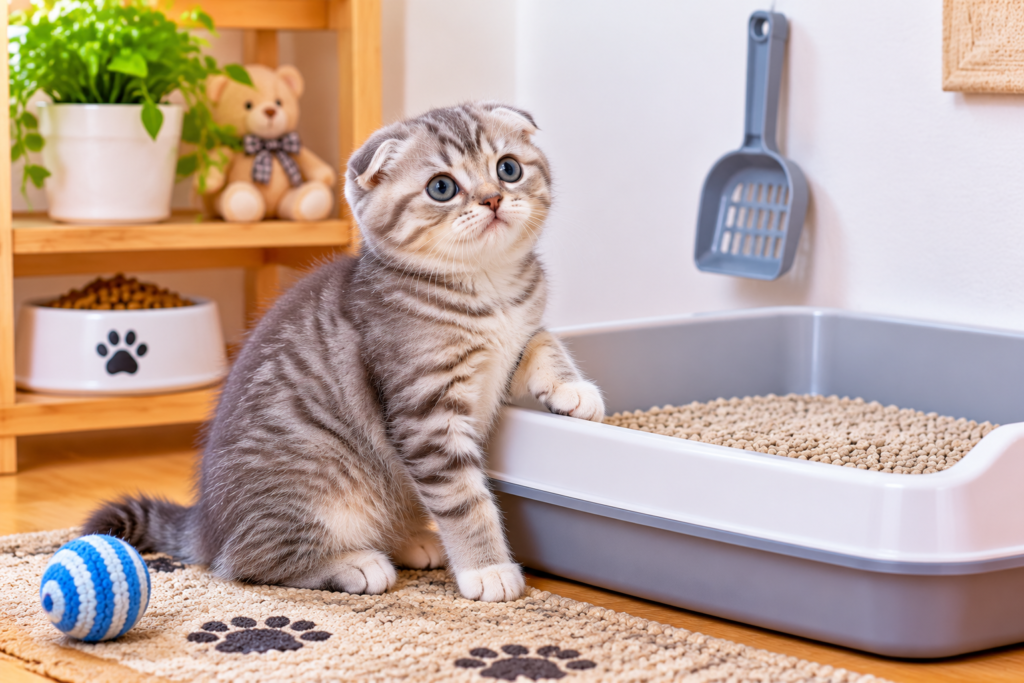
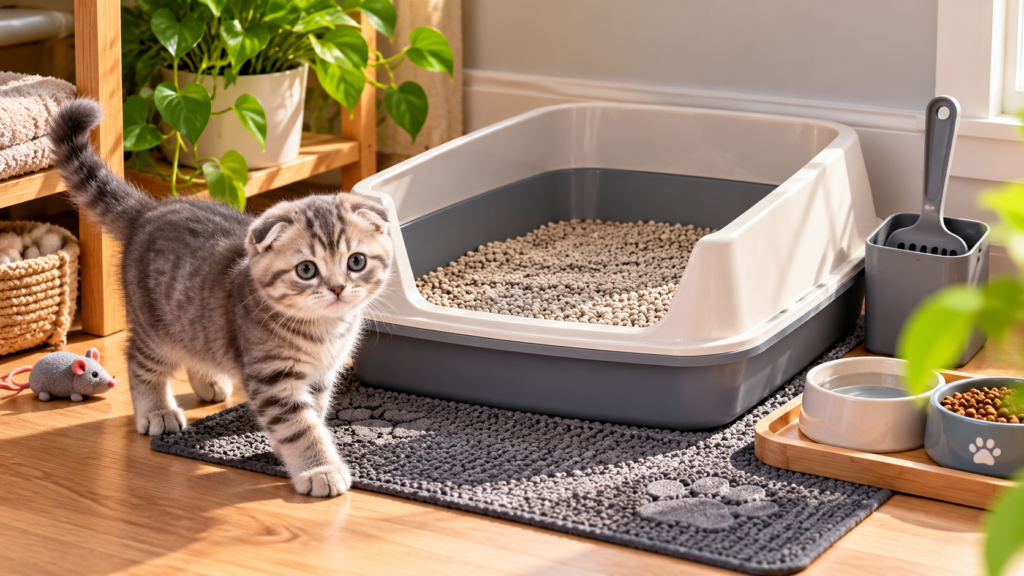
For Scottish Fold kitten litter training, provide a low opening, adequate space to turn, firm footing, and a clear route that does not require jumping or squeezing through narrow gaps. A stable mat outside the box can help on slippery floors. In a home with several levels, offer appropriate trays wherever the kitten can safely spend time.
Watch for changes such as reluctance to step over an entrance, an altered gait, stiffness, or avoiding a box that was previously easy to use. Those observations do not prove a particular condition, but they may be helpful to share with a veterinarian. Our Scottish Fold Health and Care guide covers the broader importance of monitoring everyday movement.
Accessible equipment can make Scottish Fold kitten litter training more comfortable, but it is not a substitute for assessment if your kitten appears painful or unwell.
Keeping Litter Habits Consistent as Your Kitten Grows
A kitten that has settled into a toilet routine still needs a box suited to its changing body and home environment. Protect the habits that work instead of making several adjustments at the same time. Scottish Fold kitten litter training is easier to maintain when the kitten recognizes the location and texture of its toilet.
A Simple Daily Cleaning Routine
Scoop waste at least daily and more often when needed. Change the litter and wash the tray according to the product, level of use, and your kitten’s needs. Choose a suitable mild cleaner, rinse thoroughly, and let the tray dry before refilling it. Strong fragrances are unnecessary.
Good cleaning does not mean removing all familiar cues every few hours; it means providing a comfortable place to toilet. If your kitten suddenly starts avoiding a tray that is usually clean, investigate other causes rather than assuming cleanliness is the whole explanation.
When to Add Another Litter Box
One litter box per cat plus one extra is a common starting guideline. For a single kitten, two boxes in separate locations can improve access. A larger home or a home with multiple floors may need additional trays. Avoid putting every box side by side if one pet might block the entire area.
Providing several accessible choices can support Scottish Fold kitten litter training, particularly while your kitten begins exploring rooms farther from its starter space. If a new tray is used more often, notice what makes that location easier or calmer.
Changing Litter Without Upsetting the Routine
If the current litter is suitable and your kitten uses it comfortably, there is little reason to replace it suddenly. When a change is necessary, introduce another suitable option gradually. For very young kittens, keep age-appropriate non-clumping safety in mind rather than switching simply because adult clumping litter is easier to scoop.
The tray itself should grow with the cat, but a larger box should remain easy to enter. Try not to change litter type, box style, and location all at once. A familiar routine supports Scottish Fold kitten litter training even after the kitten becomes more independent.
When Litter Box Trouble Is More Than a Training Problem
Sudden accidents, frequent attempts to urinate, crying during toileting, blood in urine, constipation, diarrhea, or visible discomfort may signal a problem that training alone cannot solve. A veterinarian can assess whether urinary, digestive, mobility, or other health concerns are involved. Do not diagnose a kitten from one symptom or try unprescribed medicines.
Repeated attempts to urinate with little or no urine are an emergency. A urinary blockage can become life-threatening, so seek emergency veterinary care immediately instead of waiting for another training session. The Cornell Feline Health Center guidance on feline lower urinary tract disease discusses signs that need medical attention.
For Scottish Fold kitten litter training, this distinction matters: a kitten that avoids a box because it cannot comfortably move or urinate needs help with the underlying problem, not stricter correction. If the kitten’s habits change suddenly, contact your veterinary practice promptly even when the box setup looks suitable.
FAQs
Are Scottish Fold Kittens Easy to Litter Train?
Many Scottish Fold kittens become comfortable with a litter box as readily as other kittens. They often recognize the purpose of litter naturally. Their past experiences, age, the tray setup, and household routine matter more than assumptions about breed intelligence. Scottish Fold kitten litter training works best with consistency rather than pressure.
How Long Does Litter Training Usually Take?
There is no guaranteed number of days. Some kittens arrive already using a tray; others take time to settle into a different room and litter texture. Watch for steadily fewer accidents and confident independent visits. A brief setback after changing the environment is not automatically a training failure.
Why Does My Kitten Pee Beside the Litter Box?
The tray may be hard to enter, too small, dirty, or filled with litter the kitten dislikes. Location and other pets can matter too. But sudden changes, straining, or signs of discomfort require a veterinary assessment. Do not assume Scottish Fold kitten litter training alone will solve persistent accidents.
Should I Put My Kitten in the Tray After Every Meal?
You can gently offer access after meals, naps, and active play, since kittens may need to toilet around those times. Do not force the kitten to stay or repeatedly interrupt it. Let the kitten investigate and leave freely; calm reminders are enough.
What Type of Litter Is Suitable for Young Kittens?
A suitable unscented, non-clumping product is usually the cautious starting choice for very young kittens because they may mouth unfamiliar material. Follow the product’s age guidance and ask a veterinarian when unsure. Litter should feel comfortable and should never be treated as safe to swallow.
Can a Scottish Fold Kitten Have Trouble Entering a Litter Box?
Yes. Any small kitten may struggle with a tall entrance, and Scottish Folds have additional breed-associated skeletal considerations. Use a stable low-entry tray. If the kitten seems stiff or painful, discuss the change with a veterinarian instead of assuming it is unwilling to cooperate.
Should I Move the Litter Box as My Kitten Grows?
Move it only when there is a practical reason, and avoid sudden changes when the current location works. You can introduce a second tray in the new area before removing the familiar option. A larger tray may be useful as the kitten grows, provided entry remains comfortable.
Does the Folded-Ear Trait Change a Kitten’s Ability to Learn?
The folded-ear trait does not mean a kitten needs a different teaching method. The main distinction is physical comfort and accessibility. A Scottish Fold can have ordinary litter habits while still benefiting from a thoughtfully placed, easy-entry tray.
How Often Should I Clean the Litter Box?
Remove waste at least once a day and more frequently if needed. Fully replace litter and wash the box based on the type used and how quickly it becomes dirty. A clean, accessible tray helps Scottish Fold kitten litter training stay consistent as your kitten grows.
A Calm Routine Matters More Than Perfect Training
Scottish Fold kitten litter training succeeds when the tray is easy to reach, the litter is suitable, and the kitten is free to develop a familiar routine. Offer the box after meals and naps, keep it clean, and treat mistakes as clues about the setup rather than disobedience.
As your kitten gains confidence, expand access gradually and keep comfortable toilet options available. If you need to leave your kitten for a period, our guide on how long Scottish Folds can be left alone explains why young kittens need appropriate supervision and care arrangements.
Above all, protect your kitten’s comfort. Calm guidance helps habits form; persistent accidents or signs of pain call for closer attention and, when appropriate, veterinary care.