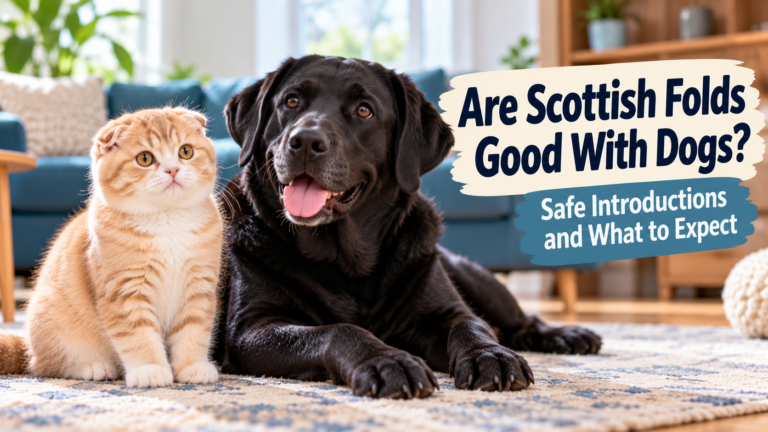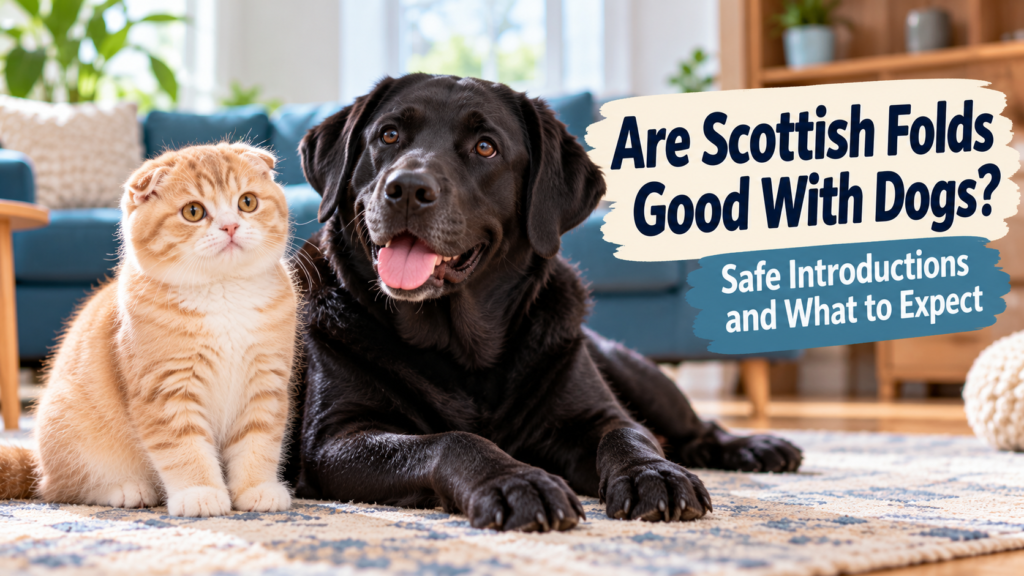


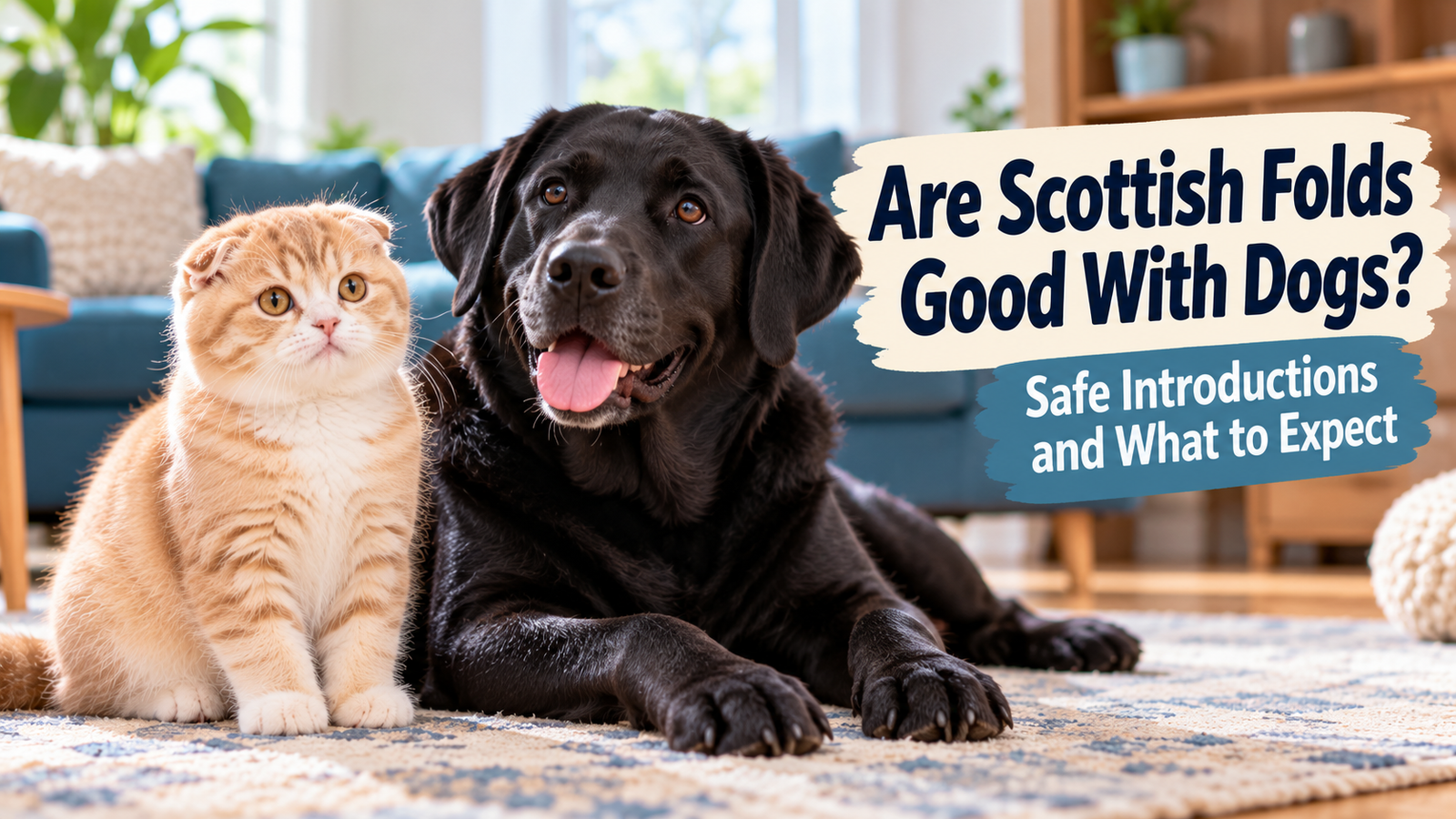
Yes, Scottish Folds can get along with dogs, and some share a peaceful home or become close companions. Scottish Folds are often described as gentle, people-oriented cats, but breed temperament alone cannot predict how a particular cat will respond to a particular dog. The dog’s behavior, each animal’s previous experiences, and the way they meet matter much more than a breed label.
For Scottish Folds and dogs, the best goal is not to make them play together. It is to help both animals feel safe enough to relax, move around, eat, and rest without being chased or cornered. Some pairs become affectionate; others are happiest giving each other space. This guide explains what compatibility can look like, how gradual introductions work, and which behaviors suggest that you should slow down.
Scottish Fold Temperament Around Dogs
When Scottish Folds and dogs meet, breed tendencies offer limited clues. Scottish Folds are commonly described as affectionate, curious, and relatively calm. The VCA Scottish Fold breed guide notes that the breed may welcome family dogs. This is useful background, but it is not a promise that every Scottish Fold will enjoy canine company.
Some Scottish Folds are confident around unfamiliar animals. Others prefer familiar people and quiet rooms. A cat that likes being held or follows its owner around the house may still be unsettled by a barking dog. Likewise, a reserved cat may eventually become comfortable with a dog that consistently behaves calmly.
Compatibility between Scottish Folds and dogs is more than a personality label. When considering Scottish Folds and dogs, think about how each animal reacts to movement, noise, close contact, and personal space. A friendly dog that repeatedly tries to play can still overwhelm a cat that wants to rest.
The most reliable signs come from how your own animals behave over time, not from descriptions of what the breed is supposedly always like. For a broader look at the breed’s usual habits, see our Scottish Fold Cats guide.
What Makes a Dog a Good Match for a Scottish Fold?
The ideal dog is not defined by size or breed alone. A smaller dog that barks, rushes toward the cat, or chases movement may be harder to live with than a larger dog that stays relaxed and responds to its owner.
For Scottish Folds and dogs, the dog’s history with cats is an important starting point. Has it lived with cats before? Can it walk past one without staring or lunging? Does it respond to familiar cues even when excited? These details are more meaningful than a list of supposedly cat-friendly dog breeds.
| Dog behavior | Why it matters |
|---|---|
| Looks at the cat briefly, then looks away | Suggests the dog can disengage rather than remain fixated |
| Responds to familiar cues | Helps the owner manage controlled meetings |
| Moves calmly around small animals | May make the cat less likely to feel overwhelmed |
| Repeatedly barks or rushes toward the cat | Can make introductions stressful or unsafe |
| Stares intensely, stalks, or tries to chase | A serious reason to stop direct contact and seek professional guidance |
| Guards food, toys, or resting places | May create conflict in shared areas |
A dog that has been gentle with one cat is not guaranteed to behave the same way with every cat. Similarly, an older dog is not automatically calmer, and a puppy is not automatically easier. The individual’s behavior comes first.
Introducing a Scottish Fold to a Dog Safely
A successful first meeting rarely begins with placing both pets face-to-face in an open room. Gradual introductions give each animal time to become familiar with the other without being forced into contact.
The Cats Protection guidance on introducing cats and dogs recommends separate spaces, scent exchange, visual introductions through a barrier, and short controlled meetings. The sequence is useful for Scottish Folds and dogs, but it should move at the pace of the animals rather than follow a fixed number of days.
Stage 1: Create separate spaces and exchange scents
Before Scottish Folds and dogs share space, give the cat a quiet dog-free area with food, water, a litter box, and a resting place. Keep the dog in a separate area where it can settle normally. Each animal should have an ordinary routine without being approached unexpectedly by the other.
Once both are settled, they can become familiar with each other’s scent through bedding or clean cloths. Let them investigate voluntarily. Do not push a scented object toward an animal or insist that it approach.
Stage 2: Let them see each other through a secure barrier
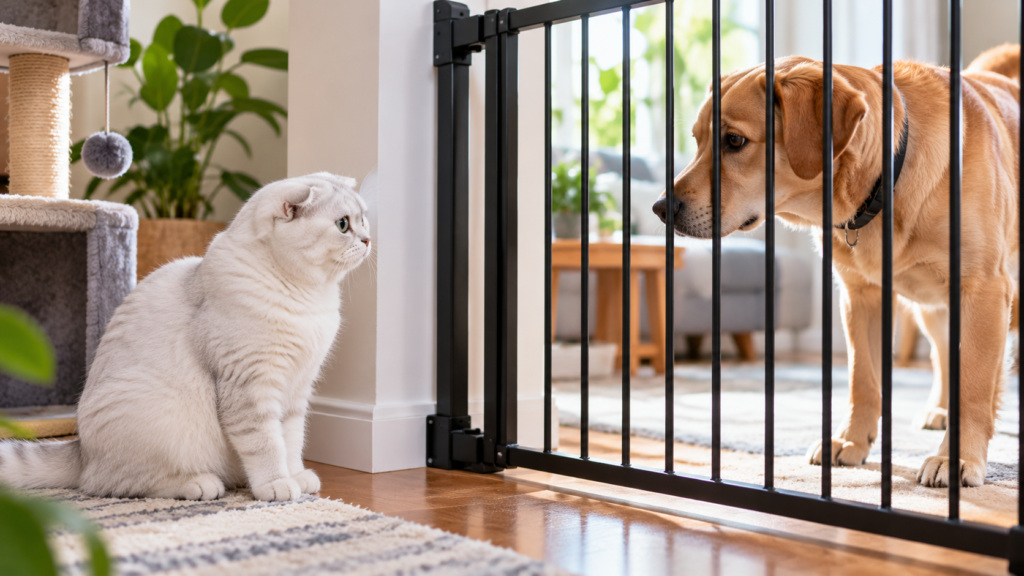
Early meetings between Scottish Folds and dogs can happen through a properly fitted gate, mesh screen, or suitable transparent barrier, with no physical access. The cat needs a route away from the barrier; the dog should remain under control and unable to reach the cat.
Keep sessions short. Calm attention that can be redirected is more encouraging than repeated barking or intense staring. If either animal retreats, stiffens, or becomes agitated, increase the distance and return to an easier stage.
Stage 3: Try brief, supervised meetings
For Scottish Folds and dogs, consider direct meetings only when both animals are consistently relaxed at the barrier. Having two adults present can make this easier, with one supervising the dog and the other watching the cat’s comfort and exit route.
Keep the dog on a secure lead, reward calm behavior, and allow the Scottish Fold to decide whether to approach or leave. Do not pick up the cat and carry it toward the dog. Never let the dog chase the cat, even if the behavior looks playful to people.
If the dog stays attentive to its owner and the cat can move around without being followed, end the meeting on that calm note. A short, uneventful interaction is more useful than pushing for a dramatic friendship moment.
Stage 4: Gradually share more space
As Scottish Folds and dogs become comfortable, supervised time in shared areas may increase. Continue providing dog-free retreats and separate resources. A relaxed meeting on one day does not prove the animals will always feel equally comfortable, especially during exciting events or mealtimes.
There is no universal three-day or one-week schedule. Some pairs adjust quickly, while others need weeks or longer. If chasing, repeated intimidation, or intense fixation continues, do not push for direct contact. A qualified animal behavior professional may help assess whether a safe arrangement is possible.
Signs Scottish Folds and Dogs Are Comfortable Together
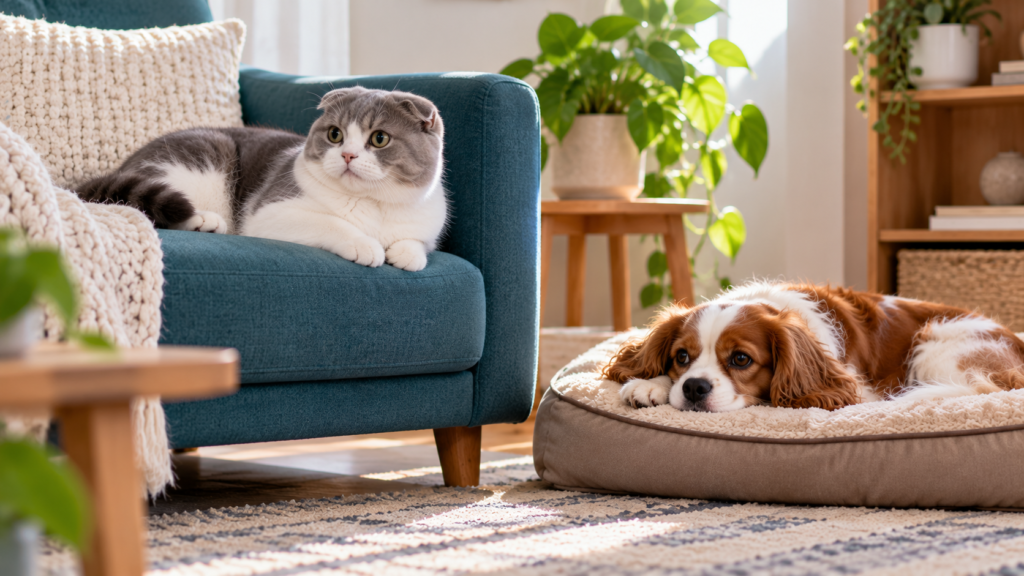
Comfort between Scottish Folds and dogs does not require sleeping in the same bed or grooming one another. Comfortable coexistence can be as simple as both pets choosing to remain in the same room without watching each other’s every movement.
When Scottish Folds and dogs are settling well, you might see the cat approach voluntarily, eat normally, and use its usual resting areas. The dog may glance at the cat, then return to a toy, a person, or a nap. Both animals should be able to leave an interaction without being followed.
| Encouraging observations | Reasons to slow down |
|---|---|
| Each pet can rest without monitoring the other | One animal stares continuously at the other |
| Cat chooses whether to approach or retreat | Dog blocks the cat’s path or follows repeatedly |
| Dog responds when called away | Dog ignores cues and becomes more excited |
| Both continue normal eating and litter routines | Cat avoids its usual resources or hides persistently |
| Interactions are brief and voluntary | Either animal freezes, lunges, or repeatedly vocalizes in distress |
When observing Scottish Folds and dogs, remember that purring does not automatically mean a cat feels safe and a wagging tail does not always signal that a dog is friendly. Look at posture, movement, and the situation together.
Warning Signs an Introduction Is Moving Too Fast
During introductions between Scottish Folds and dogs, a cat may show discomfort by hiding, moving away, crouching, freezing, hissing, swatting, or avoiding an area where the dog waits. If it stops using familiar rooms or routines, that change also deserves attention.
A dog’s warning signs can include intense fixed staring, repeated barking, lunging, stalking, chasing, or becoming difficult to redirect. Growling, stiff posture, or guarding a particular area should not be ignored either. Never punish an animal for communicating discomfort; instead, create distance and make the setting safer.
Folded ears make some body-language signals harder to read
With many cats, ears turning back or flattening can be part of a stress signal. Scottish Folds already have ears that naturally bend forward and downward, so their ear position cannot be interpreted in quite the same way as a straight-eared cat’s.
For Scottish Folds and dogs, watch the whole body: eyes, whiskers, posture, tail, movement, vocalizations, and whether the cat chooses to stay or leave. A Fold that remains motionless in a corner while a dog watches closely should not automatically be described as calm.
If an introduction leads to a bite, injury, or obvious distress, separate the animals safely and seek appropriate veterinary guidance. Do not attempt to resolve an unsafe situation by holding either pet in place.
Setting Up a Shared Home for Scottish Folds and Dogs
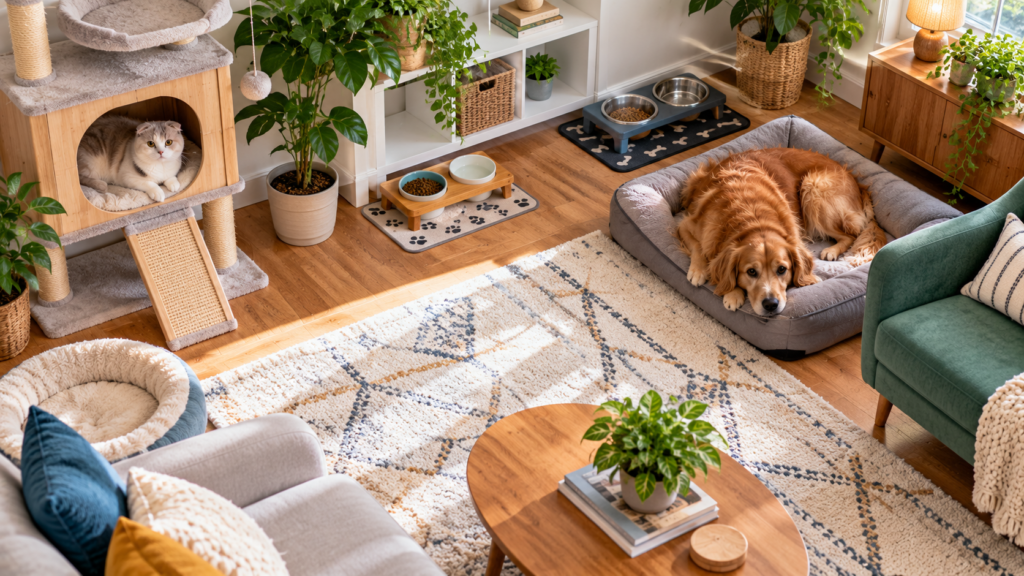
Even pets that coexist peacefully benefit from spaces where they do not have to negotiate with one another. Keep the cat’s food, water, litter, and preferred resting areas away from the dog’s access. This prevents the dog from approaching the cat during important daily routines.
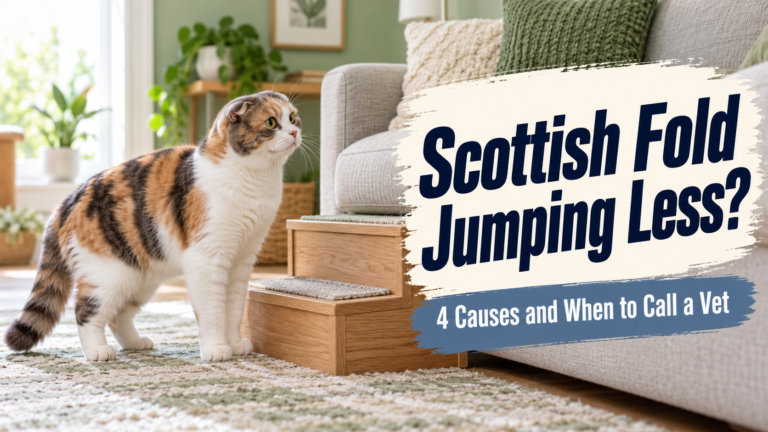
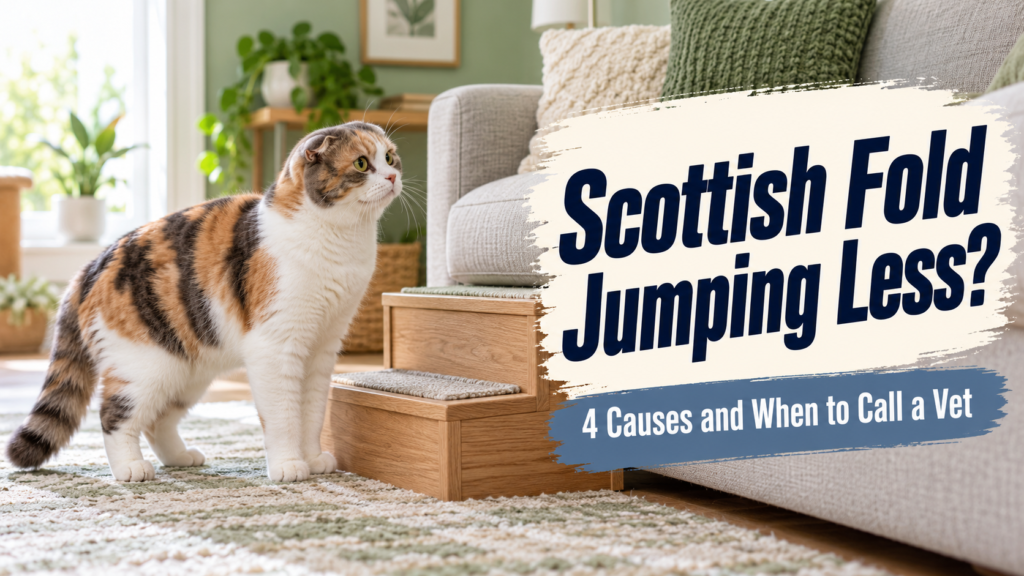
A dog-free room, an appropriately secured pet gate, or a cat-accessible retreat can help. Some cats enjoy high shelves and climbing furniture, but not every Scottish Fold can comfortably reach an elevated perch.
Scottish Folds have breed-associated skeletal and mobility concerns, although no individual cat’s abilities can be judged from its breed alone. Provide accessible floor-level hiding spots or easy routes to resting areas as well as higher options where suitable. Our Scottish Fold Health and Care guide covers the wider importance of noticing changes in movement and daily comfort.
A shared home for Scottish Folds and dogs should also allow separate play and quiet time. A dog may enjoy active games while the cat prefers an uninterrupted nap. Neither pet should have to compete for a doorway, bed, or human attention.
Scottish Fold Kittens, Adult Cats, and Puppies
Age influences how Scottish Folds and dogs should be introduced, but it does not determine success. A kitten may be curious about a dog and may also be small enough to be accidentally hurt by rough play. An adult Scottish Fold may have established habits and prefer a slower adjustment.
A puppy can be lively, vocal, and inclined to chase fast movement. Its enthusiasm should not be confused with safe behavior around a kitten. Adult dogs with previous calm experiences around cats may adapt more easily, but every pairing still needs observation and supervision.
For households considering Scottish Folds and dogs together, ask about the animals’ histories rather than relying on age-based promises. A kitten raised around dogs can still dislike a particular dog; an adult cat without dog experience may still gradually become comfortable.
Avoid forcing shared play. The cat needs opportunities to retreat, and the dog needs clear boundaries about approaching and chasing.
What if Your Scottish Fold Never Becomes Friends With the Dog?
Not every pairing of Scottish Folds and dogs will end with both pets curled up together, and that is not a failure. Some Scottish Folds and dogs become comfortable sharing a household while mostly ignoring each other. Being able to rest and move around without intimidation is a worthwhile outcome.
Others may never be comfortable sharing space. If one animal remains fearful or the dog continues trying to chase or corner the cat, ongoing separation may be the safest arrangement. A veterinarian or qualified animal behavior professional can help owners think through persistent compatibility problems.
Do not assume another pet is automatically the answer to a Scottish Fold’s need for company. Our article on whether Scottish Folds can be left alone explains why individual personality and routine matter more than broad breed assumptions.
Scottish Folds and Dogs: Quick Compatibility Guide
| Question | Practical answer |
|---|---|
| Can they live in one home? | Sometimes, with compatible individuals and a gradual introduction |
| Is a small dog always safer? | No; behavior matters more than size alone |
| Should the cat approach first? | Let the cat choose whether to approach or retreat |
| What if the dog chases? | Stop the interaction and prevent further chasing |
| How long does an introduction take? | There is no reliable fixed timeline |
| Must they become close friends? | No; peaceful coexistence may be enough |
| Can they share space while nobody is home? | Keep them separated during introductions and whenever safety is uncertain |
Frequently Asked Questions
Do Scottish Folds get along with dogs?
Some do. Scottish Folds are often described as gentle and sociable, but each cat has its own preferences. The dog’s behavior, the cat’s previous experiences, and careful introductions influence whether the two animals can share space comfortably. A breed reputation cannot guarantee compatibility.
Are Scottish Fold kittens good with puppies?
A kitten and puppy may become comfortable around one another, but both can be inexperienced and easily overstimulated. Puppies may chase or play too roughly, while kittens need reliable escape options. Keep interactions controlled and supervised rather than expecting their young age to make introductions automatically easier.
Can Scottish Folds live with big dogs?
Yes, a Scottish Fold may live peacefully with a large dog that behaves calmly and does not chase cats. Size still matters for physical safety, especially with kittens, but a small reactive dog may also be a poor match. Assess behavior and supervision rather than relying on breed or size alone.
What dog temperament suits a Scottish Fold?
For Scottish Folds and dogs, the most promising pairing involves a dog that can settle, respond to its owner, disengage from the cat, and avoid chasing. Previous calm experiences with cats can be helpful. No temperament description guarantees that a particular Scottish Fold and dog will become friends.
How long does it take a Scottish Fold to accept a dog?
There is no fixed timeline for Scottish Folds and dogs. Some animals become relaxed within days; others need weeks or may never be comfortable sharing space. Progress should depend on repeated calm observations, not a deadline. Return to separate areas whenever either animal appears overwhelmed.
What if my Scottish Fold is scared of my dog?
Give the cat access to a secure dog-free space and stop direct meetings that cause fear. Restart only at a distance where both animals can remain relaxed. If the dog fixates, lunges, or chases, seek qualified behavioral guidance rather than allowing the animals to work it out themselves.
Can Scottish Folds and dogs be left alone together?
Do not leave Scottish Folds and dogs together unsupervised during introductions or when there is any chasing, fear, guarding, or other safety concern. Even after long periods of calm coexistence, separate areas when you cannot confidently manage risks. The safety of both pets matters more than proving they can share a room unattended.
Final Thoughts
Scottish Folds and dogs can share a home successfully, but the relationship depends on the animals themselves. A calm dog, a cat with control over its space, and introductions that progress without pressure offer a better starting point than assumptions about breed friendliness.
The goal is not to produce a photograph of two pets cuddling. It is to see both animals follow their usual routines, rest without tension, and move away whenever they choose. Some become companions; others remain politely independent.
If interactions repeatedly involve chasing, fear, or intimidation, prioritize separation and professional guidance. For Scottish Folds and dogs, a peaceful, safe home is a more meaningful measure of compatibility than how close the animals sit together.