

Do Scottish Folds shed enough to need a regular grooming routine? Yes, both shorthaired and longhaired Folds shed, although the amount varies from cat to cat, and you may notice more loose fur during seasonal coat changes or after a few missed brushing sessions. A brush that suits your cat’s coat can make loose hair easier to manage, while a quick look at the skin helps you spot changes such as thinning, bald patches, or frequent scratching that deserve a closer look.
Do Scottish Folds shed all year? Many do, especially indoors, and some leave more loose fur during spring and autumn. Start with a weekly soft brush for a short coat or a brief daily comb for a long coat. Check with your vet if you see bald patches, sore skin, or ongoing itching.
Do Scottish Fold Cats Shed a Lot?
How much fur do Scottish Folds shed in a typical week? There is no single amount that fits every cat. A shorthaired Fold can have a thick, plush coat and leave a noticeable layer of fine fur where it naps. A longhaired Fold may leave strands that stand out more on clothing and furniture. How often you brush, where your cat sleeps, and the color of your upholstery can all change how much fur you notice.
Use your own cat as the baseline. A fuller brush during a coat change can be ordinary if the coat still looks even and the skin looks comfortable. A new thin spot, frequent scratching, or a sudden change in grooming habits deserves a closer look. If you have more than one cat, compare each cat with its usual coat and habits.
Does Ear Shape Tell You How Much a Fold Will Shed?
The folded ear shape comes from a trait that affects cartilage. Ear shape is not an established way to predict how much hair a cat will shed. Look at the coat, skin, and the cat’s usual shedding pattern when deciding what kind of care it needs.
When Is Scottish Fold Shedding Season?
When do Scottish Folds shed the most? Spring and autumn can bring more loose fur as cats change coats. During spring, a cat may lose some of the thicker coat that helped it through winter. In autumn, loose hair can appear as the coat changes again. The amount and timing vary, so you may notice the change on a favorite blanket before you notice it on the cat.
Day length is an important cue for seasonal coat changes. Temperature and living conditions can also play a part. Many cats that spend most of their time indoors have a less obvious seasonal pattern and leave some fur around the home throughout the year.
March and April are examples of spring months in the Northern Hemisphere, and September and October are examples of autumn months. In Australia and New Zealand, September and October fall in spring, while March and April fall in autumn. Use these months as seasonal context. Adjust brushing based on your cat’s coat.
Do Scottish Folds Shed in Summer?
Yes. You can still find loose hair in summer, particularly if your cat sheds through the year or is finishing a seasonal coat change. Check whether the coat still covers the skin evenly and whether your cat is scratching or licking more than usual. That gives you more to go on than the weather alone.
If you want to track the change, note how much hair comes off during similar brushing sessions over several weeks. Using the same brush and leaving about the same time between sessions makes the comparison easier.
How Does Shedding Differ Between Longhair and Shorthair Scottish Folds?
Do Scottish Folds shed more just because their hair is longer? Both coats can shed comparable amounts. A longer strand is easier to see on a dark sofa or a shirt, and loose strands can gather into a visible tuft. Fine short fur can still cling to clothes and work its way into upholstery. The Scottish Fold breed guide gives more context about the breed.
Scottish Fold longhair vs shorthair shedding
| Coat detail | Shorthair | Longhair |
|---|---|---|
| What loose fur may look like | Fine hairs on clothes, beds, and fabric | Longer strands and more visible tufts |
| What to check | Loose fur in the plush coat and any change in skin or coverage | Tangles behind the ears, around the chest and belly, and near the tail |
| Grooming starting point | A soft brush or mitt about once a week | A short, gentle combing session each day |

The biggest day-to-day difference is often the work needed to keep the coat free of tangles. A long coat can need regular combing even when there is very little fur on the floor. A short coat can leave plenty of loose hair while still being easy to brush. Check how easily your comb or brush moves through the fur and how comfortable your cat stays. Those observations are more useful for planning a routine than trying to compare piles of fur from two cats.
What Grooming Routine Works for a Scottish Fold?
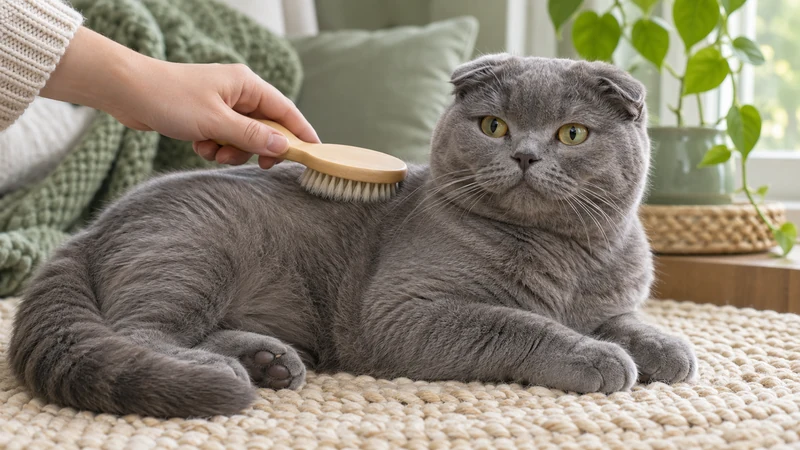
A Scottish Fold grooming routine can start with a few gentle strokes while your cat is resting on a stable surface. Let the cat sniff the brush first. Start where it already enjoys being stroked, move in the direction the fur grows, and pause when it tenses, turns toward the brush, or tries to leave. You can finish another area later.
How Often Should You Brush and Which Tool Should You Use?
Do Scottish Folds shed enough to need daily brushing? The coat type and how easily it tangles help you choose a starting schedule.
| Coat | Starting frequency | Tool |
|---|---|---|
| Shorthair | Once a week. Try twice a week when loose fur builds up and the cat tolerates it. | Soft-bristle brush or a gentle rubber grooming mitt |
| Longhair | A brief session daily, especially if the fur tangles easily. | Wide-tooth comb. A gentle slicker may suit some coats if used lightly. |
How Can You Make Grooming More Comfortable?
Keep all four paws supported and let your cat change position. Check behind the ears, along the chest, under the front legs, and around the belly and tail. Take care around areas your cat guards. Notice changes in your Scottish Fold’s tail movement or new discomfort during brushing and bring them up with your vet. Leave tight mats close to the skin to a vet or qualified groomer. Scissors can catch the skin beneath a mat.
For a long coat, work on a small area at a time so you can see where the comb catches. Give the cat a break if the fur starts to pull. Use another short session to check any areas you missed.
What Else Belongs in a Quick Care Check?
| Care item | What to do |
|---|---|
| Ears | Use a weekly visual check as a reminder. Look for wax buildup or moisture. Wipe visible outer debris when needed with soft cotton or gauze and a cleaner your vet recommends. Keep cotton swabs out of the ear canal. Ask your vet about odor, redness, pain, or discharge. |
| Eyes | Wipe minor dried buildup gently with a damp soft cloth when needed. Persistent discharge or squinting deserves a vet check. |
| Nails | Check nail length regularly. Trim as needed for your cat’s activity and nail growth. |
| Teeth | Aim for daily brushing if tolerated. Several times a week can still help. |
| Bath | Bathe only as needed with a cat-formulated shampoo. Most healthy adult cats rarely need one. |
How Can You Reduce Loose Fur Around the House?
If you are wondering how to reduce Scottish Fold shedding, start with the places that collect the most hair. Brush your cat where it feels comfortable, wash its favorite bedding, and use a vacuum or lint roller on the surfaces it uses most. A washable cover over a favorite chair can make cleanup easier.
Do Scottish Folds shed less if you brush more often? Brushing collects loose fur before it lands on clothes or furniture. Normal coat turnover continues. Start with the brush or comb in the table and change the schedule based on how much loose hair it collects and how your cat responds.
An undercoat tool such as a double-tooth rake or a FURminator is an optional extra for a suitable coat. Follow the tool instructions, use light pressure, and avoid sore skin or tangled areas. If a soft brush or comb already works well, it may be all you need.
Offer complete cat food appropriate for your cat’s age, with the protein and fats it needs, and keep fresh water available. Wet food can add moisture to the diet. Discuss fish oil, omega fats, or biotin with your vet before adding supplements, especially if the shedding has changed. Persistent hair loss needs a cause checked before you try home remedies.
A HEPA purifier can help capture airborne particles. Bedding and upholstery still need cleaning to remove the hair that lands there. If the room feels dry in winter, treat humidity as a comfort issue and keep an eye on any skin changes.
Are Scottish Folds Hypoallergenic?
Scottish Folds are not hypoallergenic. One major cat allergen is a protein called Fel d 1, which is found in saliva and comes from glands in the skin. Grooming can spread it onto the coat. Fur and tiny flakes of skin called dander can carry allergens into the home. Cat allergens can also be present in urine.
You may see more loose strands from a longhaired cat, but the amount of hair you see does not tell you how much allergen you are exposed to. Both shorthaired and longhaired cats produce allergens. If allergy is the reason you are comparing coats before bringing a cat home, discuss your situation with an allergist. The length of the coat alone cannot tell you how you will react.
When Is Shedding a Sign to Call the Vet?
Do Scottish Folds shed in bald patches during a normal coat change? Bald spots, clear thinning, and sore skin are reasons to call your vet. Along with the loose fur on the brush, look at how evenly the coat covers your cat’s skin and whether its usual habits have changed.
Check for these changes:
- A sudden or ongoing increase in hair loss compared with your cat’s usual pattern.
- A bare patch, an area of thinning fur, or short broken hairs where the cat licks repeatedly.
- Persistent itching, chewing, or overlicking.
- Red, swollen, scaly, greasy, or sore skin.
- Coat changes alongside low energy or a new reluctance to move or be touched.
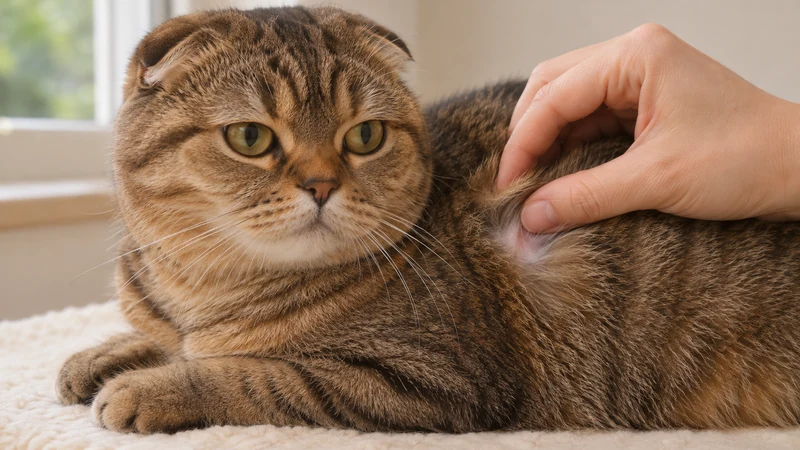
Look in good light when your cat is relaxed. Note when the change began, where it is, and whether you have seen more licking or scratching. Mention any recent changes at home, too. A photo taken without holding your cat in an awkward position may help your vet see how the area has changed. Call sooner if your cat looks unwell or uncomfortable.
Some cats with stiffness have trouble reaching their back or hindquarters and may groom those areas less. You might notice an untidy patch of coat or new mats alongside a change in movement. Mention both observations when you call. Your vet can assess whether discomfort, a skin problem, or something else is involved. Avoid pulling a mat or pressing a sore area to see how your cat reacts.
What Else Do Owners Ask About Scottish Fold Shedding?
Is It Normal for a Scottish Fold to Shed a Lot?
Noticeable loose fur can be normal, especially during a coat change. Check your cat’s usual pattern, coat coverage, and skin. A sudden increase, bald patch, or persistent scratching is a reason to talk to your vet.
Do Scottish Folds Shed in Winter?
Yes. An indoor cat may continue to leave fur on bedding and clothes in winter. Use the coat’s condition and your cat’s usual pattern to decide whether to adjust brushing or ask about a change.
Why Do Scottish Folds Shed More When You Brush Them?
The brush gathers loose hair that may have been sitting in the coat for days. Seeing it in one place can make the amount look larger. Use gentle strokes and stop if the skin seems sensitive.
Should I Shave My Scottish Fold in Summer?
Routine shaving is usually unnecessary. Gentle brushing helps remove loose fur and gives you a chance to check for tangles. If your cat has tight mats or needs help caring for its coat, ask a vet or qualified groomer about the best approach.
What If My Scottish Fold Suddenly Stops Tolerating the Brush?
Stop the session and give your cat space. Notice whether it reacts to one spot or seems less willing to move or groom. Tell your vet about any new sensitivity, especially if it keeps happening.
Choose a brush that suits your cat’s coat and a routine you can keep up with. Pay attention to what is normal for your Scottish Fold across the seasons. Short, calm sessions make it easier to manage loose fur and notice changes early, while giving your cat room to move away.
Sources