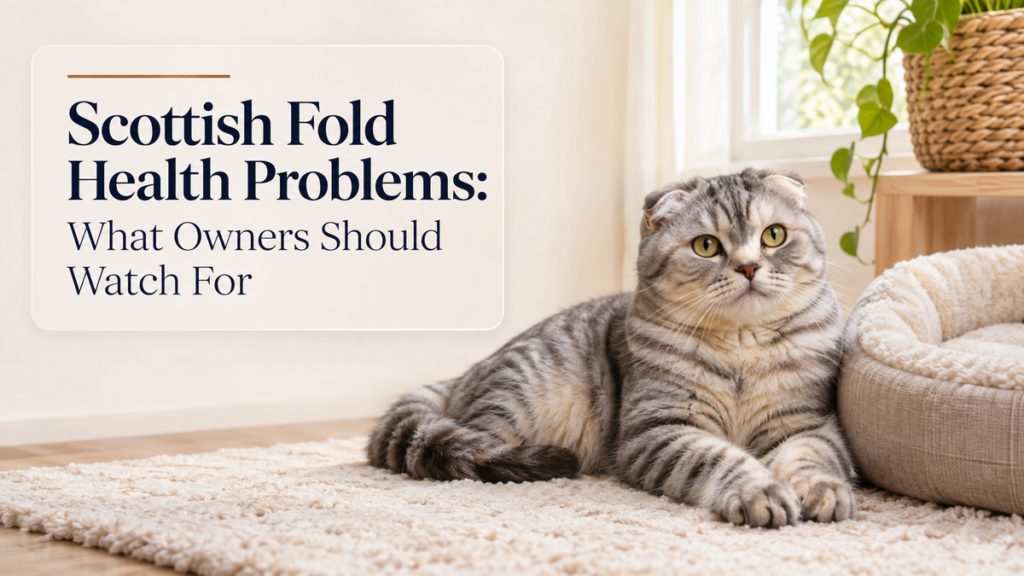


Scottish Fold health problems include an inherited cartilage disorder that can affect joints and movement, alongside heart, kidney and ear concerns that need separate checks. The folded ears come from the same genetic change linked to abnormal cartilage, but the amount of joint damage and the signs you notice can vary greatly between cats. Watch for changes in jumping, grooming, appetite, thirst and breathing, and ask your vet about anything unusual rather than waiting for obvious limping or crying, because a quiet cat can still need help with hidden discomfort.
Quick answer: The main breed concern is osteochondrodysplasia, which affects cartilage and bone and can lead to painful arthritis. Other Scottish Fold health problems need their own checks. Notice movement changes early, arrange regular vet visits, and seek urgent help for breathing difficulty, collapse or sudden loss of leg use. Comfort matters at every age.
The Folded-Ear Gene Also Affects Cartilage and Joints
The ear fold is part of a change in cartilage development, rather than a feature limited to the head. Cartilage helps joints move smoothly. When it develops abnormally, bones and joints can also become misshapen, stiff or painful.
One Gene, Different Effects
The condition is called Scottish Fold osteochondrodysplasia, often shortened to SFOCD. The linked gene is TRPV4. A cat needs only one copy of the Fold variant to have folded ears; two copies generally cause more severe problems earlier in life.
Cats with one copy can still develop joint disease. Their signs may be milder, start later or progress differently. Breeding a Fold to a straight-eared cat does not remove the genetic concern from offspring that inherit folded ears.
Random Fact 1: The same gene that folds the ears also affects cartilage in the joints, tail and other body areas.
Genetic Disease and Recorded Diagnoses
Cats Protection states that every folded-ear Scottish Fold is affected by this disorder. That does not mean every cat has the same pain or disability at the same age.
A 2023 Australian VetCompass study found 12 diagnosed cases among 1,131 Folds, with another 64 Folds recorded as suspected cases. These were clinical records, not full skeletal screening of every cat. Potentially missed diagnoses and different definitions help explain why these findings differ from welfare statements about all Folds.
Rorden and colleagues’ small 2021 study compared 10 folded-ear cats carrying one copy with 12 straight-eared cats without it. The folded group had worse average radiographic scores, but changes were milder than in earlier reports.
For owners, Scottish Fold health problems deserve individual assessment.
Early Signs of Arthritis That Owners Often Miss
Your cat may still eat, purr and sit beside you while quietly changing how they move. A new pause before jumping onto the sofa can matter more than a dramatic limp.
Small Changes Around the Home
Possible Scottish Fold arthritis signs include:
- Stiff steps after a nap, followed by apparent improvement.
- Shortened strides, bunny hopping or walking close to the floor.
- Choosing a low chair instead of a favourite windowsill.
- Shifting weight, resting more or hiding from family activity.
- Licking one joint repeatedly or neglecting the back and hips.
- Missing the litter box when climbing over its high side hurts.
- Becoming less tolerant of being picked up or touched.
These can overlap with other Scottish Fold osteochondrodysplasia symptoms, but they are not a diagnosis. Injuries and other illnesses can cause similar changes.
Tail Changes and Gentle Observation
Notice whether the tail hangs differently, lifts less or seems unusually thick. Never bend it to test flexibility. Watch natural movement and stop touching if your cat flinches or moves away.
Random Fact 2: A stiff, thick tail that does not bend is a health sign, not simply a breed feature.
Quiet behaviour and the upright “Buddha” pose alone do not prove pain. A change from your cat’s usual behaviour is more useful information.
When watching for Scottish Fold health problems, keep short videos and dated notes. Contact your vet about changes lasting more than a few days, sooner if they worsen or affect eating and movement.

How a Vet Diagnoses Osteochondrodysplasia
An examination helps your vet find sore areas and consider other causes of reduced movement. They may watch your cat walk, review your videos and gently examine the limbs and tail.
Imaging Shows Bone and Joint Changes
Radiographs, or X-rays, help confirm the skeletal changes associated with this condition. Your vet may image the ankles, feet, toes and tail, depending on the examination findings.
Possible findings include irregular bones, narrowed joint spaces, misshapen tail vertebrae and extra bone around affected joints. Follow-up images may help when the results would change treatment.
Random Fact 3: Some Folds show joint changes on X-ray as early as seven weeks old. This has been reported in severely affected kittens, not as a timetable for every Fold.
Genetic Testing Answers a Different Question
A TRPV4 test exists and can identify the variant and its copy number. Folded ears already provide a visible clue, so a vet may not need a genetic test to investigate a cat with typical signs and radiographic changes.
The test cannot measure current pain, describe existing joint damage or predict exact future severity. A genetic result and an X-ray answer different questions about Scottish Fold health problems.
Bring previous records and a list of medicines or supplements. Ask which tests would change the care plan and whether sedation is needed for comfortable positioning.
Sudden inability to use a leg, severe pain with refusal of food or water, or marked lethargy alongside joint signs needs urgent veterinary attention. Do not wait for a routine screening appointment.

Managing Joint Pain and Everyday Movement
There is no cure for the inherited cartilage disorder. However, a care plan can address pain and help your cat keep doing everyday things. Managing Scottish Fold health problems means reviewing comfort regularly, rather than accepting declining activity as inevitable.
Treatment Chosen for the Individual Cat
Your vet may discuss pain medicines, including an NSAID where appropriate, gabapentin or frunevetmab, sold as Solensia. Choices depend on age, other illnesses, kidney health and current medicines.
Solensia is a veterinary monthly injection for osteoarthritis pain. It does not repair joints or reverse arthritis. Safe use alongside NSAIDs has not been established in cats, so never combine treatments yourself. Report new problems and discuss the response before the next dose.
Glucosamine, chondroitin and omega-3 products are a separate discussion. Evidence differs between ingredients, and evidence for glucosamine and chondroitin pain relief in cats is weak. None should be presented as preventing or curing inherited joint damage.
An Easier Home and a Lean Body
Ask your vet for a suitable weight target and measured feeding plan. Extra weight adds load to painful joints, but weight loss should be gradual and supervised.
Provide stable steps or ramps, nonslip paths, padded beds and low-entry litter boxes. Keep food, water, resting places and a litter box on an accessible floor. Offer gentle play your cat chooses, without forced jumping or stretching.
Keep a simple comfort record covering appetite, grooming, movement and interaction. If Scottish Fold joint problems worsen, ask about adjusting treatment, rehabilitation or specialist referral. Costs vary with testing and care needs; request an estimate and a follow-up plan.

Heart Health and Hypertrophic Cardiomyopathy
Joint disease is not the only concern. Scottish Fold health problems can include heart disease, although the breed-specific frequency is less clearly established than the cartilage disorder.
Hypertrophic cardiomyopathy, or HCM, thickens the heart muscle and can affect how the heart fills and pumps. Cornell describes it as the most common heart disease in cats overall. That does not mean it is equally common in every breed.
Hidden Changes and Veterinary Assessment
Some cats have no obvious early signs. An echocardiogram, a heart ultrasound, is the key diagnostic test. The vet also considers other causes of heart muscle thickening.
When discussing Scottish Fold hypertrophic cardiomyopathy, ask whether your cat’s examination or family history makes further testing useful. A normal-looking cat or a general DNA panel cannot rule out every form of heart disease.
Breathing and Circulation Warnings
Watch for reduced energy, weakness, fainting or a clear change in breathing. Open-mouth breathing, laboured breathing, collapse or sudden painful weakness of the back legs needs emergency care. A blood clot can interrupt circulation to the limbs.
Ask your vet how to count breaths while your cat sleeps and what change should trigger a call. Do not delay help while trying to reach a particular number, especially if breathing looks difficult.
Kidney Health and Polycystic Kidney Disease
Polycystic kidney disease, or PKD, causes fluid-filled cysts within the kidneys. These may be tiny at birth and grow over time, affecting healthy kidney tissue.
Signs and Screening
Possible changes include drinking and urinating more, losing weight, eating less, vomiting and low energy.
For Scottish Fold polycystic kidney disease, testing may include a PKD1 genetic test, ultrasound, blood tests and urine tests. Genetics identifies the tested variant; imaging assesses cysts; blood and urine results help assess kidney function.
Random Fact 4: A cat can have heart or kidney disease without obvious early signs, which is why regular checks matter.
Care Guided by Kidney Function
There is no cure that removes inherited PKD. Your vet can plan care around the findings, which may include an appropriate diet, medicines and fluid support. Follow-up helps track changes and adjust care.
Treat published referral-clinic percentages cautiously. A study of cats sent for testing cannot establish the risk for all Folds. Kidney disease belongs in a discussion of Scottish Fold health problems without assigning every cat the same likelihood or outlook.
Repeated litter-box visits with straining or little urine need urgent attention. This may indicate a urinary blockage and should not be assumed to be PKD.
Folded Ears Need Regular Care
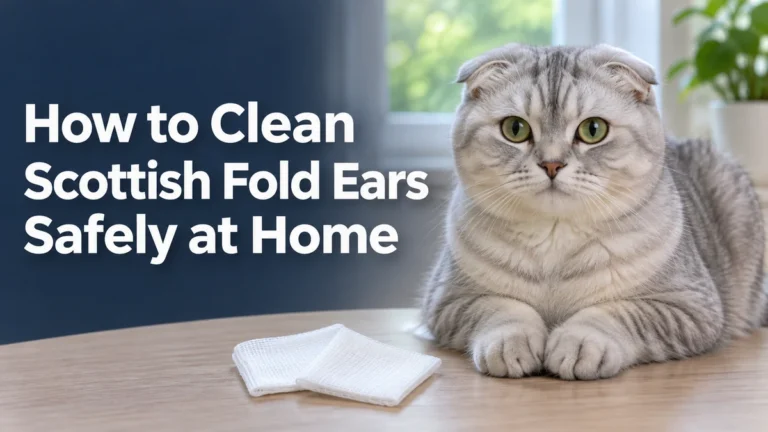
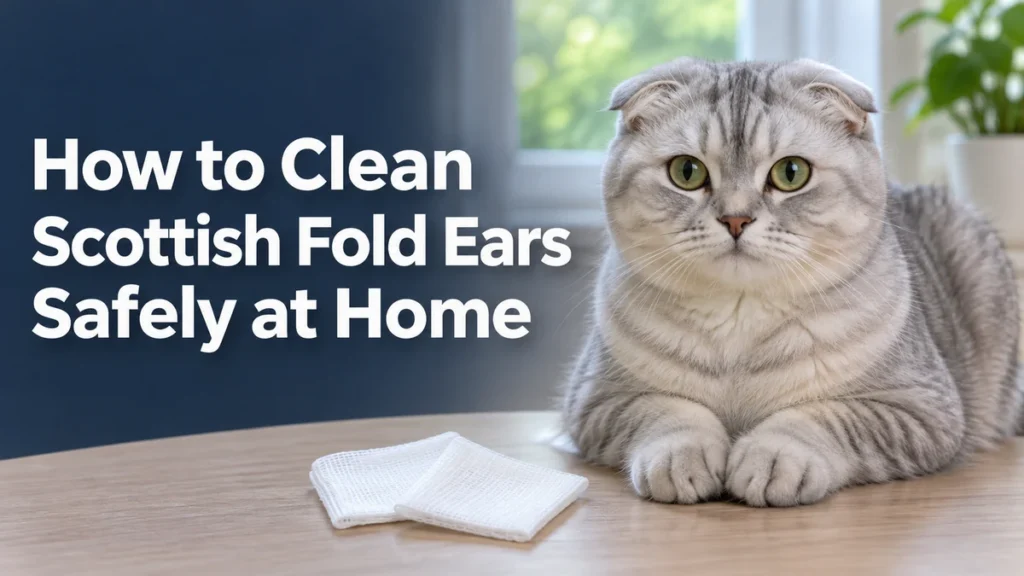
Include a weekly ear check when monitoring Scottish Fold health problems. Look in good light without bending the ear backward or forcing it open. Clean only when needed and when the ear is comfortable, following your vet’s advice.
Scottish Fold ear infections cannot be diagnosed by wax colour alone. Dark debris may be wax, mites or another problem. Redness, swelling, pain, strong odour, pus, repeated head shaking or a head tilt needs veterinary advice.
Use a cat-safe cleaner as directed, with gauze or cotton pads for the visible area. Keep swabs out of the canal. Our safe Scottish Fold ear cleaning article (https://foldedpaws.com/scottish-fold-ears-cleaning/) covers gentle handling in more detail.
Three Mistakes to Avoid
- Treating a stiff tail as normal instead of asking a vet about it.
- Waiting for crying or limping, although cats often hide pain.
- Cleaning a sore ear or using peroxide, vinegar or alcohol instead of seeking care.
Folded ears deserve practical care, but evidence does not establish a clear infection-frequency difference from straight-eared cats.

Lifespan, Quality of Life and the Breeding Question
The Scottish Fold lifespan is commonly listed as around 11–15 years, including by ASPCA Pet Insurance. This is a broad estimate, not a reliable breed-wide survival figure or a promise for an individual cat.
For Scottish Fold health problems, comfort matters alongside years. Severe joint disease can lead to difficult welfare decisions earlier in life. There is no fixed age at which every Fold develops severe pain.
Discuss eating, toileting, resting, movement and enjoyment with your vet.
Welfare and Choosing Another Cat
Breeding for folded ears preserves the linked cartilage concern. Choosing a cat without that trait avoids selecting for it; straight ears alone do not guarantee freedom from every inherited illness.
Rules differ by country. Since 1 January 2026, the Netherlands restricts keeping folded-ear cats. Existing cats meeting the transitional requirements can remain with their owners for life, with written microchip evidence needed. The rules also prohibit shows and competitions for covered cats. Check official requirements before acquiring or travelling with one.
These concerns are about preventing suffering, not blaming owners. If you already share your home with a Fold, focus on regular assessment, a comfortable environment and prompt help when something changes.
A Comfortable Life Starts With Small Observations
Watching for Scottish Fold health problems means noticing your cat’s everyday habits and acting when they change. Keep a simple record, make movement easier and stay in touch with your vet. Our Scottish Fold health and care articles (https://foldedpaws.com/category/health-care/) offer support for daily care at home.
Sources
- Cats Protection: Scottish Fold Cats, breed health and welfare guidance.
- Cornell Feline Health Center: Hypertrophic Cardiomyopathy — https://www.vet.cornell.edu/departments-centers-and-institutes/cornell-feline-health-center/health-information/feline-health-topics/hypertrophic-cardiomyopathy
- Cornell Feline Health Center: Polycystic Kidney Disease — https://www.vet.cornell.edu/departments-centers-and-institutes/cornell-feline-health-center/health-information/feline-health-topics/polycystic-kidney-disease
- ASPCA Pet Insurance: Scottish Fold Cat Facts, commonly listed lifespan estimate.
- Wikipedia: Scottish Fold, breed background and welfare overview.
FAQs
Can osteochondrodysplasia in Scottish Folds be cured?
No treatment removes the inherited cartilage disorder or reverses all existing damage. Veterinary care can address pain and make daily movement easier. A plan may combine suitable medicines, weight control and home changes. Supplements are not a cure, and treatment needs reassessment as your cat’s comfort or health changes over time.
Do all Scottish Folds have osteochondrodysplasia?
Cats Protection describes all folded-ear Scottish Folds as affected. The same genetic change produces the ears and alters cartilage development. However, disease severity, visible changes and pain vary. Low rates of recorded clinical diagnosis in one study do not prove that other Folds were unaffected or free from discomfort throughout life.
What are the signs of hypertrophic cardiomyopathy in a Scottish Fold?
Some affected cats show no early signs. Others become tired or weak, breathe faster, faint or collapse. Difficult or open-mouth breathing and sudden painful loss of back-leg use are emergencies. These signs cannot confirm HCM at home; a vet needs to investigate, with heart ultrasound central to diagnosis and assessment.
What are the signs of polycystic kidney disease in a Scottish Fold?
Possible signs include increased thirst and urination, weight loss, reduced appetite, nausea, vomiting and low energy. Early disease may be silent. Similar changes occur with other kidney and non-kidney problems. Your vet can recommend testing to identify the cause and assess kidney function, rather than relying on symptoms alone for diagnosis.
How long do Scottish Folds live?
A commonly listed estimate is 11–15 years, but individual lives vary and strong breed-specific survival data are limited. Severe joint disease or other illnesses may shorten life. Regular veterinary care supports comfort and helps identify problems, but cannot guarantee a particular lifespan or remove the inherited concern associated with folded ears.