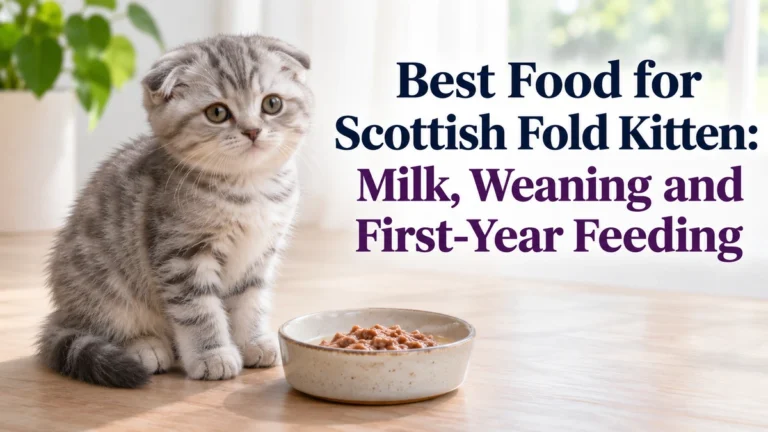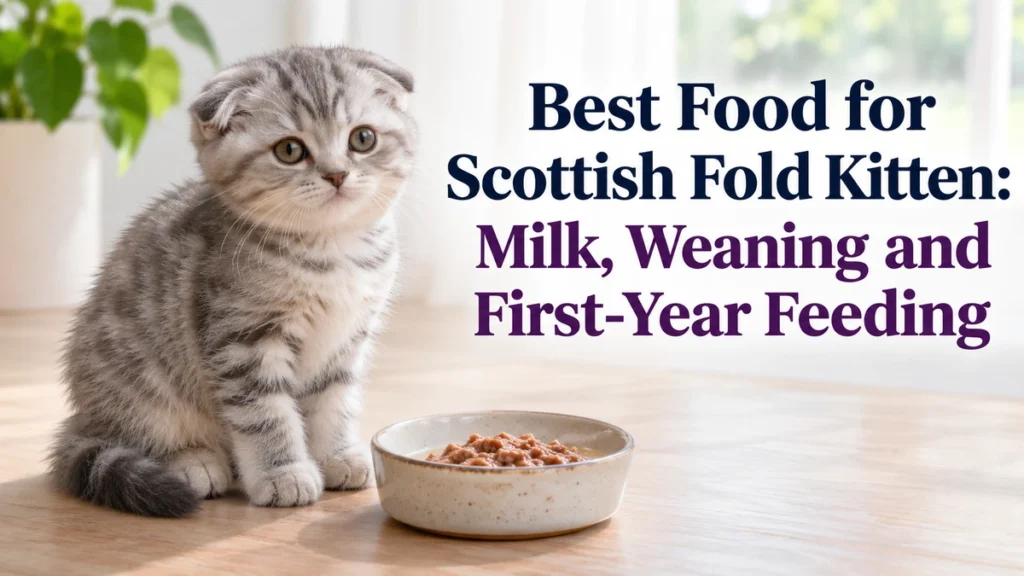


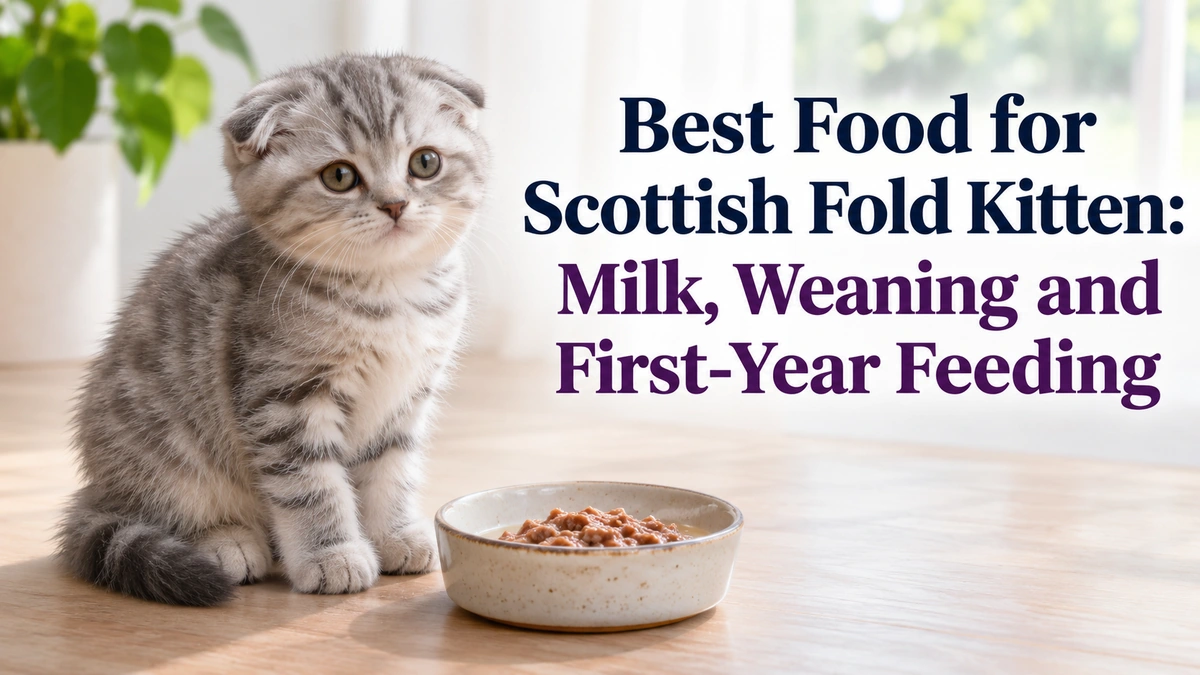
Choosing the best food for Scottish Fold kitten growth starts with age: mother’s milk or a proper kitten milk replacer comes first, followed by complete kitten food during gradual weaning. Small, frequent meals and portions matched to the food label help support growth, while fresh water and gentle changes make feeding easier as eating skills develop. Watch weight gain and comfort rather than copying another kitten’s bowl, and keep feeding for growth until your vet agrees that your kitten is ready for the next life stage near the first birthday.
Answer Box
The best food for Scottish Fold kitten growth changes with age. Start with mother’s milk or suitable kitten milk replacer, then introduce complete growth food gradually. Offer small, frequent meals and fresh water after weaning. Use label portions and growth checks, avoid cow’s milk, and agree the eventual food switch with your vet.
Milk Feeding During the First Weeks
Mother’s Milk and Early Colostrum
Before weaning, mother’s milk supplies a kitten’s nutrition. The first milk, colostrum, also provides antibodies. Kittens absorb these antibodies during roughly the first 16–24 hours, so speak to a vet promptly if a newborn misses early nursing.
If you’re asking “can Scottish Fold kittens drink milk,” the important distinction is which milk. Mother’s milk and properly prepared kitten milk replacer suit this stage. Cow’s milk, goat’s milk, human formula and treat-style cat milk are not suitable substitutes.
Random Fact 1: Ordinary kitten milk replacer supplies nutrition but does not replace the early antibody protection from colostrum.
Kitten Milk Replacer and Veterinary Support
Use commercial kitten milk replacer when the mother cannot provide enough milk. Follow the tin’s mixing chart and your vet’s instructions. Different formulas have different concentrations, so there is no universal daily volume.
Very young newborns commonly need feeds every 2–3 hours, day and night. Intervals may lengthen as they grow, but the vet should set the orphan’s schedule. Do not apply a four-meal routine to a newborn.
Ask for a hand-feeding demonstration. Warm prepared formula as directed, around body temperature, and bottle-feed belly-down with the head neutral, never on the back. Rapid flow can send milk into the airway.
Young kittens also need warmth and toileting help during the first three weeks. A cold, weak or non-nursing kitten needs urgent veterinary care. Do not force milk into its mouth or wait for the next scheduled feed.
Gradual Weaning From Milk to Kitten Food
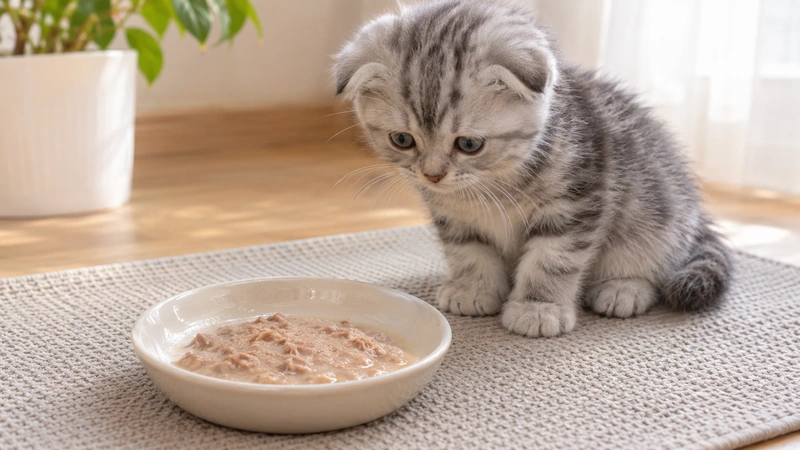
Weaning often starts around 3–4 weeks, when kittens show interest in food and can begin lapping. The best food for Scottish Fold kitten weaning is complete kitten food offered in a manageable texture, while nursing or suitable formula continues. Move gradually rather than removing milk after the first taste.
Gruel in a Shallow Dish
Mix wet kitten food with warm water or correctly prepared kitten milk replacer to make soft gruel. Use a shallow dish and start with a loose texture. There is no single food-to-liquid ratio every kitten must follow.
Let the kitten investigate without pushing its nose into the food. As lapping and chewing improve, reduce the added liquid. Properly softened kitten kibble can also be introduced when suitable.
Prepare small fresh servings and clean the dish after feeding. Follow storage instructions for formula and softened food; do not leave a milky mixture sitting out.
Progress Through the Weaning Weeks
The main transition often happens across 4–8 weeks. Many kittens are weaned around eight weeks, while some need closer to 8–10 weeks. Keep checking reliable eating and weight gain rather than working toward a strict deadline.
| Approximate phase | Main nutrition | Practical feeding change |
|---|---|---|
| Before weaning | Mother’s milk or suitable replacer | Follow the nursing or hand-rearing plan |
| Around 3–4 weeks | Milk plus first gruel | Offer a shallow dish |
| Main 4–8-week transition | Increasing complete kitten food | Thicken food as skills improve |
| Around 8–10 weeks | Usually independently eating kitten food | Check intake, growth and water access |
These phases overlap. When choosing Scottish Fold kitten weaning food, check growth-food suitability, not just softness. Do not rush weaning or separate kittens from their mother and littermates before eight weeks.
Complete Nutrition for Healthy Kitten Growth
Growth Statements and Animal-Source Nutrients
The answer to “what do Scottish Fold kittens eat” becomes straightforward after milk: a complete food designed for growth. Look for an AAFCO statement covering growth or all life stages. Adult maintenance alone does not meet this test.
AAFCO publishes standards; it does not approve individual foods. A feeding-trial statement offers useful evidence, but a formulation-based adequacy statement can also establish that a food meets the relevant profile.
The best food for Scottish Fold kitten nutrition provides balanced nutrients, not just a high meat percentage. Named animal ingredients are useful information, but being first on the list does not establish overall quality.
Taurine, DHA and Balanced Bone Nutrition
Growth profiles include minimums of 30% protein and 9% fat on a dry-matter basis, meaning after water is removed. Do not compare wet and dry label percentages directly without accounting for moisture.
Taurine supports the heart and retina; cats cannot make enough themselves. DHA supports developing brain and eye function. Calcium, phosphorus, vitamin D and essential fats also belong in balanced growth food.
Random Fact 2: Plain meat can supply plenty of protein while leaving important nutrients out of balance.
Ask manufacturers about qualified nutrition staff, quality checks and available nutrient data. No breed-specific food or extra calcium powder is automatically needed. Nutrition supports growth but cannot correct the Fold’s inherited cartilage condition.
Wet, Dry and Mixed Kitten Food Compared
Soft Textures and Water Intake
The best wet food for Scottish Fold kittens is complete growth food in a texture they manage comfortably. Wet food commonly contains around 70–80% water, while dry food often contains roughly 6–10%.
Soft food is useful during weaning and contributes water. Fresh drinking water should still be easy to reach. If softening kibble, follow preparation and storage instructions.
Suitable Dry Food and Mixed Meals
The best dry food for Scottish Fold kittens also meets growth needs. It can suit a kitten able to chew it. Neither wet nor dry is universally better, and mixed feeding is optional.
| Format | Useful feature | Main check |
|---|---|---|
| Complete wet kitten food | Soft texture and added moisture | Growth adequacy and safe storage |
| Complete dry kitten food | Convenient, concentrated nutrition | Chewing ability, water and measured portions |
| Measured mixed feeding | Offers both textures | One shared daily food allowance |
Choosing the best food for Scottish Fold kitten growth may involve either format. With mixed meals, allocate the day’s food between them instead of giving a full serving of each. Half of each label’s allowance works only if both allowances represent the same total daily energy target.
Random Fact 3: Equal weights of wet and dry food can provide very different calories. Ordinary kibble is not a replacement for dental care.
Portions and Small Meals as Your Kitten Grows
Frequent Meals Without a Fixed Breed Ration
Deciding how often to feed a Scottish Fold kitten starts with its development. Milk feeds follow a neonatal plan. After weaning begins, offer small, frequent meals rather than unlimited bowl refills.
| Age or phase | Example meal pattern | Check before adjusting |
|---|---|---|
| Around 4–6 weeks | Several small food offers, often 4–6 | Milk intake and weaning progress |
| Around 6–12 weeks | Commonly four meals | Independent eating and weight gain |
| Around 3–6 months | Often three or four meals | Appetite, growth and daily allowance |
| Around 6–12 months | Often two or three meals | Continued growth and body condition |
These are examples, not deadlines. Changing meal count does not mean growth food should end.
Label Portions and Growth Trends
To judge how much to feed a Scottish Fold kitten, use the specific food’s age-and-weight directions, then review growth with your vet. A fixed calorie allowance or cup measurement cannot suit every kitten.
Even the best food for Scottish Fold kitten growth needs an individual portion. Do not cut food automatically after neutering; reassess growth, body condition and the label guidance together.
For a calculation example, suppose your vet sets a 240-calorie daily food target for a healthy three-month-old kitten weighing four pounds. If its food label states 90 calories per three-ounce can, that is about 2.7 cans. A different food providing 400 calories per cup would supply 240 calories in 0.6 cup.
These are alternative examples, not two allowances to combine or a target for every kitten. Your labels may differ substantially.
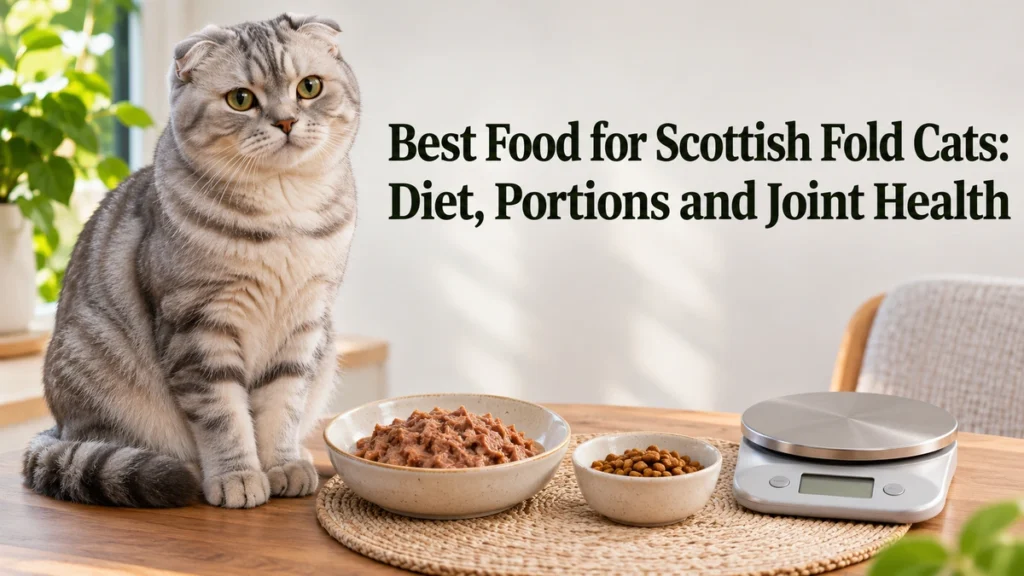
For mixed feeding, divide one daily target between the foods and account for treats. Weigh portions where possible, keep a simple intake record, and check what was actually eaten.
Feeding Comfort and Growth Checks
A Comfortable Place to Eat
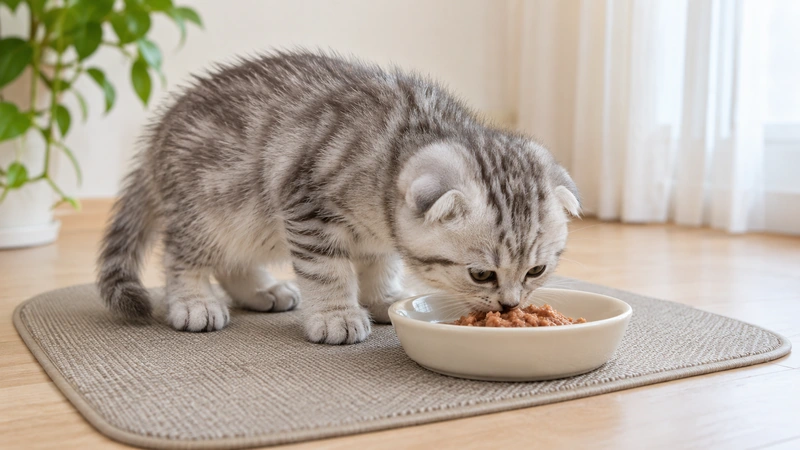
Offer a quiet feeding area with shallow, stable bowls at floor level. Keep food away from the litter tray and prevent other pets from taking it. Notice chewing, swallowing and posture rather than assuming refusal means fussiness.
Growth, Appetite and Teething Changes
Weigh newborns daily, ideally at the same time, using a digital scale. Older kittens can usually be weighed weekly. Record trends instead of treating one breed-weight chart as a pass-or-fail test.
Early daily gains are often described around 7–15 g, with individual variation. Ask your vet what progress to expect. A young kitten losing weight or failing to gain needs prompt advice; do not wait several days.
Steady gain, normal energy, comfortable eating and formed stools are reassuring. Coldness, limpness, pale or yellow gums, nursing refusal, persistent vomiting or diarrhea need urgent attention.
During tooth changes, offer manageable textures, but do not assume painful chewing is normal. Our Scottish Fold kitten biting and gentle training article explains related play and chewing habits.
Parasites and illness can affect growth. Let a vet assess poor progress before simply adding food or repeatedly changing diets.
Food Safety and Gentle Mealtime Habits
Safe Food, Small Rewards and Gradual Changes
This Scottish Fold kitten feeding guide puts clean bowls, fresh water and safe storage first. Replace water daily and follow food-storage instructions. Change suitable kitten foods gradually rather than repeatedly swapping them to chase appetite.
Keep treats below 10% of daily calories. Even the best food for Scottish Fold kitten growth cannot balance unlimited extras. Small pieces of plain, cooked, boneless chicken can be occasional rewards once eating solids reliably.
Keep onion and garlic preparations, chocolate, caffeine, alcohol, raw dough and cooked bones away. Raw animal foods carry infection risks. Keep grapes, raisins and xylitol-sweetened foods away too. The familiar kidney and blood-sugar risks mainly concern dogs; advice after a kitten’s exposure should be specific to cats.
After suspected poisoning, call a vet immediately. Do not induce vomiting unless specifically instructed.
Three Feeding Mistakes
- Unsuitable milk: Replacing mother’s milk or proper kitten replacer with cow’s milk or homemade mixtures.
- An incomplete diet: Using plain meat, dog food or complementary food as the whole growth diet.
- Unplanned additions: Copying a fixed cup ration or adding calcium without veterinary guidance.
The Transition From Kitten Food at the End of Growth
Different Timelines and the Individual Kitten
If “when to switch Scottish Fold kitten to adult food” is on your mind, ask your vet whether growth is nearly complete. Advice varies around 9–12 months, with many veterinary sources favouring about twelve months. Nine months is not an automatic switch date.
The best food for Scottish Fold kitten growth remains suitable while those growth needs continue. Body development, health and veterinary assessment matter more than a birthday alone.
A kitten can eat fewer meals while still needing growth food. Likewise, neutering is a reason to review intake, not proof that adult-maintenance food is immediately appropriate.
Random Fact 4: Food needs can change after neutering before the kitten has finished growing.
A Gradual Change When the Vet Agrees
When your vet agrees the time is right, change foods over roughly 7–10 days. Offer about 75% familiar kitten food and 25% new food initially, then move through 50/50 and 25/75 before offering only the new food.
Spread each step across several days and follow any product-specific advice. These proportions describe the transition, not a new daily portion allowance.
If stools soften, appetite drops or vomiting occurs, seek advice and slow the change if appropriate. Some kittens need around fourteen days or longer.
Never withhold accepted food to force the switch. Persistent problems need assessment rather than a faster transition or repeated changes of brand.
FAQs
Does a Scottish Fold kitten need a special breed-specific food?
Usually, no. The best food for Scottish Fold kitten growth is complete for the relevant life stage and suits the individual. A Fold picture on the bag is not proof of better nutrition. Ask about adequacy, quality checks and your kitten’s progress rather than relying on breed branding.
Can I give my Scottish Fold kitten cow’s milk?
No. It is not a suitable replacement for mother’s milk or kitten milk replacer and can cause digestive upset. Very young kittens need properly prepared formula if they cannot nurse adequately. After weaning, provide water and complete kitten food rather than treating milk as a necessary daily drink.
Is wet food essential, or can my kitten eat complete dry food?
Complete dry kitten food can work once your kitten manages the texture, provided fresh water is available and growth is monitored. Wet food is useful for softer meals and water intake. A measured combination is another option. Complementary wet food does not become complete simply because it contains meat.
How can I tell whether my Scottish Fold kitten is eating enough?
Look for steady growth, normal energy, comfortable eating and healthy stools. Choosing the best food for Scottish Fold kitten growth is only part of the job; portions matter too. Record weight and intake, and contact your vet promptly about weight loss, poor gain, weakness or feeding refusal.
Can my Scottish Fold kitten switch to adult food at nine months?
Possibly, if your vet confirms that its development and needs suit the change. Nine months is not a universal deadline. Many kittens need growth food until around twelve months. Keep the transition gradual and review appetite and tolerance rather than switching abruptly because a general chart says so.
The best food for Scottish Fold kitten growth matches each stage, from milk to complete kitten meals. Keep changes gentle, portions individual and growth checks regular. Our Scottish Fold kitten care pages offer more support, while your vet can guide feeding concerns and transition timing.
Sources